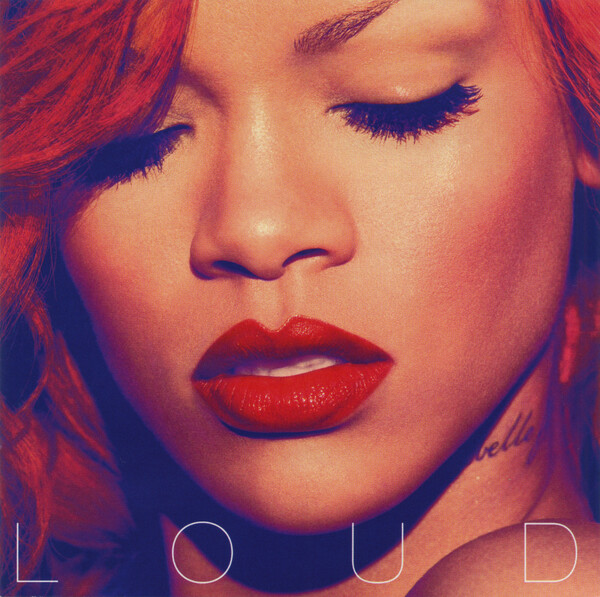
Although tunes such as “Hard”, “Rude Boy” and “What’s My Name?” seemed more quintessential at the turn of the 2010s as slices of Millennial recession-core, “Cheers (Drink To That)” stands the test of time as the most explicitly zeitgeist-bottling. This 21st century saloon song harkens back to a time when pop seemed pretty simple as an idea; a production and writing team in its bag and a couple of good ideas was enough for chart superstardom, in this case a loping Avril Lavigne sample, sugary-sweet pop-rock architecture, an irresistible chorus call-to-arms and verse lyricism simplistic but impactful enough to power a generation of social media inspo-chatter.
In my first year at university in 2007, the first under raised tuition fees in the UK, the talk was that our intake had set record bar takings. I thought little of it at first, but it seemed demonstrably true in the following years. This proved to be but a precursor. By the end of the decade, as supposedly developed economies boomeranged around in the wake of society-destroying negligence and practically suicidal greed, Millennials would come to be defined by the pursuit of escapism in the very jaws of capitalist nihilism. This is how tracks like “Cheers” and “Party Rock Anthem” became generational canticles, recognising that pop music could be just as adept as dance music, increasingly while incorporating it, at realising the utopian potential of nightclubs and dancefloors, and that while it wasn’t exactly the Second Summer of Love, most of the best nights and moments of your life occur while sozzled.
Even the lyric “don’t let the bastards get you down” inadvertently pre-empts “The Handmaid’s Tale” as a cultural phenomenon and proposes a tray of shots as the most direct solution to fascism. Unfortunately, the focus on alcohol as an anaesthetic dates the track fairly badly in the contemporary climate, as does the idea that a pleasure as effortless as putting on a pair of Ray-Bans could make you feel “hella cool”. Was even Rihanna, the dominant and unimpeachable princess of international pop, cringe? If so, she’s very much one of our own. Even at this point she was, unthinkably, only a handful of years away from what seems to be her final album. Talk about jaded. All the same, none of it changes how damn good “Cheers” feels on every single intake, just like that first ice-cold sip always does, from its fade-out for a drunken group vocal to its tropically feverish groove.
In practical terms, the memories are mixed, but no less glorious for it. Drainpipes, bad Nextwear and downing Jägerbombs until you slur heavily were the order of the day. In the modern era of vape pens, H2O at the club, cargo pants and commentary on how Millennials are “highkey functional alcoholics”, we’re no longer in Kansas. The worst part may be that Gen Z continue to party mostly to our songs, and I say that not to pen a the-kids-aren’t-alright piece, but because I hate seeing a cohort robbed of their cultural vitality. As time winds on, it seems clear that the chasm between an adult life promised and one lived is the driving factor, and one younger people mercifully aren’t burdened with. Things seem easier to see through, when your gestational touchstones were Michael Jordan, Jim Carrey and The End of History rather than TikTok and techno-feudalism. If that was the delta you’d experienced, you’d toast to the freakin’ weekend too.
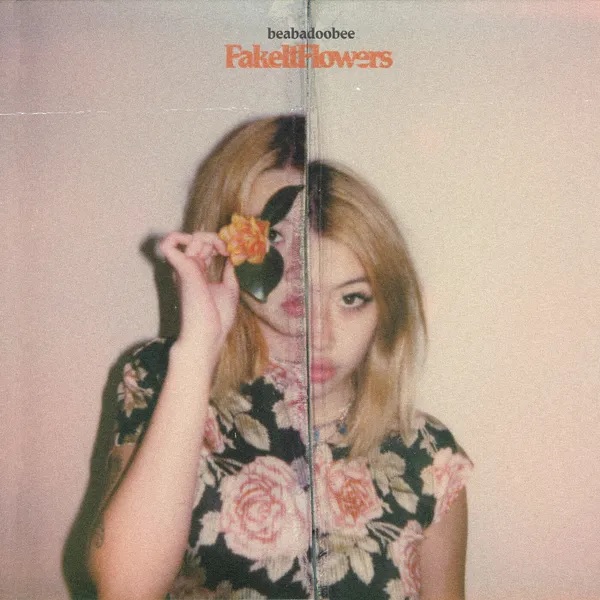
Beatrice Laus had barely been playing guitar before her bedroom revival of 90s rock music landed her on Dirty Hit. “Fake It Flowers” is a debut unashamedly indebted to that era’s hallucinogenic visions of indie flick soundtracks, but no less lit to luxuriate in for that. Beyond indulging shimmery “Siamese Dream” fantasies, the album’s brand of dream pop veritably laced with regular ribbons of dazzling, sunshine-in-the-bay melody, Laus also plays cards from the Britpop booster pack, not least ample servings of crunchy Verve-esque symphonics.
Although entirely derivative, anyone dismissing the continuing emergence of girls with guitars rebooting 90s alt-rock cornerstones may be peering past the zeitgeist, and the sound of a more utopian rock industry being built from the ground up. “Fake it Flowers” is a kaleidoscope which reveals the twin possibilities of both a Gen Z future blooming from this very launch pad and, conversely, a fully-manifested fuzzbox of Gen X sugar not to be bettered.
I know I was travelling to work on a windswept, soaking wet December morning in 2019 the first time I heard The Weeknd’s “Blinding Lights” on the radio, the perfect setting for its cleansing, synth-pop backwash. Those were rarefied days; the song still felt new, impossible to reimagine now, and unbeknownst to us all, the world was about to be flipped on its axis. Little did we know what was coming in all senses, as that driving, gleaming titan of 80s time-warp mania would eventually be crowned as the number one entry on Billboard’s Greatest Songs Of All Time Hot 100 Chart in November 2021 as a result of its breathtaking commercial performance and seemingly neverending list of records and accolades, dethroning Chubby Checker’s game-changing 1960s hyper-smash “The Twist”; truly the unimaginable occurring in real time.
For perspective, this is a 60 year period of American cultural power, its zenith coming some 34 years before “Blinding Lights” with the Chicago Bears’ domination of Super Bowl 20 in 1986, merely a year after Ronald Reagan’s 1984 landslide victory in that year’s presidential election; the apex of American empire and projection. Among its countless other achievements, “Blinding Lights” also enjoyed the longest ever Billboard chart run by a song to top said ladder, ousting the Obama-era Millennial national anthem of consumerist nihilism and head-blunting escapism, LMFAO’s 2011 barely-named, recession-busting juggernaut “Party Rock Anthem”. All of this achieved by a former Canadian street rat and sofa surfer, now officially ascended to pop ubiquity and mega-stardom.
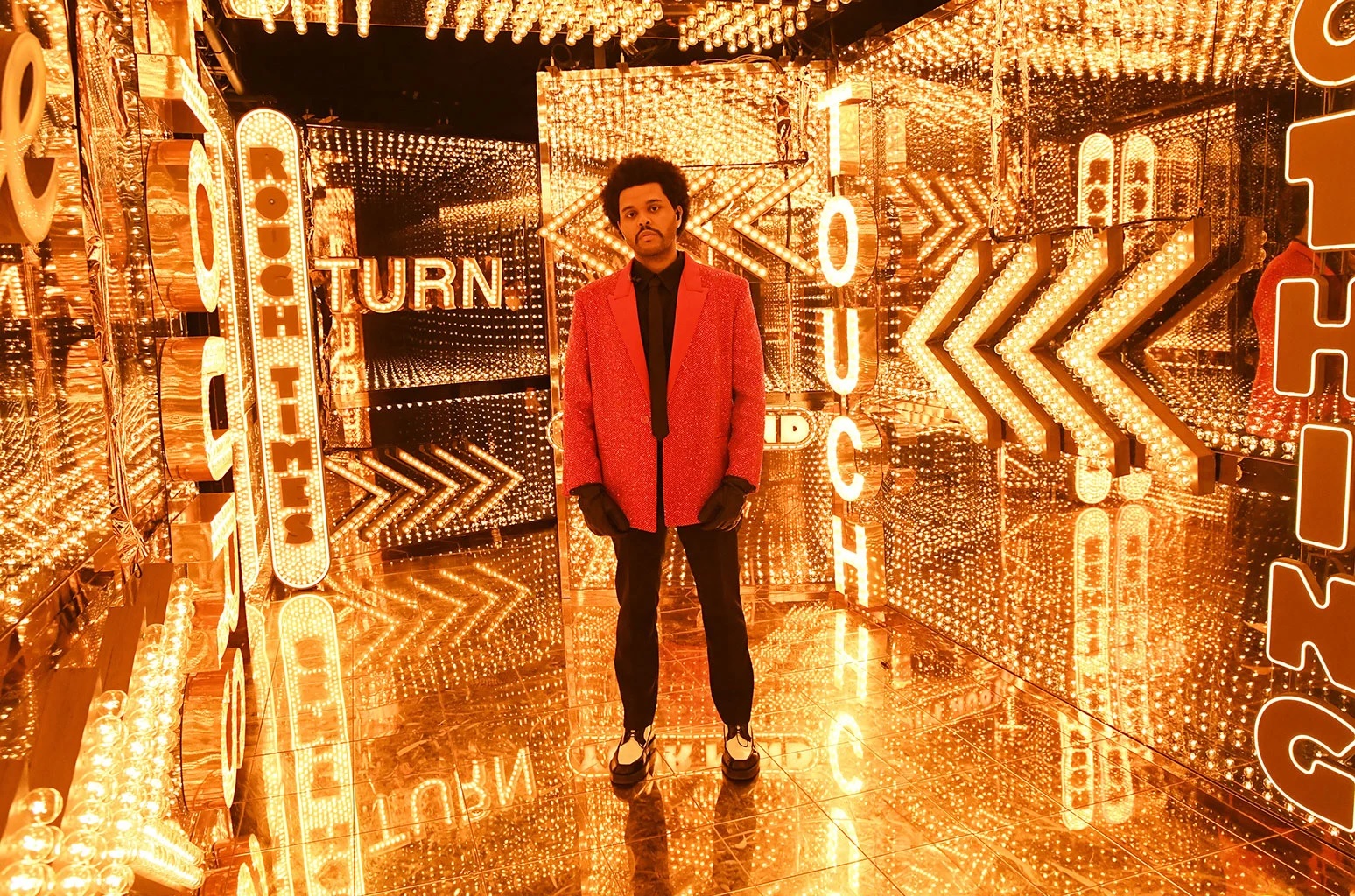
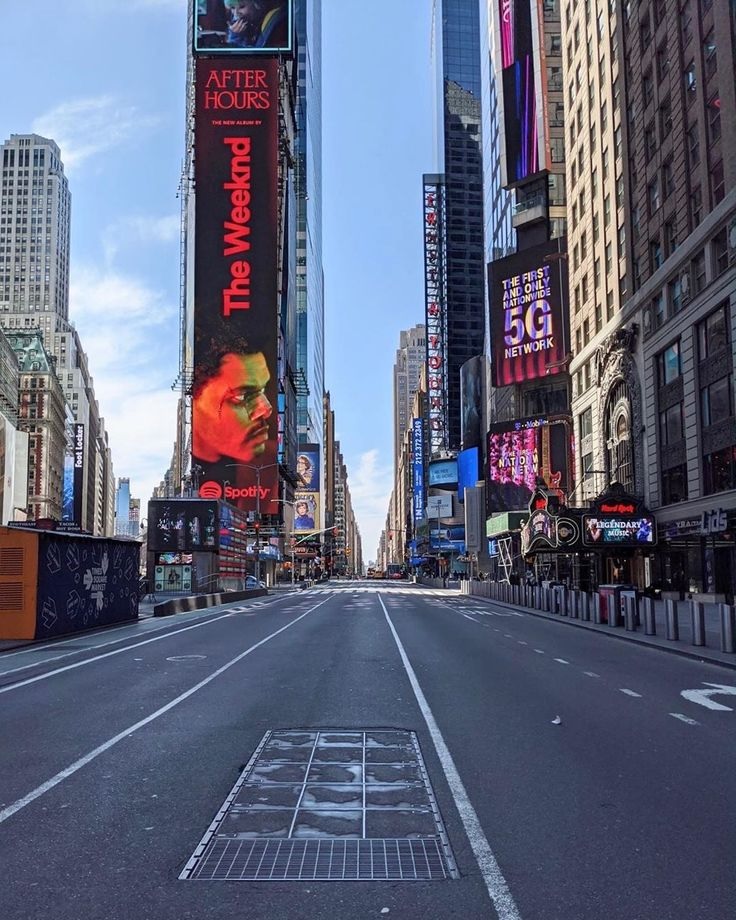
When the song’s parent album “After Hours” was unleashed in March 2020, it was released into a world where every rule had altered. It became the unintended icon of international desolation as eerie images showed towering advertisements for the record bedecking a deserted Times Square, the Crossroads of the World emptied of its usual vitality and reduced to a technicolour ode for nobody. This neatly encapsulated how things would progress for the next three months, as the album and movie pushbacks immediately began to ring in and the cultural sphere was frozen in stasis; here in the UK, the album charts were dominated by big-name compilations and greatest hits collections from across the decades as listeners sought familiar comforts and more calcified forms of nostalgia amongst an otherwise lightly-stocked market (intriguingly enough, this has continued to the present day, to a great extent). “After Hours” was the big exception, a none-more-major album release perfectly coinciding with the widespread imposition of unprecedented lockdowns, an accidental bittersweet-spot. It was The Final Album, and its stranglehold on radio, streaming and charts in such weird times told accordingly.
This commercial success was also richly deserved. “After Hours” contended for Abel Tesfaye’s strongest album to date, a tightly-sequenced cycle visually influenced by (and named for) Martin Scorsese’s imperial period and dealing very strongly in the strengths of its select producers, from the woozy psychedelic trap of Metro Boomin, which had never been utilised as progressively as here, to the nightmarish Balearic claustrophobia of long-time collaborator Illangelo on the title track. Swedish super-writer Max Martin’s three track run through “Blinding Lights”, “In Your Eyes” and “Save Your Tears” is incredible. The other notable name in the credits is Daniel Lopatin as Oneohtrix Point Never, under his OPN moniker. Here we can trace a cultural spiderweb which would feed heavily into The Weeknd’s eventual follow-up album, the seeds clearly having been planted on “After Hours”.
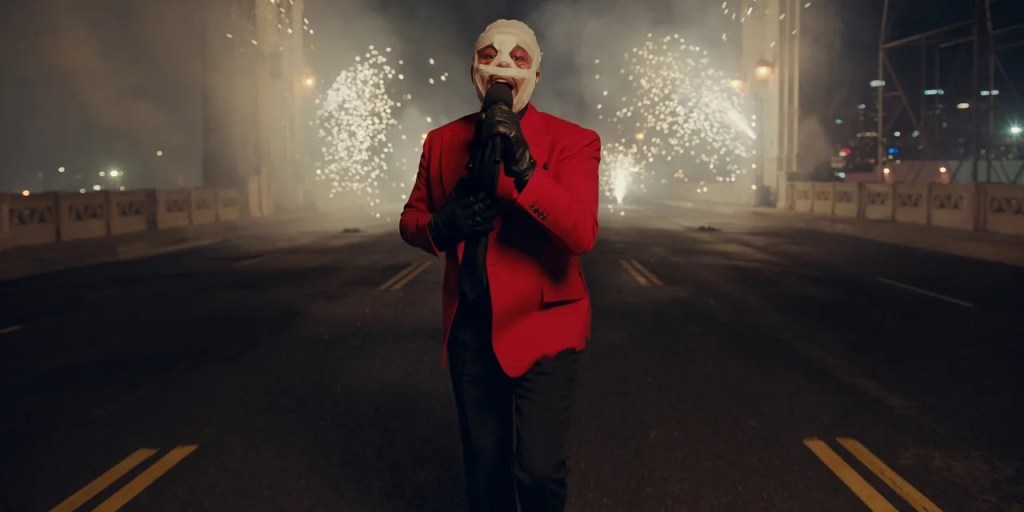
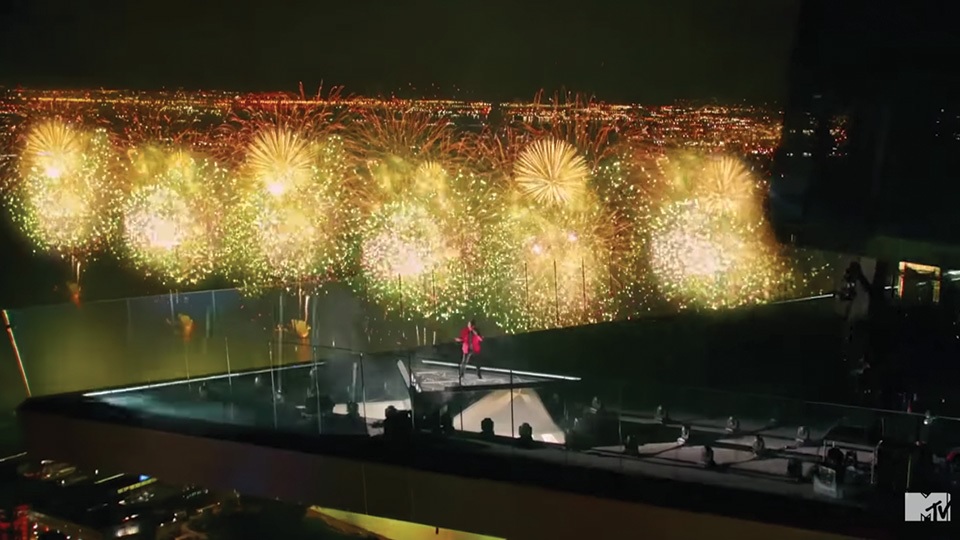
Prior to the full impact of Covid-19 being felt, Tesfaye was already keenly portraying his vision for the album and his own rapidly-developing role as a performative curator, with striking turns at late night talk shows allowing him to realise the aesthetical and character-driven aspects surrounding the songs within. Undeterred by the new circumstances the record was ultimately born into, he fully embraced the opportunity to utilise space, isolation and emptiness, qualities which resonated thematically with his entire oeuvre of work, and seized the imagination of the song-streaming public with performances such as that at the 2020s AMAs and VMAs, the latter a dizzying “Blinding Lights” atop Manhattan, which it is not an exaggeration to call one of the most significant historical performances ever, an essential time capsule moment.
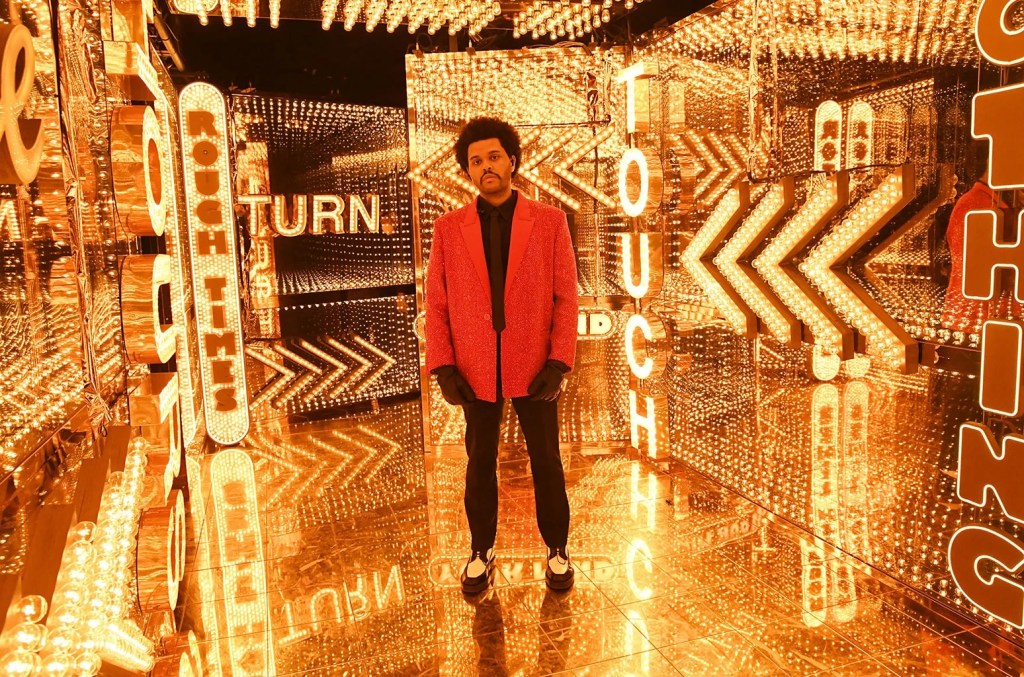
Realistically, all of this was building to February 2021, as the emergence of numerous variants meant the pandemic continued to burn, the rollout of vaccines only then in its infancy. I mentioned the Super Bowl earlier and the capacity of that event to beam American soft power around the globe, even if through the use of a Canadian artist from within the orbit of its pop-cultural ecosystem, has only heightened in the intervening 35 years. Cue Super Bowl 55 in Tampa Bay, Florida, the lowest-attended Super Bowl in history. A less than half-empty Raymond James Stadium was the setting for the main event spectacular of the “After Hours” era, into which Tesfaye reportedly poured his own money in order to achieve the appropriate sense of scale. The disorienting, technically stunning show will once again be must-see viewing for any studying pandemic pop culture, its lack of guest performers lending it singularity and the hollowed-out stadium setting which comprises its unfortunate backdrop will hopefully remain totally unique. In The Weeknd’s trajectory this is a glorious moment, of course never to be topped in terms of eyeballs, and a logical endpoint for the promotional journey of “After Hours”.
The Weeknd’s place as the defining star of the Covid-19 pandemic is only cemented further by his newest album, albeit in photo negative terms. Conceptually, “After Hours” did already touch upon the idea of the transitionary. Moments such as the coda of “Faith”, a song which effectively strings together four differing choruses, particularly perfectly marry the musical and lyrical ideas of moving beyond, which the track subsequently does as it dissolves into “Blinding Lights”, that obvious centrepoint, though this wasn’t a clearly signposted jumping-off point. Nonetheless, The Weeknd’s January 2022 follow-up “Dawn FM” undoubtedly doubles down on the purgatorial, and on several of the artistic routes first burrowed on the previous album. Dropped with little warning at the turn of this calendar year, the record is more formally a concept album than anything previously attempted by Tesfaye, ostensibly a radio broadcast in the holding pen between lives, with Jim Carrey as the DJ. Max Martin’s fingerprints are once again all over the album and Swedish House Mafia are incorporated into the process, on the heels of their canyon-sized Weeknd collab “Moth To A Flame”.
However, OPN is promoted into an executive producer’s seat alongside Martin, and this quickly shows. Tesfaye met Lopatin when appearing in the Safdie Brothers’ excellent 2019 movie “Uncut Gems”, which was scored by Lopatin. This relationship evidently blossomed through their aforementioned teamwork on “After Hours” and makes a lot of evolutionary sense for both men. On this evidence, “Uncut Gems” is the gift that keeps on giving, with Josh Safdie even appearing here on the interlude “Every Angel Is Terrifying” as fictional director Arthur Fleminger. The track teases the idea of a follow-up album entitled “After Life”, with Tesfaye having confirmed his vision of the albums constituting a thematic trilogy.
OPN is an exquisite choice to soundtrack The Weeknd’s exploration of liminality, spurred by the pandemic experience. “Dawn FM” is a genre tour-de-force, more dance-heavy than “After Hours” with a delicious Daft Punkian sheen, a continuing sharp focus on synthwave, pulling further influences from across the spectrum in the form of funk, drum and bass, RnB, disco, electropop and city pop, among many others. Unsurprisingly given its themes and structure, it is a love letter to FM radio. OPN’s handiwork is thus tellingly evident, based on Lopatin’s own career. The cannibalising of Japanese city pop here evokes vaporwave, within which Lopatin was a kingmaker with his 2010 opus “Chuck Person’s Eccojams Vol. 1” a transcendent document of the movement. His work, while varied, has rarely strayed all that far from such resonances, with the 2015 masterpiece “Garden Of Delete” another white-knuckle ride through the detritus of pop nostalgisms. The trajectory from obscurely seminal wildcard works to ushering through the artistic desires of the world’s biggest pop star is sadly a little-travelled road, but it is an extremely inspiring one to observe in this context. Weeknd completists will also want to hear “No Nightmares” from 2020’s “Magic Oneohtrix Point Never”, another key entry in the OPN canon.
These stylings strike me throughout “Dawn FM”, which has an incredibly liquid, amorphous sound, its sonics seeming impossibly, mystifyingly malleable. This holds a mirror to the ideas behind vaporwave, specifically in terms of the reliability and meaning of memory. A track like “How Do I Make You Love Me?” seems to run at a different speed every time I listen to it, dependent on mood, time of the day and countless other variables. This is extremely thrilling and lends infinite repeat value. Some of The Weeknd’s strongest material is contained within, as recognised by critics, with the record drawing Tesfaye’s greatest acclaim since the visionary 2011 debut “House Of Balloons”. “Less Than Zero” is arguably the finest song he has ever written, the near-closer before Carrey ends the album with a gorgeous narration. “I Heard You’re Married” is a supremely-crafted pop song with room for guests this time, Lil Wayne slotting in seamlessly here, and Tyler The Creator of all people on “Here We Go…..Again”. “Sacrifice” is a vamping Swedish House-helmed vault which flips Alicia Myers’ 1981 hit “I Want To Thank You”, with the unusual interpolation of that tune’s piano melody into the chorus vocal.
The first track from “Dawn FM” to have mass exposure was “Take My Breath”, an asphyxiation fantasy indulgence transmitted from Planet Banger in the summer of 2021, lathered with climbing Giorgio Moroder beats and sweltering hooks. It felt of a piece with “After Hours”, but pushing unmistakeably into the beyond. Max Martin had done his thing on it once again. It drew acclaim, as has come to be expected. So then, how do we go about explaining a Billboard peak at number six, or a highest chart bow at 13 in the UK, both countries where “Blinding Lights” especially but indeed all songs untethered from “After Hours” were all-conquering? “Dawn FM” has followed a pattern of countless artists throughout the annals, achieving critical adoration but alongside some commercial regression. This should of course be contextualised in this case; the album capped the UK album charts but in the US, despite a strong start as expected, it could only find number two, held off the mountaintop by Gunna’s “DS4Eever”, which immediately seemed symbolic of its lethargy and lack of commercial stamina when compared to “After Hours”.
Put simply, the world has altered once again. The pandemic is not over, but it looks a lot different in the middle of 2022 to even six months ago, let alone two years previous. In recent times, the popularity of the “Liminal Spaces” bot on Twitter has been no surprise, though it recently endured the inevitable backlash from hair-splitters alleging that numerous of its shared photos did not truly represent liminality, despite its hit rate seeming very stellar to me. Some suggested that academia was at fault for the newfound popularity and supposed misuse of the term, but this seems to ignore a sizeable elephant in the room. People see liminal spaces around them as en masse we have spent around two years teetering on some threshold of transformation, and the explanation doesn’t seem any more complex than that to me, particularly a genuinely universal experience which cannot be faithfully replicated. It is clear that The Weeknd understood this from the conceptual casing of “Dawn FM”.
One of the most impeccable liminal experiences available previously was engaging in international transit and airport travel. In a classic display of Crap Britishness™, one of the most enraging aspects of lockdown for the British public seemed not to be the restraint of lockdown itself, but the inability to escape the country at least once a year. Again, Tesfaye has attempted to tap a subconscious interest in and even desire for liminality, which has grown more potent due to events since the turn of 2020. Having experienced lockdowns effectively from the outside in the way he did during the “After Hours” promo drive, this is unsurprising. This very deeply submerged impulse harkens to a wish for transformational social change, which mass media and culture continue to bury with stunning efficacy; the revolution many anticipated as a result of the onset of pandemic, a supposed dry run of climate change disaster or a restructuring of social justice a la the post-war settlement on fast-forward, has never materialised, indeed quite the reverse. Everything is liminal in this seemingly endless era after the 2008 financial crash, the day-to-day evocation of the iconic Antonio Gramsci quote; “the crisis consists precisely in the fact that the old is dying and the new cannot be born; in this interregnum a great variety of morbid symptoms appear”.
In terms of quality, the writing and stylistic routing on “Dawn FM” matches that of “After Hours”. The album is just as brilliantly realised and none of its ideas can be said to be underdeveloped, even if they are sometimes more fragmentary; “Dawn FM” whips through a series of miniaturised tracks shortly past its halfway point, granting constitutional distance from the preceding longplayer. The secret lies in the timing; much like the lifespan of “After Hours” is indelibly informed by the setting into which it accidentally landed, “Dawn FM” pursued conceptual avenues with expert subtlety, but into a world where the Omicron variant would soon be on the verge of at least partially burning out, and people had become tired of even acknowledging that a pandemic was ongoing. In this way it is always important to be careful what you wish for, just as British tourists at the time of writing are discovering what travel chaos truly looks like at the nation’s airports.
“Dawn FM” is an excellent album and one of the year’s best to date; this is only an attempt to dissect its mainstream underperformance relative to “After Hours”. Between them, in these differing manners, they define The Weeknd as the Pandemic Popstar; as a mass culture we experienced this bizarre period of complete upheaval and uneasy boredom through the lens of his finest artistry to date. The long-delayed “After Hours ‘Til Dawn” stadium tour will finally commence in summer 2022, with the clear promise of continuing the showmanship and ambition Tesfaye evidenced throughout 2020 and 2021, culminating at the Super Bowl. I believe this will recalibrate the tracks from “Dawn FM” as part of the wider journey of the purported trilogy as a whole, and promises to jolt audiences into taking a second listen. The rest of the story is still to be written, but it would be hard to swallow if the conclusion is that this still-evolving coterie of music is preferred in isolation rather than communally.
A certain streaming service(!) recently informed me of my most-played song of 2021, which I suspect was a runaway winner. “Unlock It” by Charli XCX lurks at 8th in sequence on the 2017 future-pop blueprint and perfectly-titled “Pop 2”, taking cues from Ornette Coleman and Refused in terms of prophetically named genre statements. A track buried away on an album more than three years old, in our age of relentless infotainment and wafer-thin attention spans, ought to stand little chance of burrowing into any discourses, but in some cases cream does rise to the top.
Charli has herself acknowledged the cult fandom of “Unlock It” and its widespread perception, at least in the eyes of her fanbase, as her finest track, a reputation which has developed organically. This has been heightened and bolstered by the track’s popularity on TikTok, where a fine but inferior alternative cut, the Jeff Prior Mix, ranked among the app’s most-played songs of 2021 in the UK. Irrespective of this disparity in versions, my experience would seem to have been something of a universal one. “Unlock It” was already soaring when it took on a new relevance and eerie synchronicity during the deepest and darkest UK lockdown across winter 2020/21; certainly this was when I was most regularly hammering the track and dreaming naively of a summer that has yet to arrive, of parties as extravagant and free as those Charli has powered both her music and aesthetics on the basis of. Clearly I was not alone in that.
“Pop 2” as an album opens an already acclaimed trilogy of records completed by “Charli” and “How I’m Feeling Now”, the album de jour of the original worldwide lockdown (during which it was recorded in self-isolation across six weeks). Only time will tell whether this output represents the apex of XCX’s oeuvre, though we hope not, but as an already adored trio at the zenith of the hyperpop sub-genre, and one which stands to enhance its iconicity over time, this may be the case. This is not least as Charli has indicated her possible intention to pivot away from hyperpop on the upcoming 2022 album “Crash”, with tracks such as “Good Ones”, the heavyweight feature-blast “New Shapes” and equally star-studded Jax Jones and Joel Corry collab “Out Out” all implying a melding of 80s synth-pop with the recession-era bangers of LMFAO and The Black-Eyed Peas, records Charli has not been quiet in her praise of. While the typically elusive and amorphous forms of hyperpop continue to bubble away, especially in crossover with the burgeoning digicore movement, it is also difficult not to view the tragic death of Scottish producer and seminal hyperpop idol SOPHIE early in 2021 as a curtain call of sorts.
“Unlock It” is nothing less than one of the most thrilling, and therefore by extension best, pop songs of all time. It is anchored around its gleaming, sparkling synth line from Life Sim, a bleeping, sugared-up marble-cake melody which generates butterflies flapping like eagles. It is breathtaking. Overall production comes from major Charli collaborator and hyperpop overlord AG Cook of PC Music, who bends an exquisite track out of the sheer malleability of these components. The lyrics are luminous, a freak-sized funfair which repeatedly evokes white knuckles and deliciousness (“rollercoaster ride”, “cherry maraschino”) to convey the excitement of the pursuit of true love, the sort which brings out goosebumps and makes the stomach do bungee-jumps. This is in tandem with Charli’s other trope, besides partying, which is travelling by car; “passenger seat”, “got the roof down”, “when we pit stop”. Appropriately for a song this transcendent, the metaphor extends ever so slightly further on this occasion, with the song’s most beautiful lines; “I’m feeling like an astronaut watching the world/All alone, just you and I”.
Charli’s candied vocals croon in so syrupy a fashion as to match the song’s subject matter perfectly. They are not shifted up into a hyperpop archetype on this cut, but nonetheless subtly conjure up the genre’s chief promises of possibility and transformation. The chorus consists of little more than the track’s title repeated, spliced, cut up and interlocked in a clickety-click reminiscent of the ASMR stylings of Lorde and Billie Eilish, only to a synthetic tenfold. Charli’s voice throughout is near-indistinguishable from that of Kim Petras, who, alongside rapper Jay Park, gets to appear here in central, if as mentioned somewhat obscured, form on a perfect, timeless track. “Pop 2” is utterly loaded with invitees to Charli’s circus, and “Unlock It” is no exception. The German singer delivers the second verse, though I had to double check this. For me, this can be portrayed as a neat, knowing hyperpop trick, but all the same, both artists can count their blessings for being here.
After Park’s rapped verse, which is wisely economical in refusing to distract from the song’s central thesis, we reach the escalating climax of the track, which is a rocket ship aimed squarely into the stratosphere. You would need to venture back to post-metal’s early-century prime to locate tracks with as barrelling a denouement or as wide-eyed a sense of their own epic structure. “Unlock It” in fact contains a false finish, but more on that momentarily. As the hook doubles and trebles up towards a climax, this section commences with percussive synth stabs underlaying that unforgettable main melodic line. As vocals clamber atop each other, the sense of escalation is ratcheted up hugely by, first of all, clapping drums and then hissing noise and sirens; the melodies become increasingly fluttery and stargazey, the overall mix is more and more ecstatic by the second. This constitutes an incredibly powerful, awe-inducing stretch of guaranteed Stendhal Syndrome, the likes of which can only be afforded full justice by being heard.
“Unlock It” seems to be over at a spritely three minutes, a giddy plunge over the horizon which should have you reaching instantly for the repeat button. This does not account for its gorgeous post-Burial coda, which takes proceedings closer to the four minute mark; the revivification of majestic melody, the disembodied pitched-up garage vocals floating free from the track which birthed them in a furious orgy of love and sonics, the pitch-perfect interplay between voice and percussion. This is an unexpected and excellent appendage to what would have stood as unadulterated musical bliss on its own, and worthy of the comparison to British electronic music’s greatest artist, in feeling if not in style, and it is indeed his significance as an indicator and barometer of how things “feel” which brings Burial his seismic relevance as a 21st Century artist.
I mention this especially because it is when thinking about “Unlock It”, as I have done so much over the past 12 months, that this following particular quote from consciousness-bending British documentary artist Adam Curtis about Burial’s music often comes to mind. As this shows, Curtis is an unabashed disciple of Burial, whose music has liberally scored his astounding films, from “Bitter Lake” to “Hypernormalisation”, and the superb 2021 TV series “Can’t Get You Out Of My Head”. Curtis opined of the visionary South London producer’s song “Come Down To Us”, arguably his very best work in an extremely competitive field:
“It really sums up our time…that song is saying, it’s really frightening to jump off the edge into the darkness. Both when you fall in love with someone, and when you want to change the world. And it depends whether you can live with the fear or whether you really want the thrill of it. Or whether you retreat into the world you’re happy with….it’s the mood of our time that we’re waiting for”.
This is one of the best descriptions I’ve ever seen of “Come Down To Us” as a song, of Burial’s music in general, of the 21st Century to date and most probably of music, period. It describes what all of the very best music to be recorded, which is to say a vanishingly rare collection of songs, is able to do, including pop music of course. All pop songs should have no less ambitious an aim than to encapsulate such head-spinning, generational tendencies, and Charli XCX is able to stand as a progressive and forward-thinking act who has achieved this Herculean feat at least once with “Unlock It”. This is to say nothing of the now clear link between the Lana Wachowski speech famously sampled in Burial’s track and the direction and thematic content of much of hyperpop, which I will not explore further here but which resonates forcefully in this connection.
“Unlock It” is explicitly about love, but all songs about love are about changing the world, and all songs about changing the world are about love. Curtis accidentally and miraculously captures that symbiosis with his words, and the way tracks which somehow hurdle such towering credentials feel to listen to; they create an apprehension which is life-affirming and terrifying, even on countless repeat listens. This is the magnetism “Unlock It” boasts and which will continue to pull me back into the song, through another lonely winter into 2022 and for as long as we continue to wonder when life might be the same again, if ever, but certainly for as a long as the hope and energy of adventure continue to blaze, however faintly.
Queen Bey had the universe of commercial singles locked down before morphing into an outstanding album artist with “Beyoncé” (2013) and the epochal pop album “Lemonade” (2016). Despite that, her 2018 Coachella-headline show and the accompanying all-time great concert movie “Homecoming” are merely her most recent volcanic apogee. We just welcomed her back into active public consciousness with the rocket-powered Juneteenth smash “Black Parade”.
Most recent: “Lemonade” (2016)
You’ll also need to hear this: “Beyoncé” (2013)
9. Frank Ocean
A one-album superstar after “Channel Orange”, Frank outdid himself with 2016’s spectacular bedroom RnB fantasia “Blonde”. Nobody charts the mountain ranges of Millennial relationships with such devastating, surgical insight, across a gold rush of sublimely crafted pop, soul and rhythm and blues songs with a decisive indie flair. An utterly elusive live act who seems currently settled on an evolving puzzlebox of single releases, Frank continues to be a beautiful phenom.
Most recent: “Blonde” (2016)
You’ll also need to hear this: “Channel Orange” (2012)
8. Deftones
The dream-weaving Sacramento alt-metallers peacock their myriad influences and are poster boys for the tentative critical reassessment of nu-metal currently gathering steam, but ejected from the genre’s orbit way back with their 2000 classic “White Pony”. The 2010s saw them release three albums comprising their finest work to date. No other metal band can quite match the aerodynamics of Stephen Carpenter’s guitar playing or Chino Moreno’s impassioned vocals.
Most recent: “Gore” (2016)
You’ll also need to hear this: “White Pony” (2000)
7. Bon Iver
Justin Vernon has well-established pedigree for melding the sacred with the supposedly tasteless, seamlessly marrying Autotune and yacht rock to the unlikely realms of indie folk and art rock before anyone else dared. It doesn’t hurt that he is a once-in-a-generation songwriter with an inimitable ability to bend the very contours of what constitutes a melody or a song and is on an increasingly expressionistic streak of album writing most recently extended by the jigsaw-esque “i,i”.
Most recent: “i,i” (2019)
You’ll also need to hear this: “22, A Million” (2016)
6. Death Grips
Nobody else has sounded like the first truly futuristic band of the 21st Century since they blasted out of Sacramento in the early 2010s as the most profound cultural response to the nightmare of late capitalism. Providing vital reworkings of punk and hip hop simultaneously, with a trenchantly electronic focus, and the source of a veritable production line of music lore memes replicating like grey goo, Death Grips are the leaders of a Transatlantic collective of acts proving that angry men need not be regressive.
Most recent: “Year Of The Snitch” (2018)
You’ll also need to hear this: “The Money Store” (2012)
5. Lana Del Rey
The critically deified “Norman Fucking Rockwell!” is the culmination of a decade of work from Del Rey flavoured with literary aspiration and interrogating the exceptionally dark side lurking behind chocolate box Americana. Del Rey’s magnum opus, marking her out as the nation’s finest songwriter, is a fascinating, multi-storey character study which delves into a national psychology and finds a dysfunctional America which is perpetually 33 years old.
Most recent: “Lust For Life” (2017)
You’ll also need to hear this: “Norman Fucking Rockwell!” (2019)
4. The Hotelier
At the vanguard of the 2010s emo revival, these Worcester, Massachusetts upstarts exclusively craft life-affirming, emotionally turbulent rock music. In an era where guitars have been largely eschewed in popular music, “Home, Like Noplace Is There” (2014) and “Goodness” (2016) are rare gemstones of a contemporary folk mythology constellating across white suburbia. The Hotelier are the finest band in the United States of America.
Most recent: “Goodness” (2016)
You’ll also need to hear this: “Home, Like Noplace Is There” (2014)
3. The Weeknd
Since emerging with a store-ready mystique on 2011’s “House of Balloons”, Scarborough, Ontario’s Dark Knight has elevated the fusion of musicality and aesthetics to unrivalled heights, remunerated with a dominant chart presence. The ever-woozy, cinema-indebted “After Hours”, the international smash hit album of the Covid-19 pandemic, is his best work yet, finally locating a slippery sweet spot between 80s pop nostalgia and the multi-suite darkwave RnB which minted his name.
Most recent: “After Hours” (2020)
You’ll also need to hear this: “House Of Balloons” (2011)
2. The 1975
More than any other act, The 1975 have articulated the way digital culture has influenced reality and vice versa; the unspeakable synthesis. As if harnessing a sonic singularity, the band seems kitted out to plug into genres at will without ever losing fidelity. Their supercharged fourth album “Notes On A Conditional Form” deeply explores the crossover between underground electronic music and pop while charting the band’s evolution into the world’s best. All three of their previous records are dyed-in-the-wool future classics.
Most recent: “Notes On A Conditional Form” (2020)
You’ll also need to hear this: “A Brief Inquiry Into Online Relationships” (2018)
1. Kendrick Lamar
The world’s foremost musical artist, having released the 2010s’ most acclaimed album in “To Pimp A Butterfly” in 2015, before becoming the first non-jazz or classical artist to win the Pulitzer Prize for Music with 2017’s follow-up, “DAMN.” Lamar then curated the soundtrack for Marvel’s ground-breaking “Black Panther” movie. To say we eagerly await the next step of a performer so expertly chronicling an era of such dizzying tumult from his lofty pinnacle would be some understatement.
Most recent: “DAMN.” (2017)
You’ll also need to hear this: “To Pimp A Butterfly” (2015)
As an artist, Travis has become a creative centre of gravity, filtering the finest contributions out of all collaborators. His ability to synthesise and refract influences and shades of detail have rendered his own albums exponentially superhuman, while his notorious live show, which went digital to wide acclaim during lockdown, further fosters a youthful solidarity and community from the jaws of the lurid debris of capitalism. He is now a fully-fledged crossover star, as evidenced by Rosalía’s current hit “TKN”.
Most recent: “Astroworld” (2018)
You’ll also need to hear this: “Birds In The Trap Sing McKnight” (2016)
19. Kanye West
Where to start? For seven albums across 15 years, West lived up to his controversial billing as a musical genius, constantly challenging audiences with the most sublime, trend-setting records in pop and hip hop. Few in history can claim to have influenced so many disparate movements and generations with every release. Recent albums, while still confrontational and surprising, suggest his exceptionally high peak is in the rearview, but he continues to shine sparingly as a producer.
Most recent: “Jesus Is King” (2019)
You’ll also need to hear this: “My Beautiful Dark Twisted Fantasy” (2010)
18. Tool
Los Angeles alternative stalwarts Tool have been a towering act in metal and rock with only four more momentous albums since the 1993 debut “Undertow”. After a 13 year hiatus, 2019’s “Fear Inoculum” may feature the best individual work from all members. Over a decade, my doomed quest to locate the motherlode of Tool’s amplified aesthetic, summoned by guitar pyromancer Adam Jones, has sent me down a who’s-who spiral of seminal alt bands from Melvins to Helmet, Failure to Primus, and back again.
Most recent: “Fear Inoculum” (2019)
You’ll also need to hear this: “Lateralus” (2001)
17. Radiohead
Radiohead would have contended to top this list for a decade or more following the release of the 1997 landscape-altering warhead “OK Computer” through 2007’s gorgeous “In Rainbows”, as they repeatedly released the finest, most fascinating albums in popular music, gateways to the experimental reaches of countless genres for generations of music fanatics. They continue to be compelling, appointment-listening every five years or so; true guardians of the form.
Most recent: “A Moon Shaped Pool” (2016)
You’ll also need to hear this: “Kid A” (2000)
16. Kate Tempest
England’s Poet Laureate-in-waiting already boasts a catalogue of rewarding albums of steadily fizzing musicality and playful, rhythmic wordplay, but to call her such assumes anything other than disdain for establishment. Contrarily, Tempest yearningly rues societal decay at every turn. 2019’s “The Book Of Traps & Lessons” is a masterpiece of engaging musical scores and barely-veiled Brexit metaphors, climaxing in the devastating career-best crossover “People’s Faces”.
Most recent: “The Book Of Traps & Lessons” (2019)
You’ll also need to hear this: “Let Them Eat Chaos” (2016)
15. Lil Uzi Vert
Lil Uzi has risen to the apex of a group of exciting young rap artists blurring the lines between hip hop, pop, rock and emo, partly because most of the others died before reaching 22. That said, his hyperspeed, technicolour “Eternal Atake” and the accompanying “Luv vs. The World 2” tape see him largely abandon some of those previous emotionally fraught leanings for a saucer-eyed freakout of breakneck rapping and accelerationist consumerism. The results are head-spinning.
Most recent: “Eternal Atake” (2020)
You’ll also need to hear this: “Luv Is Rage 2” (2017)
14. Sleaford Mods
The Nottingham duo’s no-holds-barred insights into austerity Britain are the most critical update to punk since it was first scraped off the walls of 70s London. The glorious alchemy of Jason Williamson’s excoriating, oft-hilarious lyricism and Andrew Fearn’s knuckle-dragging bass beats has hit enough chords to entrench the Mods as unlikely repeat occupants of the UK album chart top 10. The pair are indisputably one of music’s most essential, unique contemporary acts.
Most recent: “Eton Alive” (2019)
You’ll also need to hear this: “Divide & Exit” (2014)
13. Everything Everything
Manchester’s pre-eminent prophets of poptimism are quietly building one of the finest canons in contemporary rock-based music while subsuming influence from everything but. Brandishing a baton yielded by Radiohead, the band are fuelled by Jonathan Higgs’ ear for maximalist melodies and eye for a wicked sociocultural take to ram into his regularly madcap lyricism. These dispatches from the new model island are equal parts academia and dystopian entertainment.
Most recent: “A Fever Dream” (2017)
You’ll also need to hear this: “Get To Heaven” (2015)
12. Meshuggah
Hailing from the rich metal heritage of Umeå in the Swedish north, the progressive metal titans may boast the most definitively signature sound in all of music. Nobody but nobody sounds like the palm-muted landslides and polyrhythmic tidal waves of Meshuggah’s monstrous compositional mania. Pioneers of the djent sub-genre, their albums have been untouchable explorations of seriously deep groove and syncopated insanity for decades now.
Most recent: “The Violent Sleep Of Reason” (2016)
You’ll also need to hear this: “Koloss” (2012)
11. Björk
The chameleonic Reykjavik siren songstress is nine albums deep, and her most recent, 2017’s “Utopia”, may be her most blissful yet. Although she never truly missed a step, her recent partnership with electronic trailblazer Arca has, somehow, brought even more illuminating scope, panorama and scale to Björk’s experimentation. Hers is one of the most vibrant, enriching and consistent discographies of any artiste out there.
Since inheriting the folk-metal throne from Falkenbach, Moonsorrow’s colossal sound has outlasted major challengers such as Primordial and Agalloch and continues to withstand a spirited current attack from Celtic folk metal masters Saor. After so many years, their every album is event-listening for the extreme metal community, and all are unparalleled in scale, energy and vision; the very best band from Finland’s world-leading metal scene.
Most recent: “Jumalten Aika” (2016)
You’ll also need to hear this: “Verisäkeet” (2005)
29. Charli XCX
With her latest records of titanium-coated space pop, Charli is caressing and coaxing chart music into its inevitable future; party music aching with empathy and longing, its vulnerability candying in the breathless gaps between slamming production and digitally decaying vocals. “Charli” (2019) is her futurist pop manifesto, “How I’m Feeling Now” (2020) will be the lockdown album du jour. Charli has tirelessly written her way to the near-top and is hopefully just getting warm.
Most recent: “How I’m Feeling Now” (2020)
You’ll also need to hear this: “Charli” (2019)
28. Perfume Genius
Mike Hadreas has flown a flag for outsiders everywhere from the days of his lo-fi emergence a decade ago to 2020’s instant classic “Set My Fire On Fire Immediately”, which may cement him as the headline act of excellent NYC label Matador against stiff competition from his peers. Comfortable orienteering baroque, glammed-up chamber pop and smoky Zeppelin-esque segues in equal measure, this ever-improving indie helmsman is one breakout hit song, which nearly came with 2014’s “Queen”, from a surprising future as an arena act.
Most recent: “Set My Heart On Fire Immediately” (2020)
You’ll also need to hear this: “No Shape” (2017)
27. Julia Holter
Los Angeles-based Julia Holter was already one of America’s most exciting experimental talents prior to 2018’s “Aviary”, the multitudinous meditation on medieval memory which saw Holter carving out a liminal space even further down the evolutionary vein of irresistible avant-garde mined on 2013’s “Loud City Song”, after the more traditionally structured “Have You In My Wilderness” brought her a wider audience in 2015. All limits to her sound have now been shed.
Most recent: “Aviary” (2018)
You’ll also need to hear this: “Loud City Song” (2013)
26. Tyler The Creator
Tyler manifested a decade ago as an enigmatic but dastardly provocateur who seemed a bit lost for a couple of albums. Few have settled into a niche as comfortably as he now has. He could maintain a cult following for years releasing albums in the style of “Scum Fuck Flower Boy” (2017) and “Igor” (2019), understatedly beautiful records which repurpose the forms and techniques of hip hop to interrogate feelings and demographics around male loneliness.
Most recent: “Igor” (2019)
You’ll also need to hear this: “Scum Fuck Flower Boy” (2017)
25. Solange
As Beyoncé seemed to complete her conquering of the planet with the universally adored “Lemonade” in 2016, her sister finally harnessed her own talents into an opus of similar stature. “A Seat At The Table” deep-dived into the lived tribulations of black American women and gleamed with a nourishing, inestimably vintage sound which made it sound like we’d known it forever. “When I Get Home” (2019) continued the trend from a musical family we barely deserve right now.
Most recent: “When I Get Home” (2019)
You’ll also need to hear this: “A Seat At The Table” (2016)
24. Converge
Three decades in, the Salem, Massachusetts metalcore overlords boast a span of albums with which few can compete. Almost 20 years after their defining classic “Jane Doe”, they have continued to bolster their highly accomplished musicianship and increasingly thoughtful lyricism behind the twin pistons of guitarist Kurt Ballou, maven of frenzied, razor-wire guitar riffing and now a producer of immense clarity in the worlds of metal and experimental music, and extreme music pin-up and frontman Jacob Bannon’s seismic, throat-shredding vocal work.
Most recent: “The Dusk In Us” (2017)
You’ll also need to hear this: “Jane Doe” (2001)
23. Tame Impala
Kevin Parker (“did you know Tame Impala is just one guy?”, as the music nerd meme goes!) may once have been a rock kid but has now been fundamentally turned by his time deep behind pop lines. Tastemakers already couldn’t get enough after “Lonerism” (2012), and giving in to his inability to resist giddy, luminescent melody saw “Currents” (2015) turn him into a go-to collab for pop music’s biggest names. “The Slow Rush” (2020), an incredibly topical treatise on time, is all vamping, intergalactic beats and electronic euphoria.
Most recent: “The Slow Rush” (2020)
You’ll also need to hear this: “Currents” (2015)
22. The National
While hailing from Cincinnati, Ohio, big budget indie giants The National came to outstrip the false dawns of The Strokes and Interpol to become the definitive soundtrack of big city living post-9/11. Matt Berninger waxed lyrical about the glamour and boredom of young professionals before the band bottled a dusty, cinematic aura which flowed to some centre on “Boxer” (2007) and “High Violet” (2010). Their most recent albums more playfully stumble across a capacity to surprise.
Most recent: “I Am Easy To Find” (2019)
You’ll also need to hear this: “High Violet” (2010)
21. Ulcerate
The New Zealand trio conjure up jaw-dropping power on record. Their sound is a post-metal melee, a big tent pitched at the atmospheric mid-point between death metal and sludge, with listeners liable to lose footing amid the technical and structural chaos modelled on the utterly disorientating innovations of Gorguts, Portal and Deathspell Omega and the powerhouse drumming of creative engine room Jamie Saint Merat. 2020’s “Stare Into Death & Be Still” may be their best yet as they play with increased melody to astonishing effect.
Most recent: “Stare Into Death & Be Still” (2020)
You’ll also need to hear this: “The Destroyers Of All” (2011)
Nobody, not even Kanye West, has shaped the sound of current American chart music more forcefully than Future since he arrived as a fully-formed modern-day bluesman for the trap generation. A revolutionary artist still churning out records of cast-iron consistency, Future crammed in an underrated collab tape with Juice WRLD in 2018 before Juice’s tragic passing, turned in an arguable career crescendo on the 2019 FKA Twigs cut “Holy Terrain” and continues to average at least an album per year.
Most recent: “High Off Life” (2020)
You’ll also need to hear this: “DS2” (2015)
39. Iceage
Once described as the most dangerous band in the world by Iggy Pop, the Copenhagen outfit’s punk-rooted music is aflame with poetic heft and beaming musicality, transmogrifying from a firebrand modern hardcore sound into a sophisti-rock mould incorporating post-punk, jazzy stylings and various other arthouse leanings, perfected on “Plowing Into The Field Of Love” (2014) and “Beyondless” (2018). These boys look poised to continue to cultivate their profile with class.
Most recent: “Beyondless” (2018)
You’ll also need to hear this: “Plowing Into The Field Of Love” (2014)
38. Run The Jewels
The incendiary eloquence of Killer Mike has positioned him as one of America’s most significant modern rappers after a long rise. Underground veteran El-P is no slouch, bringing cocksure witticisms and future-funky bombshell production to the table. The duo are on a seemingly intractable run of self-titled calls-to-arms dripping in swagger, steel and style; it’s the very best of political party music anchored in an effortlessly charismatic chemistry between the tandem.
Most recent: “Run The Jewels 4” (2020)
You’ll also need to hear this: “Run The Jewels 3” (2016)
37. Deathspell Omega
The mystical French collective have been a unique force in black metal for a long time and boast an expansive catalogue of material showcasing the most dizzying, nauseating guitar dynamics in music. Concluding a stream of records lyrically focused on the theology of God, Satan and humanity, the band switched to political themes on 2019’s “The Furnaces Of Palingenesia” as their shrouded membership came under heightened scrutiny, but the band remains a staggeringly dense lodestar for extreme music.
Most recent: “The Furnaces Of Palingenesia” (2019)
You’ll also need to hear this: “Paracletus” (2010)
36. Arca
Venezuelan producer Arca has defined the future sound of electronic music through her albums “Xen” (2014) and “Mutant” (2015) before delivering one of the most exhilarating curveballs of the 2010s by lacing the wartorn dynamics and brooding, Lynchian textures of her ever-shifting compositions with haunting vocal work on 2017’s excellent self-titled album. As well as steering Björk in new sonic directions of late, Arca has just undertaken another left-turn into what can be broadly termed pop on the new album “Kick I”.
Most recent: “Kick I” (2020)
You’ll also need to hear this: “Arca” (2017)
35. J Hus
J Hus is flying low on so many radars right now. The London rapper and singer and his collaborative producer Jae5 have brought new linguistic and musicological possibilities to the UK hip hop scene with two white hot albums defined by an effervescent studio sound, midwifing the nascent Afroswing movement in the process, and unlocking a wave of burgeoning young acts headlined by Coventry rookie Pa Salieu. You’d have to look to Nigeria’s Burna Boy to find Hus’ only contemporary right now.
Most recent: “Big Conspiracy” (2020)
You’ll also need to hear this: “Common Sense” (2017)
34. Oranssi Pazuzu
Mashing psychedelic rock, black metal and the backwater prog of Swans into a monolithic, snaking curiosity come Finland’s Oranssi Pazuzu. Steadily gathering momentum in the metal world, the band struck gold on 2016’s “Värähtelijä” and are now back with the equally gargantuan “Mestarin Kynsi”, an oft-bonkers, hulking slab of spaced-out, nightmarish chaos. This is an ambitious, complex band with a likely big future of similarly significant statements ahead of them.
Most recent: “Mestarin Kynsi” (2020)
You’ll also need to hear this: “Värähtelijä” (2016)
33. FKA twigs
Tahlia Barnett is a singular force, merging contemporary RnB and a hive-mind of star electronic artists to forge an uncompromising, extraterrestrial blend of avant-garde music. Her commitment to her art, as musician, dancer and visual sorcerer, is unquestioned, and on the painstakingly crafted “Magdalene” (2019) she ascends to a magnetic career zenith best highlighted by the album’s stunning closer “Cellophane”, which was instantly acclaimed as one of the finest songs of the 2010s.
Most recent: “Magdalene” (2019)
You’ll also need to hear this: “LP1” (2014)
32. Deafheaven
The San Francisco collective took to the stratosphere with 2013’s instant classic “Sunbather”, the shimmering, shoegazing epic which is one of the most widely acclaimed metal albums of all time and proved that black metal could be as American as apple pie. The band have been remarkably consistent and, in “Ordinary Corrupt Human Love” in 2018, added their second classic, rifling expertly through post-rock, post-metal and a dreamy blackgaze sound they have immortalised.
Most recent: “Ordinary Corrupt Human Love” (2018)
You’ll also need to hear this: “Sunbather” (2013)
31. The War On Drugs
With 2017’s “A Deeper Understanding”, Adam Granduciel impossibly refined the trippy, panoramic Heartland renderings of 2014’s “Lost In The Dream”. The group is now defined by tightly-confected, skyscraping song structures loaded with foreshadowing of never-promised finalities, lyrics which evaporate on contact with air, statuesque peaks of crystalline instrumentation and Rust Belt evocations painted contemporarily with a veritable Springsheen.
Most recent: “A Deeper Understanding” (2017)
You’ll also need to hear this: “Lost In The Dream” (2014)
Welcome to the inaugural entry in the Michael Johnson Power Rankings, my subjective countdown of the 50 greatest acts in music based on the admittedly vague notion of “artistic momentum”! My intention from here is to update these rankings biannually, on the 1st of January and 1st of July each year. I figured this would be fun and informative and will provide both myself and anyone who reads this with an opportunity to discover some great new music and great old music too, as well as tracking the glacial pace at which music acts rise and fall over many years, and the rarity with which artists powerful enough to reach the upper echelons of this poll are unseated. I very much encourage people to shout at me to ask why I did or did not include a certain artist; I will have opinions but it’s perfectly likely that I have not heard their material, and it will therefore assist me to unearth new treasures!
I only applied one cast-iron rule, which was that an artist should have at least two studio albums (or “equivalent”) to their name to be eligible for inclusion. For example, this meant that artists who released debut albums which ranked among the finest records of 2019, such as Dave and Billie Eilish, are not included here. Another factor which is not a rule as such but came into consideration for me was that the longer an act has gone without making a definitive statement, the less likely they were to make this list, which eliminated some outstanding acts such as Joanna Newsom, Daft Punk and Sigur Rós. Otherwise, an act which has gone several years without a release but which I consider highly significant may rank well above a prolific artist with a great but less engaging catalogue; it is largely arbitrary and adheres to my taste, which is why I welcome any questions!
Music fanatics will know how hard it was to leave many incredible artists and performers off this list. Not everyone could make it, but there are troves of stunning music across the careers of all of the acts below, not least in the 100 albums mentioned as recommendations! All things being well, this will be the first time of many that I do this. I already know that you can expect change in January 2021, but for now, I hope you enjoy reading!
50. Drake
Many critics allege Drake sounds tired, but he always has. On the MJ-cannibalising quarantine smash “Toosie Slide”, with the laziest ever novelty dance, he sounds dead behind the eyes, but is the same icon of an overly-medicated, inherently sad generation long embodying bleary assimilation into capitalist exuberance as captured in Mark Fisher’s immortal review of his 2013 masterstroke “Nothing Was The Same”. k-punk is gone, but Drake is still trying to tell us things.
Most recent: “Dark Lane Demo Tapes” (2020)
You’ll also need to hear this: “Nothing Was The Same” (2013)
49. Arctic Monkeys
Alex Turner has never had a tighter grip on the reins, but the rest of the band seem comfortable, likely owing to the fact that the sleek, shiny space-lounge of “Tranquility Base Hotel & Casino” soundtracks the most startling tour of the psychogeography of a hotel since Kubrick’s “The Shining”. The band have firmed up their already stellar reputation; the hyper-observational brat poet who surveyed Noughties England lives on in Turner’s now more metaphorical, but equally swoon-worthy, sociocultural prescience.
Most recent: “Tranquility Base Hotel & Casino” (2018)
You’ll also need to hear this: “Whatever People Say I Am, That’s What I’m Not” (2006)
48. Shabaka Hutchings
Rapidly becoming an icon of UK jazz and reviving the canonical Impulse! label, saxophonist Shabaka Hutchings has set the scene ablaze with Sons Of Kemet’s “Your Queen Is A Reptile” (2018), a record which channels the spirit, energy and defiance of punk and metal through jazz, The Comet Is Coming’s “Trust In The Lifeforce Of The Deep Mystery” (2019), a progressive tour-de-force, and now Shabaka & The Ancestors’ “We Are Sent Here By History” (2020), a marvellously accomplished record. Anything he now commits to tape is a must-hear.
Most recent: “We Are Sent Here By History” (2020)
You’ll also need to hear this: “Your Queen Is A Reptile” (2018)
47. JME
After 2019, the finest year in the history of British hip hop, this list would be simply incomplete without a leading light of the scene on it. Although his brother Skepta has become the genre’s elder statesman either side of the Atlantic, JME marginally has the better albums. 2015’s “Integrity>” may be the best ever British hip hop record and 2019 follow-up “Grime MC” is equally weighty from an artist who prizes authenticity and faithfulness to oneself above all else.
Most recent: “Grime MC” (2019)
You’ll also need to hear this: “Integrity>” (2015)
46. Insomnium
The Finnish outfit have no peer when it comes to the melodic death metal sub-genre. By this point, with the addition of “Heart Like A Grave” (2019), they have amassed a portfolio of albums to rival any. Theirs is one of the most emotional listens in metal, typified by cascades of tearful, lamenting guitar melody, sweeping stardust bridges and chugging power chord breakdowns laced expertly together. The secret is in the weight of feeling always counterbalancing the heaviness of sound.
Most recent: “Heart Like A Grave” (2019)
You’ll also need to hear this: “Above The Weeping World” (2006)
45. The xx
Possibly nothing influenced British music more in the 2010s than The xx’s jaw-dropping debut “xx” (2009), part of a rich lineage of UK guitar music debuts which arrived from the womb primed to shift psychic earth. The influence of their mercurial texture stretched far beyond rock, not least because it simply sounded amazing. Despite only three albums in 11 years, the trio remain essential listening as their glistening, serpentine indie takes on new colours and shades. It doesn’t hurt that Jamie xx doubles as one of the most exciting electronic artists out.
Most recent: “I See You” (2017)
You’ll also need to hear this: “xx” (2009)
44. Beach House
The Baltimore, Maryland dream pop auteurs may have numerous touchstones, but have unmistakably carved their own name into the heritage of the genre. “Teen Dream” (2010), “Bloom” (2012) and “Depression Cherry” (2015) is their classic trilogy but they continue to progress steadily; by 2018’s “7” they have more gorgeous, blissed-out numbers than you can shake a Flake 99 at (because this is aural ice cream!) and an intriguing career-long storyline regarding how percussion (the band has no official drummer) has driven their songwriting.
Most recent: “7” (2018)
You’ll also need to hear this: “Teen Dream” (2010)
43. Flying Lotus
FlyLo has long turned heads as an electronic artist breaking into new territory and has done a similar service for contemporary jazz, which has always defined the leanings of his material, reflective of his familial ties to the Coltranes. His artistic relationship with bass guitarist extraordinaire Thundercat puts him at the centre of the Los Angeles sound. His latest, 2019’s “Flamagra”, is a sprawling, diverse and jam-packed record buoyed by the character FlyLo has always brought behind the boards.
Most recent: “Flamagra” (2019)
You’ll also need to hear this: “Cosmogramma” (2010)
42. Freddie Gibbs
Gibbs is one of hip hop’s most overlooked talents, despite elucidating some of the most dexterous, velveteen rhymes in the game. The most concretely-realised amalgamations of his abilities are two albums with legendary producer Madlib, the modern crime classics “Piñata” (2014) and “Bandana” (2019), both displaying relentless lyrical talent. Gibbs just hooked up with another veteran in The Alchemist for “Alfredo”, and now possesses an enviable legacy playbook.
Most recent: “Alfredo” (2020)
You’ll also need to hear this: “Piñata” (2014)
41. Christine & The Queens
Héloïse Letissier is building an army of followers on the back of two glorious pop albums and a new EP, all bearing theatrical, bungee-jumping melodies, beats which are equal parts arty and danceable and lyrics which match Letissier’s vocals in their penchant for taking oblique turns. With an arena-sized ambition which always brings the spectacle and performative flair of her live show to a track, as well as growing mainstream acclaim, we can expect Christine & The Queens to ascend to far greater heights yet.
Most recent: “Chris” (2018)
You’ll also need to hear this: “Chaleur Humaine” (2014)
























 Roads To The North