During the early summer of 2018, Kanye West’s GOOD Music released five short-form albums; chronologically they were label head Pusha T’s third solo album “Daytona”, Kanye’s eighth studio album “ye”, Kanye and Kid Cudi’s collaborative album “Kids See Ghosts”, hip hop icon Nas’ almost-self-titled “Nasir” and finally Teyana Taylor’s “K.T.S.E.” This came hot on the heels of a period of spectacular public tumult even by West’s standards, including a number of endorsements of Donald Trump and highly provocative statements about the history of slavery in America, all playing out in horrifying, rolling news slo-mo, intertwined with much more sobering focus on Kanye’s mental health status. The political concerns are barely mentioned across Kanye’s contributions to these albums, which feels wise and welcome. West’s fingerprints are all over the entire project, all production having been led by him at a ranch in Jackson Hole, Wyoming in what has already entered musical lore as the “Wyoming sessions”. This seemed a throwback to Kanye having holed up in Hawaii with a slew of collaborators following his infamous interruption of Taylor Swift at the 2009 VMA Awards and the subsequent public backlash (which again reached presidential attention), sessions which ultimately produced 2010’s “My Beautiful Dark Twisted Fantasy”, the most acclaimed album since Radiohead’s 1997 game-changer “OK Computer”.
West has a history of helming and heavily directing albums by associates in between his own albums and furthering the sound and direction having been explored on whichever record he had just released. For my money the finest examples were Common’s “Be” in 2005, which extended upon the sublime orchestration of “Late Registration”, and Pusha T’s solo debut “My Name Is My Name” in 2013, which mined the same abrasive, electronically-focused, multi-instrumental terrain as the stunningly short-circuiting “Yeezus”, dragging a generation of artists along with it. These albums are different in that they are a series of concise records containing a solo Kanye album amongst their number, but they offer the same form of reassessment and recalibration, while showcasing the fact that on his day, few producers in the mainstream or anywhere else can meet Kanye’s bar. Much was also made of the respective lengths, little over 20 minutes on average, which seemed a direct response to the bloat and overkill of many Spotify-era rap albums which beg for home curation, not least Migos’ early 2018, 24-track behemoth “Culture II”, although this briefer model had already been adopted by young rappers from the more dexterous side of the lyrical/mumble divide, such as Vince Staples and Earl Sweatshirt.
There is much to enjoy across these five albums, all of which are very fine in my view. Hopefully you will enjoy my countdown of my ten finest tracks from them, in no order!
Pusha T – If You Know You Know
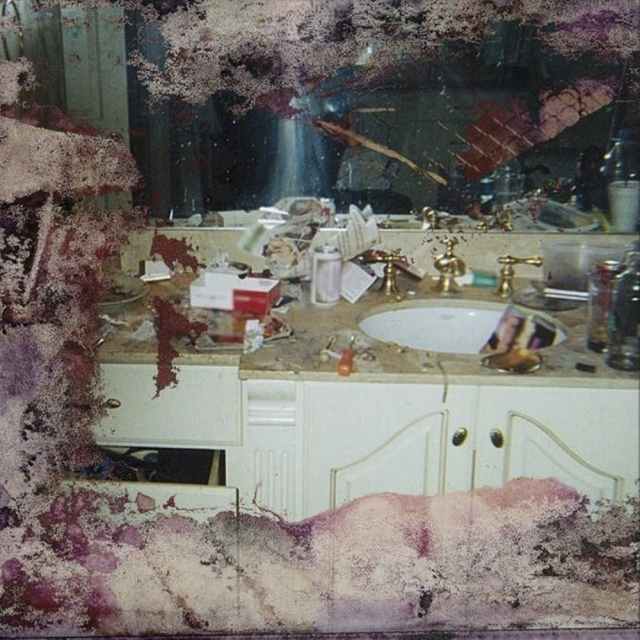
Anyone new to Pusha T gets an elemental breakdown of what makes his work essential listening on the opening track of “Daytona”, which comes blasting out of the blocks at ferocious pace. The only artist whose enunciation it seems fair to compare Push’s vocal style to is not a rapper at all but comedian Frankie Boyle; both men share a lucid awareness of how hard pronunciation keeps an audience in thrall. Every couplet Push spits is as translucent as glass and equally sharp to the shatter; on this opener alone he maintains a Shakespearean rate at reeling off quotables. The extent to which the rhymes appear effortless sits in contrast to how inconceivably crafted they surely, impossibly, must be. Kanye West comes through with some statement of intent; a restless and writhing prog firecracker the likes of which he has regularly employed to undercut any genuine rivals he has had on that side of the boards. In that spirit, each line is either a portable insight into how to one-up your competitors or to celebrate doing so. “Daytona” never gets much more complex or varied in its unpretentious excellence.

Teyana Taylor – WTP
Teyana Taylor’s “K.T.S.E.” is a perfectly serviceable gem of RnB from a talented vocalist and writer, albeit one still currently underdeveloped. Harking back to much of West’s earlier musical work, the slow, soul-focused production throws up plenty of highlights as vehicles for Taylor’s style, sometimes gentle and summery, other times surprisingly sweltering (check out “3Way”). The strutting funk of the West collab “Hurry” is a made-for-radio standout. Nonetheless, all changes when closing cut “WTP” hits home. The track works precisely because it is so different to the rest of the material, and therefore is suitably sequenced as an epilogue. The thrill ride of that house bass is a direct reference to Kanye’s own Mr Fingers-sampling “Fade”, the video for which classically featured Taylor and her husband, Iman Shumpert. Much like the later trajectory of the house music whose underground 80s heyday is triumphantly paraded here, alongside bold nods to ballroom culture which are significantly heightened by the track’s accompanying clip, between-verse vocals from the enigmatic Mykki Blanco outline Taylor’s potential for world domination. More twists of this nature and that master plan could yet be fulfilled.
Kids See Ghosts – Reborn
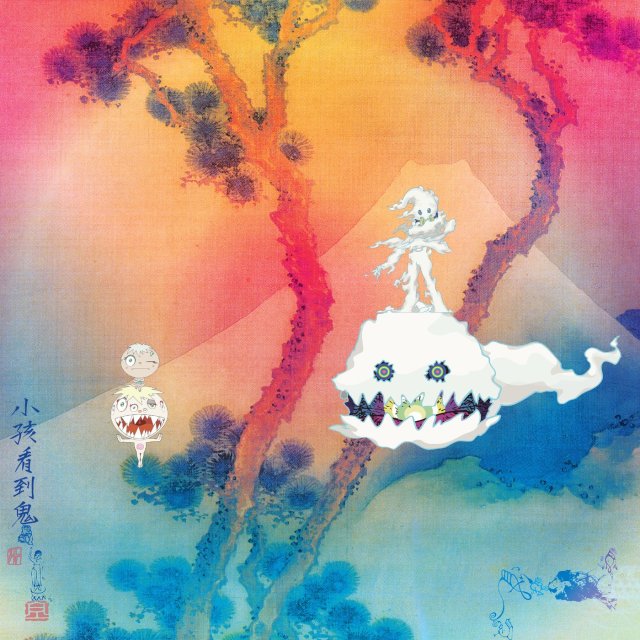
While discussing “Reborn” seems to be the perfect point at which to encapsulate the overarching themes of the “Kids See Ghosts” album. Lyrically, it seems to me that West and Cudi grapple directly with the problems of mental health and related substance abuse which they have experienced, a very welcome entry when it comes to opening up about mental health and male mental health specifically, as well as vitally cooling West’s image after a summer of questionable political interventions which seemed too contradictory even for Ye. “Reborn” is refreshingly nursery-rhyme like in its approach, with a Cudi chorus which builds and repeats to a euphoria, fluorescent brick by fluorescent brick. The track is a microcosm of the whole record, a blinding, beacon-like shield against suicidal thoughts, isolation, loneliness and the darkest of times a la British electronic phenom Burial’s unparalleled 2013 album “Rival Dealer”. It strikes me as highly empowering that this was the most acclaimed and popular song of a strong collection of tracks. West’s rapped verse is one of his best lyrical efforts across the Wyoming albums, and sharply candid. The wider importance of this track cannot be understated.
Pusha T – Hard Piano
Kanye’s production on “Hard Piano” is an exercise in minimalism made maximalist; a shimmering peak into the alchemy of how less can be scintillatingly more. The simple, skeletal combination of steadily stabbing drumwork and piano keys rolling calmly in like contented storm clouds (to me, the title seemed like braggadocio; the musical tone is nothing if not gentle!) creates a swelling atmosphere over which Pusha T and Rick Ross can trade trademarks when it comes to comparing some of the sacrifices and responsibilities which come with high living (“the Warhols on my wall paint a war story” is the poetic peak). We find Push feeling assured enough to take aim at every mainstream MC going (“Had to find other ways to invest/Cos you rappers found every way to ruin Pateks”). West scores further points for making the Maybach Music tag sound so shiver-inducing in 2018, no small lesson in the standard of beat required to usurp the familiarity that comes with near-ubiquity. With that hook, there’s no telling how many thousands of times to date that the track has been blasted in the Dominican capital, and deservedly so.

Nas – Not For Radio
By mere virtue of his locating a supercharged Kanye West at the desk, “Nasir”, even at a sub-half hour, becomes the best produced Nas long-player in decades. Check the plural! Although the gleaming, statuesque “Everything” is the album’s undeniable centrepiece, the opening “Not For Radio” is my choice cut. In many ways they mirror each other; this may be the first ever Nas effort where the musicality outshines the rapping. Nas has free rein to lyricise about the structural analysis and sociopolitical conspiracies he favours; nobody will be surprised by any of that. The guest work and hooks are a serious strength of this record, exemplified by 070 Shake’s lubricious chorus contribution on this track. Much the same can be said of The-Dream and Kanye’s off-stage magic throughout the album. There’s no fancy way of saying that that Gregorian chanting on which the track is built slaps hard. Puff Daddy of all people parachutes in with a shouty cameo which will draw inevitable comparisons to “Hate Me Now”, a track which was very much for radio in 1999. Don’t be fooled; this particular track title ends up ironic.
Kids See Ghosts – Cudi Montage
For my money, this is the most meaningful and deepest-hitting composition of the Wyoming sessions. Perusing the tracklist for the first time, I expected a closing Cudi solo effort; maybe some patch-worked freestyles. Unfairly, I judged the seemingly unexciting title as suggesting something half-baked. This is me asking for forgiveness. The title is a nod to the sample; “Burn The Rain” from the Cobain home recording vaults, first aired to a wider audience via the 2015 docu-film “Montage of Heck”. This is utterly perfect sampling, as that starstriking, understatedly frenzied acoustic line cascades repeatedly down the mindscape until entrancingly imprinted. By the time you reach this track you are highly familiar with the album’s thematics. West and Cudi deliver similar but differing choruses which are each their own; they say everything by saying barely anything. They are technically syllabic and vary in their degrees of pronunciation, West going for a more full-throated hook while Cudi contents himself with a mumbling “hm mmm”, but they may as well be indecipherable transmissions for all their alien sheen. The love, compassion and empathy which seems to swell in these vocals, which may have taken mere seconds to record, render them almost glossolalia as opposed to words. They are mere soundbites (“save me”, “stay strong”, “shine your light on me”) but shake me to my core with their pleading, as if doing so on behalf of all humanity. So intense a focus can and should be had on these brief, fragmentary pieces of sound that Cudi and West’s verses seem almost by-the-by, until they aren’t. West bursts through the sonic will-o’-the-wisp with the whiplashing line “everybody want world peace/’Til your niece get shot in the dome-piece”. Everything which makes the “Kids See Ghosts” album surprising and sometimes overwhelming can be found here.
Pusha T – Santeria
Of all the tracks on “Daytona”, this one trades in religious imagery to a much greater extent than anything else on the record, complete with a goosebumpin’ Spanish chorus for which Ye pulls away the aural fire and brimstone of sweltering guitar lines and crisp, skittering drums, apparently his favourite toys when sharing a studio with Pusha, then delaying its return long enough for Push to play preacher. One of the clearest strengths of the machine-like precision with which Push pronounces is his ability to make couplets sound exciting even when the incoming rhymes and wordplay can be spotted a mile off; “they say that death comes in threes, how appropriate/Triple back, they rush in (geddit?) like Soviets/At the Kremlin/Searching for the green like a Gremlin/Presidential emblem”. The way West understands the musical dynamics to surround his artist with so supremely on this track enhances the allegorical value of the song’s themes and marks him out as a suzerain of sonics, as if we needed further proof. Having Pusha T determine your fate could scarcely sound more sinister. “All praise, no jail bars can save/Leave you like Malcolm where X marks your grave/Hey, it’s probably better this way/It’s cheaper when the chaplain prays/Santeria!”

Kanye West – Ghost Town
There seems little doubt that “ye” is the most straightforward Kanye West album. It is the loosest, sparest, by far the shortest, and feels far less crafted and obsessed over than anything which preceded it. A mixed bag of ideas, it nonetheless contains this career stand-out track, which rises over the precipice with walloping emotional charge. A collage of samples and semi-mumbled, sing-songy Ye elevates us to a stunning crescendo. The message is simple; “we’re still the kids we used to be/I put my hand on the stove, to see if I still bleed/And nothing hurts anymore, I feel kind of free”. This uncomplicated, empowering mantra, delivered by Wyoming breakout performer 070 Shake, is an utter joy to both hear and sing along to, which you will do. Where the sequel cut on “Kids See Ghosts” boils the same strain of statement up to dramatic fanfare and sloganeering, West has always been underrated at his most tender. The coda of “Ghost Town” is every inch as tear-inducing, as nerve-tinglingly stormy and as genuinely moving as the Fennesz-like, Autotune hurricane of a rhapsody which acts as denouement to his signature tune, “Runaway”. That alone is worth the price of admission, without the fascination of the scrapbooked, crowdsourced theatrics which come first and seem to bundle all those Kanye eras which each unleashed their own sub-scene into one glowed-up power surge.
Pusha T – Infrared
“Infrared” is the closing coup de grace of “Daytona”, with Kanye uncorking a howitzer of a beat for Push to ignite the 2018 episode of his Drake beef (“The bigger question is how the Russians did it/It was written like Nas but it came from Quentin”), which later ended in him dropping “The Story of Adidon”, the nastiest diss track since “Ether” some 17 years previously. Your ears witness that burrowing vocal loop, the creeping, voyeuristic bassline and those breathless “heys” which flutter through the microscopic cracks of the production. Swift and deadly to the point of grand masterdom, we find Push in absolutely no mood to mess around. In a fell swoop he dissects the hip hop industry down the middle, treating us to the nuclear bars which comprise 2018’s lyric of the year; “Remember when Will Smith won the first Grammy?/And they ain’t even recognise Hov until ‘Annie’/So I don’t tap-dance for the crackers and sing Mammy/Cos I’m posed to juggle these flows and nose candy”. Elsewhere, between keeping his (female) associates in Moynat, more allegations of Drizzy being ghostwritten and managing parallel musical and narcotic empires, the only flaw is when Push misjudges a metaphor, misunderstanding that Tom Brady’s longevity and unparalleled success as a quarterback is rooted in his ability INSIDE the pocket(!). We’ll forgive him that. All in less than three minutes as well. This is pure venom.
Kids See Ghosts – Kids See Ghosts
Bringing in Yasiin Bey (the artist formerly known as Mos Def) with an earworm of a chorus which deals strictly in slow-burn, the title track of “Kids See Ghosts” is the stealthiest of black holes, pulling everything in proximity into its hyper-gravitational pull, from those breathy, electronically-candied vocals to a beat which flows at the speed of treacle, the best production to sound like water dripping down a drainpipe since Jeru The Damaja broke necks with his mid-90s boom bap warhead “Come Clean”. The moment West steps onto the beat should be studied by young rappers for technicality. For a snapshot it seems that the whole thing only feels so slowed-down, hung like a constellation, because Kanye is seeing it in zeroes and ones, manipulating sound and speed to his desire, such is the force with which he then attacks lyrically, producing his most firebrand verse of the sessions. “Don’t like being questioned and don’t like being less than/Any-a competition in any of my professions/So I got to guess then, I got to stay the best man/What else you expect from Mr. West, man?” is particularly breathless from an artist who puts the ass in assonance (it’s a compliment!). There is an almost lurid asymmetry in the contrast between Cudi’s deftly-touched, introverted soul-searching and this latest instalment of West’s very public trial with perception and expectation, which converts journeying through West’s psychosocial space into an exercise in dérive. Whether the Miami and Switzerland he references to close things are the real deal or paper Potemkins may never be clear. The open spaces in which the tribulations of West’s celebrity existence play out are but mirror reflections of the playground that is his own mind, a la Synecdoche, New York, while Cudi’s words are about a struggle to escape a Venus flytrap. Making it this entertaining for the rest of us is one hell of a sacrifice.
 Roads To The North