Say Their Names: Nia DaCosta’s “Candyman”

Nia DaCosta’s slasher flick “Candyman”, a simultaneous reboot of and sequel to the 1992 movie of the same title, arrives on to cinema screens fully formed and awash with meaning and symbolism. Co-written by DaCosta alongside Jordan Peele and Win Rosenfeld, the effort is only DaCosta’s second directorial piece before graduating up to 2022’s “The Marvels” for her third, a now familiar fast-track route through Hollywood which will render her the youngest director of an MCU movie ahead of previous navigator of the same journey, Ryan Coogler. This buzz is notable given the stubborn paucity of high-profile female directors, and much deserved on this evidence.

As immaculate directorially as “Candyman” seems, it nonetheless bears so many of the hallmarks co-writer Jordan Peele has made his own across only two previous films directed in the shape of “Get Out” and “Us”, the former in particular a powerful acclaim magnet, the latter a somewhat underrated gem; most prominently, Peele’s vast subtextual architecture and his brilliance of pop-cultural touch. Like any horror film worth its salt, “Candyman” expertly confects its authenticity from a grab-bag of conceptual sources, made all the more challenging by its having to juggle many of the elements inherited from the narrative of the 1992 original, which was but one year removed from the magnum opus of this feat within the slasher and horror spheres, “The Silence Of The Lambs”. As we shall explore, it aces this feat on its own terms.

Those devices from the original movie, be they based in storytelling or in theory, were already irresistible, and the new film sagely makes no attempt to step away, instead incorporating and sometimes flipping them to immense effect. The chief promotional posters of the two aforementioned 90s films are informative in this regard; “The Silence Of The Lambs” features a moth covering a mouth, the original “Candyman” goes with a bee crawling over an eye. Both are adapted from novelistic work, but utilise the potency of cinema to amplify the composite parts of their stories and surrounding media.

This is instructive as a general guide to film-makers, and horror-makers especially. DaCosta, Peele and Rosenfeld proceed accordingly. The original setting, Chicago’s infamous Cabrini-Green housing projects, is remixed through the lens of gentrification in the contemporary film, blending in sociopolitical context with ease. While the specific avenue perhaps goes underexplored as the film develops, it acts as an in for Yahya Abdul-Mateen II’s burgeoning but doubtful artist Anthony McCoy, and flows into a generalised soup of racial injustice, sat firmly in the movie’s crosshairs.

At a lean and utterly fruitful 90 minutes, “Candyman” is exquisitely paced and plotted, with nary a wasted frame. Those plot components really are delicious, from the moment the studio imprimaturs appear reversed on screen in foreshadowing reference to the centrality of mirrors in the Candyman story. The chilling, eerie opening credits are superbly scored, with disorientating, upended graphics paying tribute to the Chicago setting and the psychogeography of the story (and, indirectly, positing an alternate version of Wilco’s cover art for “Yankee Hotel Foxtrot”, the Marina City towers). These smile-inducing lower key moments are classic Peele cornerstones, from the man whose “Us” (and its trailer specifically) irreversibly repositioned Luniz’ 1995 smash “I Got 5 On It” as a horrorcore anthem.

Some outlets, understandably drawn into Peele’s contribution to the film, billed “Candyman” as something akin to ‘this year’s “Get Out”’. While race is pivotal to the story, in structural terms this seems very misleading. “Get Out” was a masterpiece in the subversion of audience expectations; anyone who didn’t leave every item of psychological baggage at the screen door was liable to ride the rollercoaster. The film was grandly metaphorical, allowing for a useful degree of stealth in the promotion and plotting of the movie, but focused heavily on what can be broadly described as liberal complicity in racial oppression, certainly in a US-specific context. The ingeniously-titled “Us”, to take a quick detour, was contrasting; while race remained a part of the package, it was class, nowadays mistakenly much-maligned as a theme, and inequality which the film targeted in a decidedly high-concept but quietly intersectional fashion.

The thematic and narrative scaffolding of “Candyman” is much different to either film, and “Get Out” in particular. From the outset, there is an overtness of theme in the plotting which was absent from “Get Out”, where screenwriter intentions were deeply submerged. Abdul-Mateen is excellent as McCoy deteriorates into body horror while his artistic fortunes simultaneously threaten to prosper, as is Teyonah Parris as his girlfriend Brianna, an art gallery director, conveniently enough. Some of the most telling moments can be found between script lines, in the various conversational scenes between the pair, Brianna’s brother and various other associates, which reveal the flick’s worldview on race and art, unsurprisingly a key concern in the film’s scenes. Some of these zingers are as cutting as Candyman’s hook.

The same goes for dialogue between McCoy and the snooty, ridiculous art critic Finley Stephens, whose condescension is potently white, middle class and ultimately opportunistic, but representative of a world into which Anthony and Brianna are, in what seems a materially simplistic but spiritually destructive choice, hoping to advance further. If viewers find themselves pondering why, that is of course intentional; the question of whether black advancement through white structures of society and imagination can ever really represent emancipation is posed.

The film does therefore match “Get Out” in being largely concerned with the imposition of violence on racial minorities. The reflection of this in McCoy’s disintegration through his art, once he is exposed to the Cabrini-Green legend of the title character, is another delectable line of the plot which stands tailor-made for the hands of a director and writer pairing as glowed up as DaCosta and Peele are currently.

Nonetheless, as mentioned, the parallel is far from direct. By interrogating the role art has to play in ending black oppression, if any, “Candyman” toys tantalisingly with black guilt and complicity, potential dynamite for a scriptwriter, but handled sensitively here. The look on Brianna’s face as another gallery director soliloquises that the roots of her enthusiasm for hiring Brianna in fact grow from her partner’s rising stock after his works on the Candyman are connected to the film’s grisly murders is brilliantly shot and perfectly acted in silence, a thousand yard stare which encapsulates the complexity of their own relationship and the film’s thematic fault lines.

Thus, like the mirror images throughout “Candyman” which are imperfect rather than bearing the symmetry we would normally anticipate, the reflection some may see between “Get Out” and this flick is not sublimely drawn. The fact that this inversion of mirroring itself mirrors the content of “Candyman” is highly paradoxical, but we do not need to peer beyond the confines of this film to find another, more relevant example. The film is bookended by scenes of police violence and injustice against black people. Every instance of the story’s notorious centrepoint, that uttering Candyman’s name in the mirror five times will summon him, is coloured by his gruesome dispatching of whoever follows the instructions. The lone exception occurs in the climactic scene, whereby the fabric of this arrangement is completely altered. Structurally speaking therefore, via any of the many scenes in the film featuring a mirror, the work as a whole is littered with metonymy. 

The final scene bears a more significant meaning in relation to the direct thematics at hand. The audience cannot be certain that the stated switch in dynamics we have witnessed is permanent, by virtue of the film concluding, although it does so in a manner which seems self-consciously ripe for sequels. We already know via the character of William Burke, the main conduit of information to McCoy and pitched perfectly shiftily by Colman Domingo, that the Candyman legend encompasses multiple iterations of the supposed monster, detailed visually and enticingly via shadow puppetry which seamlessly interweaves critical aspects of the original film. In one of the movie’s most important quotes, Burke states “Candyman ain’t a ‘he’, Candyman’s the whole damn hive”. This is delivered amid myriad explanatory twists as we approach the movie’s denouement, all of which embolden the considerable subtext of the story at a tornado’s pace.

That is to say, Candyman is representative of racial injustice and suffering at large. The ultimate call-back is to the character’s origin story, that of the 19th century artist brutally tortured and murdered for falling in love with a wealthy white woman. It seems incorrect to claim that the 1992 original was ahead of its time in espousing these themes when the Los Angeles riots occurred in the same year, but even for a tale as old as America itself, the lore of the Candyman universe seems to slot appallingly well into the young decade that is the 2020s, with audiences stuttering to catch up to the aesthetic and topical sequencing of the original in the years following its debut.

As ubiquitous an icon as Candyman is therefore rendered come the film’s closure, we can read much into the eventualities which unfold. The film is an interrogation of the reform cycle and its relationship with predeterminism. With the conclusion thoroughly subsuming our protagonists into the endemic savagery McCoy’s art looks to reflect and examine, the film asks whether legal mechanisms of reform are superior to violent ones, whether either achieve progress quickly enough and whether artistic endeavours have any role to play in the pursuit of justice, as well as whether any of these options or the outcomes of such choices are inevitable. The plotting of the film is undoubtedly cyclical, if we isolate the progression and fate of McCoy’s character and the way this relates to the underpinning provided by both the themes and the multi-layered narrative, a most sturdy bedrock.

Another keystone unveiled by the film’s development, in its final stages in particular, is the prevalence of unreliable narrators. “Candyman”, as expected from Peele, packs a certain degree of self-reflexivity, and is undoubtedly aware of the folkloric strands entangled within the various levels of its plotting. The importance of who tells a story and why is underlined very effectively as the story unfurls and blossoms, undoubtedly a pivotal point in a work which leverages the state-sanctioned killing of innocent black people as part of its didactic brew.

McCoy titles his first exhibition after learning of the Candyman yarn “Say His Name”, offering a mirror by way of invitation for the observer to engage with the art in a more immersive way than can be comfortable, with extremely bloody consequences. While we’re talking promotional posters, the new film’s art prominently utilises the similar “Say It”. The interplay between this element of the film series and the killing of Breonna Taylor by police officers in Louisville, Kentucky in 2020, which would (eventually) prove to be a major part of civil unrest around racism in the US and globally last year, seems inextricable. “Say Her Name” became the hashtag and slogan of protests against the slaying, another chilling, off-kilter mirroring linked to the iconography of “Candyman”. Similarly, having ventured down this street of thought, I was unable to ignore the similarity between the names of Breonna and the character of Brianna here.

While some believe that the surge in Hollywood focus on American racism since the early 2010s is sullied by the obvious financial motivation of the studios, it must be contended that films as intelligently and pointedly drawn on the issue as “Candyman”, which in this installment bucks the trend of pointless remakes and toxic franchising, will remain totally essential for as long as racial inequality perseveres. With the wrong people continuing to tell the stories, that will remain a long time.
Quentin Tarantino’s Liberal Anaesthetic: “Once Upon A Time In Hollywood”

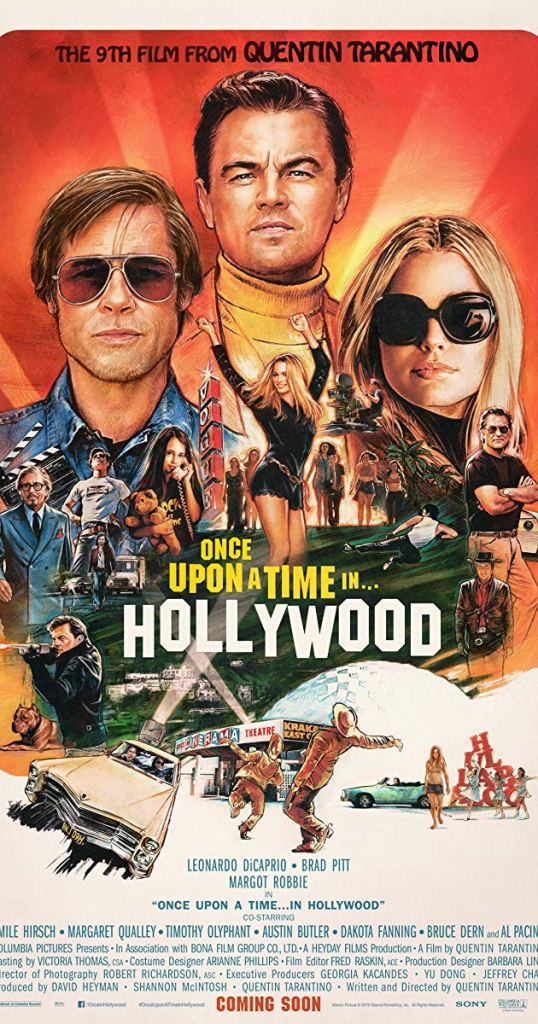
“Once Upon A Time In Hollywood” is, if virtuosic filmmaker Quentin Tarantino is true to what he once claimed, the auteur’s penultimate movie prior to his eventual curtain call with a tenth and final film in the presumably not very distant future. Tarantino’s films have been among the most acclaimed and academically dissected of the last three decades, and this latest features no shortage of his stylistic calling cards, continuing some of the patterns which observers of his work have seen emerge steadily over the years. Since “Reservoir Dogs” back in 1992, Tarantino’s films have always glowed with the touch of a true cinephile. This flick really takes that aspect of his work to its logical conclusion. The film depicts interweaving storylines during the golden age of Hollywood, specifically the cultural cliff edge that was 1969. The tone and photography are similarly celebratory and effervescent, as is the outstanding soundtrack of contemporaneous tracks which again expertly evidences Tarantino’s sublime traversing of cultural ephemera, while simultaneously exploring a deep sense of loss; of a cultural moment and, in my view, so much more.

The main focus is on Leonardo DiCaprio’s ageing actor Rick Dalton, becoming all too aware of his own mortality amidst an impending descent into European Spaghetti Westerns, after a sobering encounter with Al Pacino’s casting agent. Brad Pitt is Dalton’s dog-loyal stuntman and glorified driver Cliff Booth. Meanwhile, Margot Robbie is Sharon Tate, living next door to Dalton with her husband Roman Polanski. These are the three most notable roles in what is a lengthy and star-studded cast. Reunited with Tarantino, DiCaprio is clearly having a lot of fun here; equal parts tragic and hilarious with sometimes little more than a flick of the head or facial expression. His scenes with child actor Julia Butters are among the film’s most magical, in what is generally a very slow-burning piece. Pitt, also back with the director, puts in one of his most memorable late-career turns. Although generally seen merely prancing around Hollywood, Robbie is exquisite on screen. None of this excellence seems to be a coincidence in Tarantino’s possession.  

The Hollywood setting allows Tarantino to indulge in a Greatest Hits-style scene parade; a schlocky Nazi-killing spoof is a naked nod to the masterful “Inglourious Basterds”, while the generous dollops of Western tribute, which clearly locate the director in his element, continue in the vein of his last two movies; that other outstanding film “Django Unchained” and the underrated chamber piece “The Hateful Eight”. Incorporating fourth-wall breaches into the set up, this is pure playground territory for an individual of Tarantino’s razor-sharp writing prowess. These scenes are those in which the love and tribute for the golden age of Hollywood are most keenly felt, reminiscent of, though not as extensive or varied as, the Coen Brothers’ playfully pitched gem “Hail, Caesar!” In my previous take on Ari Aster’s “Midsommar”, I described as ‘synthetic authenticity’ the ability of writers to make divergent aspects appear natural, even historic, in the context of a story. Tarantino has been a master of this artform, fusing the Western with martial arts and Samurai flicks (“Kill Bill”), and with American race history (“Django Unchained”, which with its incorporation of the apocryphal concept of ‘Mandingo fighting’ and an embryonic version of the Klu Klux Klan, to name but two examples, is an exhibit par excellence of the technique) in ways which have made generations of discerning film fans swoon. There are no finer hands through which to experience a romantic fictionalisation of the era.

All of this said, to truly move on to some of Tarantino’s specific trademarks, we start to encounter some of the most interesting and perhaps troubling aspects of the film. One of the patterns I mentioned earlier has been Tarantino’s swing towards the revisionist in the second half of his career. In “Inglourious Basterds” and “Django Unchained” he dealt in only the grandest of scales and panoramas, tackling Nazi Germany and Antebellum-era American slavery respectively, in what were explosive, exhilarating, maddeningly entertaining reimaginings of history; the deepest of revenge flicks writ large. The former was the film which sucked me into cinema when I first saw it in 2011, and ran around the house from sheer giddiness for a couple of hours afterwards. Although “The Hateful Eight” was not of this vein, it explored racial tension in the hangover of the American Civil War in a most understated fashion, nestled between the lines of its rich, engrossing script. In this film, Tarantino is back to taking a red pen to some of the history which stalks our contemporary imagination most vividly, but his focus is much more precise, zooming in to a specific incident in ’69 Hollywood. For anyone who knows the story of the Tate murders by the Manson Family cult, Tarantino’s film is laced with a venomous foreboding, which tastes all the more potent when coupled with Rick Dalton’s mourning as his career begins to slowly, tantalisingly unfurl. The entire script fizzes as it builds to a denouement which will allow Dalton to eclipse his supposed shortcomings while offering the viewer the comfort of seeing history remoulded into a more comforting, salving alternative to its vicious reality.

So many of Tarantino’s films have been about time, even before he began to take a scythe to the most discomfiting of historical events, as seen from his liberal Los Angeles vantage point. His masterwork, 1994’s “Pulp Fiction”, remains one of the most sparkling and canonical works of cinematic post-modernism, especially to mainstream audiences, as a result of its non-linear narrative structure. Tarantino has employed the method several times, though never as satisfyingly as in that film, where it was one of those high five-inducing, “why-has-nobody-done-it-as-well-before?” strokes of genius. This kept his stories alive with the possibility of subversion, but largely as an illusion generated by structural fragment. The time in these films still moves as one thread, just like time as we experience it in life. The same applies to his more recent revisionist output, including this film, but in these cases while we sometimes experience the same method from Tarantino, the films themselves represent alternative realities with different outcomes to those in our own timeline. The source of the change to the timeline is never conclusive. We see overlapping, layered storylines between Dalton and Booth on one side and Tate and Polanski on the other, until they begin to converge via the Manson Family angle. We see non-linear storytelling in a particularly riotous segment involving Bruce Lee, where Booth reminisces about why he is unlikely to be hired by a particular person. As examinations of what time means, these are more bludgeoning, direct but visceral cinematic levers than the intricately constructed mazes of Christopher Nolan, whose output is also almost all an interrogation of how time is experienced, but instead questions whether it is possible to alter future events by altering the perception of time, rather than changing history.

When we arrive at the moment where it is time to present that altered version of events, there is no denying that Tarantino does so devilishly. He reaches for that most Tarantinian of moves, the aestheticised violence served with lashings of wicked humour. Even by the standards of Tarantino flicks, the brutality somehow manages to be moved up a notch or two, intensified by the film’s gradual climb and the fact that the pivotal action of the movie is all packed into one tinderbox of a scene. I give Tarantino particular credit for avoiding the boring overreliance on guns which is typically omnipresent in not just most of American cinema (including his own catalogue) but cinema in general. That said, in one of the film’s most chortle-worthy frames, Mikey Madison’s Manson cultist is roasted with a flamethrower, but this brings a certain novelty to proceedings! This climax is a furious eruption of violence, which brutally refutes historical accuracy. I have no objections to that as a storytelling device, least of all as a fan of Tarantino’s oeuvre.

It is perfectly possible to say that a piece of cinema is of an excellent quality, as “Once Upon A Time In Hollywood” is, finding an elite filmmaker still somewhere in a never-ending prime, while also acknowledging that it decants some interesting implications. It is clear when studying Tarantino’s work that his films are of what we would today refer to as a ‘liberal’ persuasion on issues such as, most prominently, race, if we are employing a binary dichotomy of socio-political markings, which is obviously dangerous in and of itself, and has perhaps irreversibly corrupted the American public sphere already. Tarantino’s relationship with liberal identity is less comfortable when we consider that this is the first film he has made in his career without the involvement of Harvey Weinstein, after the producer was heavily alleged in 2017 as a grotesque and prolific sex criminal. On a different but still related note, the most interesting moment of the film left dangling in mid-air is an isolated micro-scene which implies that Booth murdered his wife, which goes unexplored for the remainder, in a way which ought to complicate viewer sympathies somewhat. All the same, the events of this film, in line with those of “Inglourious Basterds” and “Django Unchained” before it, are symptomatic of a political problem in a climate where people who are apparent fans of Nazism and the subjugation of black people can freely parade around expressing such views without shame, all the way into the highest of political offices.

The problem I am referring to is that by abandoning the future in favour of attempting to win battles which were already lost in the historical past, liberals (of which I am one) are widely vacating the political space needed to win the arguments of the day and thereby secure electoral success. It seems to be fitting that the film was released exactly 50 years after the particular calendar year it paints, with all the tumult of Woodstock, the Moon Landings and, yes, the Manson murders. This was a year in technicolour, both brilliant and barbaric, giving little inkling of the dreary, insidious 1970s. Tarantino, on behalf of liberal culture at large, mourns the end of a chapter of American history, using a reframing of the Manson murders as a particular incident through which he can summon an anaesthetising, becalming nostalgia, to which Rick Dalton’s redemption in the face of certain defeat is a most blinding of mirrors. Even if you interpret it as sad to see this from a figure of Tarantino’s stature, it remains spectacular and dizzying story-writing in so far as sociocultural significance goes. One of the most surprising omissions of the film is that the white supremacist ideology running through the Manson cult is not referenced, which would have made the themes I mention here more overt and would have made the murders’ centrality to the plot of this movie more obvious given Tarantino’s vibrant recent tradition of discussing race in his works.

As mentioned earlier, there is reason to believe that Tarantino will make his final film the next time he sits in the director’s chair. One of the most interesting and logical of the ideas he has mentioned for a future film, of which there have been many in a largely speculative and scattershot fashion, would be a biopic of the 19th century white abolitionist John Brown, who took up arms against slavery. What we can tell from “Once Upon A Time In Hollywood”, and all of Tarantino’s recent films if not every film he has ever crafted, is that the subject matter would be in more than capable hands. However, since this is the only biopic which he has expressed an interest in making, it would be most intriguing to see if Tarantino could resist the urge to tinker with the past in a way designed to massage the insecurities and doubts of modern day liberals unable to articulate a vision of how a self-confident, equal and peaceful society would look in future and be brought into being today. Brown was, after all, convicted of treason by the Commonwealth of Virginia and hanged. Such narratives continue to cast a shadow over the daily news bulletins of modern America, and as a most prominent filmmaker, for whom this film became the second highest gross of his decorated career behind “Django Unchained”, Tarantino is at the very epicentre of the culture wars. Even if his stories and the forms in which he tells them throw up some discrepancies and shortcomings, cinema will be a far less gripping and gloriously engaging field when he is gone.

Breakups, No Makeups: Ari Aster’s “Midsommar”

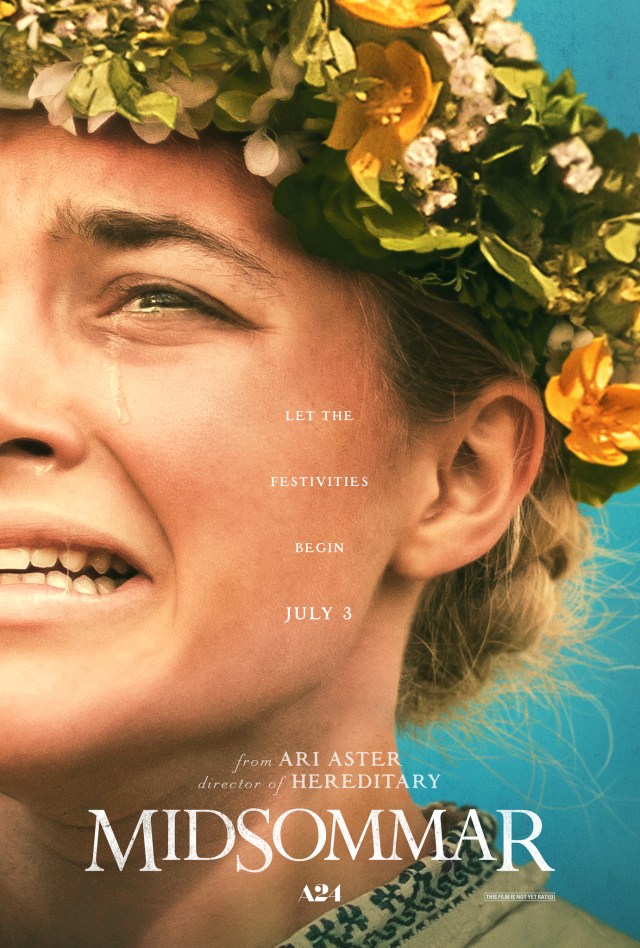
“Midsommar” is Ari Aster’s second full-length writing and directorial effort after 2018’s notable breakout flick “Hereditary”. It shares many of that debut’s hallmarks as far as Aster’s style goes; he is not an artist whose instinct is to reach for the jugular, eschewing such naked ambition as relates to the horror genre in favour of slowly evolving, and in this case deeply felt, tension punctuated by narrative shocks. The effect is to possibly leave some fans of traditional horror wanting more, but general cinema enthusiasts are likely to draw great sustenance from his limited body of work thus far. Contrary to an off-kilter guess by one of my friends, the film is a movie most probably unlike any you have seen before, not a big-screen adaptation of the lightweight British detective show Midsomer Murders(!).

To a greater extent than “Hereditary”, I would venture that “Midsommar” is not a particularly scary film, regardless of how it was marketed. It is an extremely tense and eerie piece which ramps up in carefully prescribed increments. The movie chronicles a grouping of American friends who follow their Swedish college peer Pelle back to Europe to experience a once-every-90-years festival amongst his home community. The main focus is on Dani, played outstandingly by Florence Pugh, who has experienced very recent trauma and whose relationship with her boyfriend Christian (also in attendance and played by Jack Reynor) seems to have entered its death throes. Will Poulter is relied on for much of the comedic sarcasm as Mark and William Jackson Harper is another notable character in the form of Josh. The opening scenes of the film in America are highly critical in establishing the character dynamics at play, which they do very efficiently, clearly portraying Dani’s uneasy relationship with the remainder of the group. Aster’s pacing of the story is tremendous, with great value apparent in the expository scenes which occur around dinner tables throughout, acting as checkpoints for our characters as events spiral.

Aster has rapidly codified his position as a creator whose films come as puzzleboxes. Just as in “Hereditary”, he scatters visual clues as to eventual happenings throughout, generally in the form of actual, expressive images. This merely enhances the foreboding of the film. Having seen both of his films in the cinema with larger groups than I am typically accustomed to attending the multiplex with, I have already noticed that Aster’s work provokes considerable debate as to meaning and leaves the audience walking away with plenty to discuss in terms of what they have actually just seen occur. The use of drawn imagery within the tapestry of the story establishes a roadmap for circumnavigating a collective reading of the film, which has struck me as an effective and interesting callback technique. Although it may be malleable to argued interpretation, Aster likes to weave a mythos.

To me, “Midsommar” has several thematic currents running through it. One seems to be the hidden darkness of social democracy. Scandinavian countries and those generally affiliated to them (chiefly Iceland and, especially, Finland) have been widely acclaimed as paragons of societal excellence. In the same way that those on the Remain side of the hellish fever dream that is Brexit have largely ignored the rise of the far-right throughout mainland Europe across all of the continent’s classic fault lines (to say nothing of the once-unthinkable corresponding rise in fascist thought in the UK itself), any idyllic portrayal of Sweden would need to turn a blind eye to the constant march of the fascistic, nationalist Sweden Democrats party during the last decade, as the issue of immigration (as part of a somewhat unspoken debate on globalisation) has served to poison the body politic of the nation in much the same way as it has around Europe. Reading a rejection of outsiders and foreigners who fail to ‘respect’ and ‘honour’ the norms of a community into a watching of “Midsommar” is not the stuff of academia, although it can just as easily be taken as a play on Americans’ fear of the outside world, toying with American domestic anxiety in the way almost every great American horror film ever made has done.

Although much more subtle, gender relations seem a touchstone here as well, as I shall comment on momentarily. While in the context of the film Midsommar is a fictional festival, it is based on traditional Swedish summer gatherings. Part of the genius of Aster’s writing is to intertwine these ideas with concepts such as ättestupa, ancient Swedish sites where ritual senicide apparently took place, and the ‘blood eagle’ method of ritual execution, also drawn from Scandinavian history. These twists in the tale, among the movie’s wooziest and most nauseous, evidence a beautifully researched film and are embedded effortlessly, lending the movie what I would call a synthetic or confected authenticity from a melding of disparate but interrelated parts, which makes a profound sense to viewers of the film even if only subliminally, and is one of the hardest achievements in writing of any form; Aster seamlessly inserts dusted-down folklore from the cultural framework within which he has set his story, in an expert appeal to the comparatively contemporary form that is the horror movie. The character of Josh has some familiarity with these concepts and seems an on-screen proxy of Aster’s in this sense, as he aspires to complete his thesis on midsummer traditions. Aster still cannot resist a more typical nod to horror, as Josh, a black character, and despite race not having factored into the film overtly, is the first we see meet his end, with what is displayed as an at least minor form of insider knowledge shielding him not one bit once his curiosity gets the better of him and he attempts to steal the commune’s most sacred document.

It was not long after the film’s release before accounts of how some of these festivities have been experienced from a female vantage point surfaced, replete with sexual entitlement and violence. There is nothing to suggest that this is uniquely Swedish; instead, it only seems to be uniquely male, occurring as it does in a patriarchal society. I refer there to Sweden at large but the same seems to apply to Pelle’s community; the gender roles seem very traditionally imagined and, notwithstanding Dani’s merciless redemption, men still seem to be the smirking winners. Although Dani is not exposed to sexual harm on screen, undercurrents of sexual expectation and coercion permeate her one-to-one conversations with Pelle, which are deeply uncomfortable, and seem far more sinister than those she has with her feckless, sad-sack boyfriend Christian, whose behaviour and fashion choices in the movie combined to gain the character a meme as “scoop neck T-shirt guy”, someone women should steer clear of but only for reasons of deceit with a side-serving of significant disappointment. As opposed to Pelle however, he did at least never attempt to crowbar his way into a twisted knight in shining armour narrative as part of a wider scheme to position himself and Dani as figureheads of the cult at the centre of the movie while the bodies pile up in the background.

Both because “Midsommar” is a strange and unsettling film and also because some of it seems written for absurdity, audiences are likely to find themselves laughing as much as gasping throughout. That was certainly the case when I saw it, and this heightens the atmosphere in which this film should be viewed, for me. A scene towards the film’s conclusion when a villager selected by lottery is cheerily prompted to come forward to be considered for execution in the style of a “The Price Is Right” contestant had me suppressing a belly laugh. You may need to check both your pulse and your sense of the comedic if you can get through the film’s crescendo-ing centrepiece of a sex scene without some hysterical chuckling. This soon-to-be infamous scene is among the most musically-inclined of coital presentations I can recall on screen, requiring only the human voice as an instrument. The uniqueness of “Midsommar” unfolding almost entirely in daylight at the height of Swedish summer, possibly unprecedented for a horror flick, is worth mentioning and serves to enhance the already radiant cinematography and use of bold, striking colour throughout. However, to me sound, or more specifically a lack of it, is the most essential element of the film, and this scene is just one example of why.

The film is scored by visionary British producer The Haxan Cloak, whose 2013 album “Excavation” remains an intense capturing of how sound can shift psychic earth. His detailing of how he interrogated traditional folk music, employed a specialist in the interpretation of sacred texts through singing and had his own non-existent instruments crafted in the same vein in order to lovingly and organically ensnare the sound needed to bring “Midsommar” to its maximum potential is well worth tracking down. The score lends the film vitality and is every bit as central to it as any of the acting, photography or writing; there is no hierarchy. All of these facets coexist in a steadying equilibrium constituting the essence of the completed film. Whether he had any involvement in the aforementioned sex scene is not known to me, but would be no surprise since it is entirely operatic.

This synthesis between the writing of the film’s music and Aster’s story itself is best exemplified by an unnamed character; an oracle who is the product of incest. Disabled people seem to have an almost divine status within this community, and the paintings of this individual form the basis for the group’s sacred manuscripts. Although not seemingly formally mute, the oracle is essentially presented as such. Absence of sound becomes integral to the film as it develops. When Christian is paralysed during the movie’s denouement, he is also unable to communicate in any way as he meets a surreal demise. The deceased, who are served up around him in a macabre, ceremonial fashion, are presented in a way which suggests an excision of the head from the human body; a grotesque, mocking neutralisation of the vocal chords. This seems to nod silently to the way in which silence drives horror in certain communities, which spreads like contagion through cities, countries and continents in turn. Some viewers may scoff at my earlier suggestion that there were suggestions of the dynamic of rape or even sexual violence in some of the film’s scenes, but a critical tenet of rape culture is that rape does not have to be mentioned to be considered normal or even to occur. Silence, a central thematic thread of “Midsommar” to these eyes (and ears), brings sexual and political violence in its wake, from the Swedish backwoods to Washington, D.C. Every character to appear in this film deserves a better, more consensual and mutually understanding world.

One of the most astonishing things about “Midsommar” is that it is Aster’s attempt to fuse the traditional slasher film with a breakup film, the latter concept being the one which unlocked the realisation of the former concept for him, based on his own breakup. You cannot help but ask how savage a breakup Aster went through to devise this story, particularly once you have witnessed the choices Dani makes at the movie’s conclusion! One of the other most astonishing things, for which we should give considerable thanks, is that a movie this madcap was commissioned. We need to celebrate the fact that this is one of the barmiest movies you are ever likely to see. There is no doubt that it will divide audiences down its centre; among those I attended it with, one described it as “The Wicker Man turned down”, another independently as “The Wicker Man on speed”! The glorious and sometimes gruesome insanity of the film, which transports us to an otherworld where we catch potent glimpses of our own, ought to be enough for any viewer to take the plunge. Aster has hinted that he is done with horror, and even if “Midsommar” proves to be his magnum opus of horror or just in general, I can’t help but have the impression that what constitutes horror to us may differ significantly to what falls into the bracket for this most enthralling of young writers and directors.

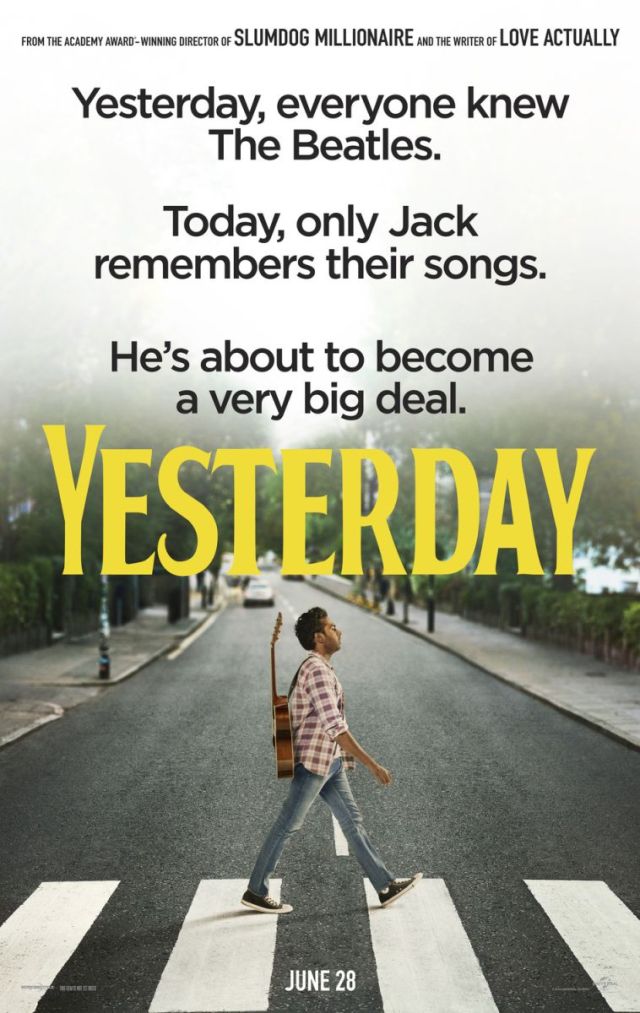
Yesterday

“Yesterday”, for anyone living in a cultural vacuum of late, is a Danny Boyle-directed, Richard Curtis-penned new film in which struggling musician Jack Malik (played by Himesh Patel) emerges from a worldwide blackout as apparently the only person on Earth who remembers The Beatles. Lily James plays his love interest Ellie, while the film also prominently features Kate McKinnon and, yes, Ed Sheeran. Boyle seems a half-decent choice for the sort of big, British event cinema Curtis likes to write, having directed harder-hitting flicks in a strangely similar vein and, most memorably, coordinated the opening ceremony of the 2012 Olympic Games in London to huge fanfare. I’m not going to comment much on Boyle’s contribution here; it is slick and efficient. I didn’t find anything interesting about it, which to me is probably a criticism. I have enjoyed his films before, but as we shall get into, a director does need subject matter. In terms of directing, nothing jumps out here. In terms of its substance, the film raises many interesting questions about nothing less than the nature of art, but not in as profound a fashion as that sentence might first suggest.

The main question this film raises for me is about how we should treat art vis-à-vis its intentions. If Curtis just wished to write another nicey-nicey film in the style of “Notting Hill” and “Love Actually”, two very popular and enduring films, and happened to stumble upon a way to do it which plays out on the backs of The Beatles’ music, is that OK? That is what has happened, after all. This film is perfectly fun to watch once. It is going to sound like I am annihilating it in the upcoming paragraphs. In truth I am, but there is a shadow version here where I have no qualms with this as a form of mass entertainment. I am no different to anyone else in that I go to the cinema as a form of escapism. However, I don’t think it is unfair to say I am possibly more interested in the artform than some, and certainly music is my favourite artform. A question “Yesterday” brings into view is whether I have any right to traduce something which failed to live up to my expectations if those expectations were formed from an entirely different angle to that from which Richard Curtis decided to write the script.

First learning that acts like The Beatles and The Beach Boys (more on them later) were among the most important groups in the history of popular music not just for their trailblazing pop but also for later becoming impossibly influential and keenly experimental bands who embraced the possibilities of the album and of musical recording is a critical rite of passage for any discerning music nerd, along with the Aphex Twin phase or the discovery of Norwegian black metal to name but a couple. Very little of the former’s finest moments in this second regard (I’m talking “Tomorrow Never Knows”, “A Day In The Life,” “Happiness Is A Warm Gun” etc) feature here. There are only 16 tracks from the entire catalogue employed in the film, and they lean heavily towards the pop end of the spectrum, although some of their best known later tracks do feature. All 16 tracks are great songs in my opinion, but it feels like a massive oversight to not highlight everything which made the band so mercurial.

One butterfly effect of The Beatles’ disappearance from the canon is that Oasis do not exist. Malik mutters “that figures”, for a neat little gag. At this point the question is why The Fratellis existed then? They exist prominently in fact, featuring on Malik’s wall and a t-shirt he wears. This is a bizarre inconsistency and it does feel churlish to rip the film apart to this detail, but expecting us to follow this is a huge ask! The Beach Boys are not mentioned despite the creative rivalry between The Beatles and Brian Wilson driving the late 60s magnificence of both outfits. I accept that you cannot mention every act going in this context, but to be thrown merely one bone would be lovely. It means that the film is not seriously approaching the premise it has been set up to tackle, which is very simply “what does a world without The Beatles look like?” If the answer is “Oasis don’t exist”, it’s not the most inspiring deconstruction. I have heard many music fans, mostly of the metal persuasion, ask the question of whether The Beatles would succeed if they emerged today. It is usually asked sneeringly, but is a good question. It is asked the wrong way around really as The Beatles obviously wouldn’t need to exist today and the question of what music history would be like if you removed them is the correct chronological rendering of the idea, or at least one which doesn’t ignore the fact that “Helter Skelter” is sometimes considered the first ever heavy metal recording. However, on paper it seems correct to say that there is no guarantee that a Beatles canon dropped into contemporary culture would succeed as easily as it does in this movie. Additionally, we may never know who Curtis had to call to get Neutral Milk Hotel’s name into this script.

History is written by the victors and Curtis can have his way in this script. He imagines a scenario where the magic of The Beatles’ music is all-winning, irrespective of era or cultural context. This is pure Hollywood and doesn’t celebrate their music in the way he thinks it does. The film is a wishy-washy diet product if you want any considered historical thought. In truth, Curtis abrogates any effort to grapple with his central issue via the scene in which two other characters present who, it turns out, also remember The Beatles. Initially the scene is correctly pronounced as foreboding, until we discover that they have only arrived to kiss Malik’s feet. If this actually played out, you have to suspect that the ensuing battle over the legacy of The Beatles would be far more fraught and bloody. No though, in “Yesterday”, The Beatles only have to be brought back into existence and that is enough (literally in the case of a late scene with ‘John Lennon’, which given the film’s mishandling of his music is surprisingly sweet). It is simpler not to ask what anything means. As I’ve already questioned though, does this matter? If people enjoy the film (and many critics have, audiences even more so), is my dislike of how it treats The Beatles even remotely relevant?

Many commentators have rightly raised the fact that Patel is British of Indian origin. The question that this raises is whether casting alone can be considered transgressive, independent of any evidence of exposition in the script? We can delve into the question here because this film is almost entirely free of any reference to race, weirdly given the circumstances. Casting an ethnic minority individual to carry the music of the band in this film is more becoming of the revolutionary elements of not just The Beatles’ early pop work but also their incredible strides in the second half of their career, truly reinvigorating the album format. Yet seemingly midwifing (some of) this music into the world runs without consequence in Curtis’ world. Malik’s race is essentially never mentioned during his meteoric rise. This could definitely be said to be welcome, although this universe is not entirely post-race. “The Beatles” album’s better known monicker of “The White Album” is utilised for a weak gag which is the only direct reference to Malik’s race, while a genuinely funny quip is made about Ed Sheeran’s toe-curling rapping and its relation to race issues. I can’t remember anything else. When you project this movie into our own society, you can’t help wondering if, when Kate McKinnon’s agent, no fan of mincing words, asks Malik “is this the best you can look?”, she might not be stating a preference that he was white.

Our world is certainly not perfect. Indeed, it is racist. I would certainly lean towards casting not having provocative potential on its own when a film goes so far out of the way to turn its head from the issue, but the other question raised here is this; is there any point in a film existing if it makes no attempt to interrogate the conditions of the world it is actually being made for? Is it OK for art in an unjust world not to make an attempt to interface with that same injustice? I have an obvious opinion on that but ultimately it’s not for me to decide; the almighty rule of the box office will be the final arbiter. “Yesterday” is unknowingly raising these issues loudly, however, for sure.

For Curtis, nothing bad ever happens. In a laughable turn of events prior to the film’s conclusion, after Malik has declared his long-dormant love for Ellie, Ellie’s current partner simply steps aside for them to be together. Is this feasible? I’m a big fan of suspending disbelief and consider it utterly essential to enjoy cinema, until it starts to spill over so relentlessly into cracks which run throughout a film. Curtis has no shortage of form for this and the ending here could only more strongly resemble a satire of a happy-ever-after trope if the dreamy couple literally ended up with 2.4 children. As is probably clear from this write-up, James’ character is almost entirely inconsequential. She is a cardboard cut-out hanging around until Malik decides he does love her after all. How he hadn’t realised this earlier wasn’t borne out by the writing, to me. The problem with all of this is that a supposed examination of what would happen if everyone on Earth except three people forgot The Beatles deserves better. It goes without saying that a film deeply and richly exploring that concept would be almost impossible to write in scope and implication, but this never truly approaches the same orbit.

McKinnon gives a playful turn, the film’s acting highlight for me, as Malik’s power-hungry, wealth-obsessed and rather ruthless agent, also the agent of Ed Sheeran in the film. However, her jokes about Malik’s supposedly off-putting appearance (in that he dresses like a normal person) are milked dead in the script. Sheeran seems to have been accidentally brilliantly cast, and not for his acting, which is especially wooden and cringe-inducing in the first scene he appears in. No, rather for the fact that he is the perfect artist to include in a film which seems so vapid in its ultimate results. It is practically believable that McKinnon’s character could be his genuine agent, given his real-life flirtation with admitting that he writes his music by algorithm to keep the money rolling in, and that a track such as the international smash hit “Shape of You” sounds joyless and dead-eyed enough to have been written with a gun to his head. I should mention that Patel and James are both perfectly fine, competent actors giving good turns and keeping the film watchable.

The only conclusion is that “Yesterday”, disappointingly, is a wafer-thin rom-com with (a small cross-section of) The Beatles’ music catalogue third-wheeling in it. It brings up lots of important questions as covered above but without intending to raise any of them, which is itself a question; can we consider a film thought-provoking if the thoughts it provokes weren’t actually intended to be provoked during its creation? Imagine.