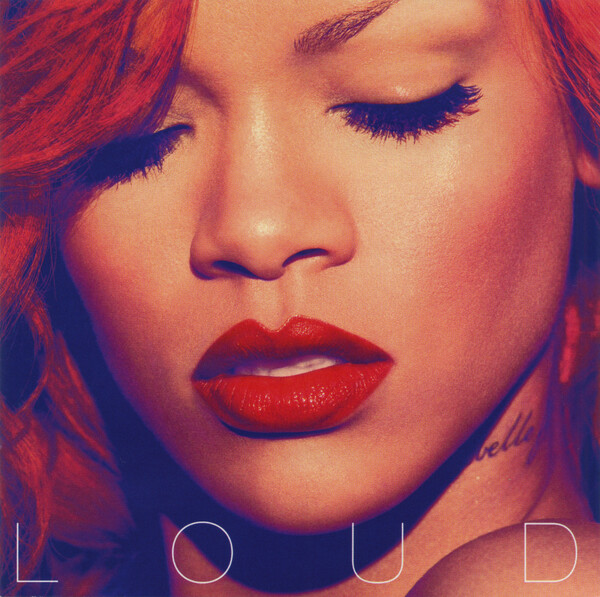
Rihanna – Cheers (Drink To That) (2010)

Although tunes such as “Hard”, “Rude Boy” and “What’s My Name?” seemed more quintessential at the turn of the 2010s as slices of Millennial recession-core, “Cheers (Drink To That)” stands the test of time as the most explicitly zeitgeist-bottling. This 21st century saloon song harkens back to a time when pop seemed pretty simple as an idea; a production and writing team in its bag and a couple of good ideas was enough for chart superstardom, in this case a loping Avril Lavigne sample, sugary-sweet pop-rock architecture, an irresistible chorus call-to-arms and verse lyricism simplistic but impactful enough to power a generation of social media inspo-chatter.

In my first year at university in 2007, the first under raised tuition fees in the UK, the talk was that our intake had set record bar takings. I thought little of it at first, but it seemed demonstrably true in the following years. This proved to be but a precursor. By the end of the decade, as supposedly developed economies boomeranged around in the wake of society-destroying negligence and practically suicidal greed, Millennials would come to be defined by the pursuit of escapism in the very jaws of capitalist nihilism. This is how tracks like “Cheers” and “Party Rock Anthem” became generational canticles, recognising that pop music could be just as adept as dance music, increasingly while incorporating it, at realising the utopian potential of nightclubs and dancefloors, and that while it wasn’t exactly the Second Summer of Love, most of the best nights and moments of your life occur while sozzled.

Even the lyric “don’t let the bastards get you down” inadvertently pre-empts “The Handmaid’s Tale” as a cultural phenomenon and proposes a tray of shots as the most direct solution to fascism. Unfortunately, the focus on alcohol as an anaesthetic dates the track fairly badly in the contemporary climate, as does the idea that a pleasure as effortless as putting on a pair of Ray-Bans could make you feel “hella cool”. Was even Rihanna, the dominant and unimpeachable princess of international pop, cringe? If so, she’s very much one of our own. Even at this point she was, unthinkably, only a handful of years away from what seems to be her final album. Talk about jaded. All the same, none of it changes how damn good “Cheers” feels on every single intake, just like that first ice-cold sip always does, from its fade-out for a drunken group vocal to its tropically feverish groove.

In practical terms, the memories are mixed, but no less glorious for it. Drainpipes, bad Nextwear and downing Jägerbombs until you slur heavily were the order of the day. In the modern era of vape pens, H2O at the club, cargo pants and commentary on how Millennials are “highkey functional alcoholics”, we’re no longer in Kansas. The worst part may be that Gen Z continue to party mostly to our songs, and I say that not to pen a the-kids-aren’t-alright piece, but because I hate seeing a cohort robbed of their cultural vitality. As time winds on, it seems clear that the chasm between an adult life promised and one lived is the driving factor, and one younger people mercifully aren’t burdened with. Things seem easier to see through, when your gestational touchstones were Michael Jordan, Jim Carrey and The End of History rather than TikTok and techno-feudalism. If that was the delta you’d experienced, you’d toast to the freakin’ weekend too.

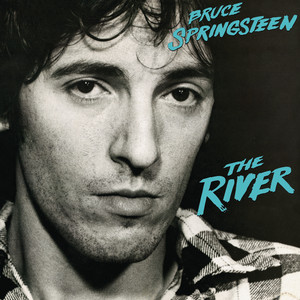
Bruce Springsteen – Wreck On The Highway (1980)

Such is the strength of its finality, it is perfectly clear that the closing track from 1980’s epic “The River” album was also the last written for it. A powerfully haunting, economical, country-esque arrangement, it is nonetheless musically vibrant, between those gold-kissed strums, spare, warm basslines, devastatingly placed keys and rushes of watercolour organ. The main gravitational pull is Springsteen’s simple but crushing vocal melody, looping immersively to describe coming across an unfortunate young fella downed by late-night road carnage.


Nobody has deployed automobile-based metaphor as often or as superbly as The Boss, and he does so in his sleep here (almost literally, if we go by the lyrical denouement). If we are to take the song as an allegory for the death throes of the
American Dream, at a time when the Reaganite-Thatcherite axis was still just powering up, then we can glimpse Springsteen as a prophet as much as the legendary chronicler he undoubtedly is. The man’s work is always imbued with an overwhelming sense of loss, with this cut anticipating the fatalism of the follow-up album “Nebraska”, or the closing piece of “Born In The USA”, the equally affecting “My Hometown”, which also employs a familial-flavoured fake-out for a finale.


In his finest fashion though, Bruce really leaves little doubt that this is a human story after all. Pop music in the years since has rarely had room for a moment as potently empathetic as this:


“I thought of a girlfriend or a young wife/And a state trooper knocking in the middle of the night/To say ‘your baby died in a wreck on the highway’”.


After that, the (non-)false climax arrives:


“Sometimes I sit up in the darkness/And I watch my baby as she sleeps/Then I climb in bed and I hold her tight/I just lay there awake in the middle of the night/Thinking bout the wreck on the highway’”.


An all-encompassingly relatable passage like this really bottles the essence of Springsteen as everyman king, and summarises why he could easily follow Bob Dylan into the Nobel ranks, were his lyricism not quite as homespun and plain-spoken, a little too unassuming for the academy, though never any less beautiful for it. We’re left chilled, but with a wondrous sense of the mutability of tomorrow and the imperative of living a full life. After that, are we really so sure after all that the song isn’t a precursor to the certain death of a nation? Two things can be true at once, as the victim here well knows. We never discover his fate, as an ambulance whisks him away into the night.

Be The Cowboy

In June 2025 I had the pleasure and the privilege of attending the third of six dates at Tottenham Hotspur Stadium in London for Beyoncé’s “Cowboy Carter” stadium tour, showcasing the 2024 album of the same name. I consider this show more of a continuation of than a sequel to 2023’s “Renaissance” tour, also a tour of the 2022 album of the same name, which is as strong a contender as any to date for the finest record of the 2020s, and which I was also lucky enough to attend.

It would seem a stretch to describe the themes and conceptualisations of the “Renaissance” tour as ‘smuggled’ given Beyoncé’s status as an astronomical pop mega-star, but while the very similar ideas which flow through said album have been widely and deeply engaged with, they are perhaps most strongly realised on that stage, and have not always been covered with the significance they command in my view. Like the album, that stage show pushes forward thematics centred around an interrogation of the black and queer roots and history of house music, wider dance and disco music and dance culture, with an especial focus on ballroom. As part of this exploration, its messaging is explicitly radical and heavily focused on notions of joy, belonging, peace and love, experiences and emotions which are actualised live among the artist’s fan community. In the modern climate, I believe these to be nothing short of revolutionary positions.

Personally, I found this deeply moving and empowering to be immersed within, and it was with delight that I found the “Cowboy Carter” tour to, even if inevitably, move along similar conceptual lines. Like its sister album, the show this time engages with the hidden black histories of country music, the symbolism of America and its culture and the reclamation of aspects of both as being unapologetically black. It seemed to me to eschew some of the most politically radical underpinnings of “Renaissance” despite this, while only further emboldening its celebration of the touchstones of family, community and identity, which is utterly radical in its own way. The entire jamboree is a marvellous triumph, and we await part three of this trilogy in both album and live show form with positively giddy anticipation.

The “Cowboy Carter” tour, as mentioned, pulls no punches in asserting the rightful place of blackness within the narratives of a specific musical genre and the United States as a country, utilising corresponding video packages, the album’s incredible songs, call-and-response moments with all of the charged racial history implicit within that and various visual and vocal allegories both subtly and explicitly sociopolitical along the way.

As anyone who knows their history ought to, I found it striking to see such a show play out so colourfully, boldly and beautifully in the heart of London, a city which was once the nerve centre of the Transatlantic slave trade, albeit at a remove from the living hell of said atrocities, especially since their shockwaves continue to considerably influence how we live. Not far from my mind was another much different but also excellent 2024 album confronting this history head-on; “The Great Bailout” by Moor Mother, stage name of the incendiary and diabolically brilliant Philadelphia poet, musician and spoken word artist Camae Ayewa.

The latest in a string of outstanding records, but Moor Mother’s darkest to date by my reckoning, “The Great Bailout” contends with the Slavery Abolition Act 1833, an act of the UK Parliament abolishing slavery and compensating former slave owners, with not a penny paid to former slaves or their countries. Through this prism, the record, which is studded with avant-garde guest stars from Lonnie Holley to Angel Bat Dawid to Vijay Iyer, tackles slavery and colonialism in the UK and its relationship to the historical structuring of capitalism and its functioning to this very day, hacking miraculously through the dense thickets of time to transport the listener there.

Against all odds, on a foggy, chilling record characterised by haunting horn work, grinding, twisted and experimental percussive textures and a steamy, metallic atmosphere which nods to slavery’s enabling of Britain’s Industrial Revolution, Moor Mother places us deeply, unnervingly into the centre of the raw, gaping injustices of the past which continue to shape our societies in the present. One cannot listen to the penultimate nine-minute track “South Sea” with an understanding and awareness of the central themes and not be shaken and distressed to the core, a testament to her power as an artist and collaborator with the countless underground talents present on “The Great Bailout”. The steely, robotic clatter of “Liverpool Wins” is the stand-out to my ears, frighteningly marrying the past to the present through its gloriously disturbing sonics, and contextualising the economic competition of Britain’s 19th century slave-trading port cities by way of comparison to modern day footballing feuds.

While in London this summer I also headed to the National Portrait Gallery to take in their exhibition of Edvard Munch portraits. Best known for his 1893 work “The Scream”, which has passed over firmly into popular culture, Munch left behind an extensive body of portraiture. While not captured anything like completely here, I nonetheless came away feeling I had witnessed some of the horrors not just of the human condition but of subjectivism, from the handiwork of an artist often credited with a proto-existentialism, often linked to Nietzsche (and who painted his portrait despite never meeting him) and whose later life was considerably impacted by the Second World War. It wasn’t lost on me that Beyoncé and her husband Jay-Z are often considered, or perhaps more appropriately I should say accused of being, capitalism’s favourite musicians, along with all of the individualism mixed up and entailed within this. This, to me, is what makes Beyoncé’s employment of her almost unrivalled global platform to broadcast some of the ideas and ideals I referred to earlier all the more striking, and speaks to a complex inter-relationship between art, beauty and contemporary societal contexts in the same way as Munch’s artistic legacy could.

All the same, this isn’t the artistic offering within the walls of the National Portrait Gallery which seemed the most meaningful to me. On the gallery’s second floor, in room 23, hangs Thomas Jones Barker’s 1862-1863 work, “The Secret of England’s Greatness”, a large and somewhat turgidly framed painting depicting Queen Victoria presenting a bible very much downwards into the hands of an unidentified African ambassador. The painting very effectively exemplifies the Victorian leveraging of propaganda, specifically the channelling of supposed religious and racial justifications for imperialism and hierarchy in depicting the moral superiority of the English people and nation. Up close the canvas undoubtedly packs a glow, and I came to wonder if some of the tense, horrid stirrings of recent English summers explained this, perhaps with its apparent in-person thrum reducing in times of greater harmony (perceived or otherwise), like something from “Ghostbusters II”. 

The crucial importance here is that Barker’s painting is referred to by Moor Mother in the lyrics of “Liverpool Wins”:

“1856, the opening of the National Portrait Gallery/Full of lies/Europeans’ first encounter with a mirror and look how they see themselves/In the famous painting of Queen Victoria she is presenting a Bible to a Moor in Windsor/Called ‘The Secret of England’s Greatness’”.

This, as much as any of the depictions of slave transportation or regular demands for reparations which have instead been used to build a capitalist world of injustice both financial and otherwise, perfectly portrays the anger of Moor Mother’s album. She has spoken of the necessity of exploring this area specifically through the lens of the United Kingdom despite not having face-value links to the country, given that all people of African origin and ethnicity are indubitably tied to and affected by the country due to its centrality in Atlantic slavery, a process which, as mentioned, influences our societies to this very day. While they may differ considerably in focus and tone, this for me mirrored Beyoncé’s own reclamation and reassertion of history in the name of black justice. It is at this nexus where the seemingly disparate and disconnected worlds of pop music and underground music intersect, blend and collide explosively and sometimes flip positions in unexpected and seemingly improbable fashions that we can locate the territory upon which and the community through which to bring about radical sociopolitical discussion and change via the refractions of pop culture.

As I write this months later and as England is widely dotted with St George’s flags variously flapping in the breeze or vandalised onto roads in the name of something much uglier than a so-called patriotism, the histories challenged, memorialised and re-advocated on the two records I have touched upon demonstrate very powerfully and trenchantly why, like the artists who brought them into the world with their own distinguishing and divergent admixtures of passion, love, fury and unalloyed strength, those of us who know these pasts and the ways in which they flow through history will never stop fighting for justice and equality, today and for the future.

The 25 Best Smashing Pumpkins Songs Of The 1990s Ranked

For my money, even Kurt Cobain and Elliott Smith (and Noel Gallagher?) can eat their hearts out; Billy Corgan was the finest songwriter of the 1990s and a generation. That decade was the golden era of Smashing Pumpkins, with an early period awash with little nuggets of buried developmental treasure, an outtakes compilation stronger than any studio album most acts ever produce, four major albums of which two can be counted as seismic and troves of b-sides worthy of any great record; all in all, a veritable platinum mine. The classic line-up of James Iha (guitar), D’arcy Wretzky (bass) and one of the finest drummers of all time in Jimmy Chamberlin being in tow certainly didn’t hurt the group’s stock and potential.

The stylistic diversity within the alt-rock sphere is perhaps the most striking; after triangulating 60s psychedelic rock with the still-emergent but fast-skyrocketing alternative rock genre on 1991’s “Gish”, all bets were off for the size and structure of a Pumpkins song. This means that in attempting to collect their finest 25 efforts of that decade, all manner of songs are benched, traversing proggy supernovas (“Soma”, “Silverfuck” ), metal-adjacent freakout jams (“The Aeroplane Flies High (Turns Left, Looks Right)”, “X.Y.U.”),  electronic radio gems (“Ava Adore”, “Perfect”), tightly wound pop songs (“Bodies”, “Tristessa”), eye-of-the-storm becalmers (“By Starlight”, “Galapagos”), slight but indelible musical poems (“Cupid De Locke”, “Stumbleine”), punk workouts (“Tales Of A Scorched Earth”, “Pissant”) and, perhaps most egregiously, even the sickly-sweet orchestral acrobatics of “Disarm”. Not to max out on spoilers, but you get the picture.

All that said, let’s dive in and rank the absolute cream of a decade’s worth of gob-smacking sonic excellence from the Chicago outfit.

25. “To Forgive”

From “Mellon Collie & The Infinite Sadness” (1995)

When “To Forgive” creeps in it sounds like a track in the midst of decay, with a rousing progression wobbling through its chords, primed to crack open and reveal its inner workings at any moment. Even with the support of Chamberlin at the set entering the mix, it hardly becomes any less delicate as it flowers, introducing ornate arrangements to a cut already tracking as one of the most chamber-ready from the Corgan songbook. That pulse-checking pause in the final chorus is a reminder of how organic the process is, even from a band firing out generational anthems like a well-oiled production line at this point in both their career and the “Mellon Collie” album.

24. “Rocket”

From “Siamese Dream” (1993)

It’s another huge entry in the win column as far as the studio martialling of Butch Vig and Billy Corgan on “Siamese Dream” goes, with remarkable use of the boards to construct an imposing barrier of blaring, contorting guitar alarms. It’s a viscous buzz-box, and sounds too good not to submerge oneself in the glorious blur. While what passes for dream pop today, as popular as ever, has morphed over time, Pumpkins tracks like “Rocket” have proved immeasurably seminal, with a glam rock stomp to boot adding significant bolster. The transition of the guitar from verse or bridge to hook is a truly velveteen scheme. Call it textural ecstasy.

23. “Marquis In Spades”

From “The Aeroplane Flies High” (1996) / “Zero” (1996)

Lurking on the “Zero” single and collected on the “The Aeroplane Flies High” bumper boxset, this banger is one of only two cuts from said compilation to make my ranking despite being surrounded by pearls, such is the competition for slots on this list. Sounding superb and ageing as well as any A-lister Pumpkins track of the era, its elastic, bendy chord progressions are nonetheless extra crunchy and speak to a then-young lifetime of Black Sabbath worship. Alongside other amazing discarded tracks of these sessions like “Mouths Of Babes”, the suggestions that “Mellon Collie” could have stretched to a triple album pile up.

22. “La Dolly Vita”

From “Pisces Iscariot” (1994) / “Tristessa” (1990)

The earliest days of the Pumpkins are loaded with tracks orbiting the debut album “Gish” which thrum with promise and potential within the confines of their twee guitar-pop, often incorporating eastern scales on a Beatles-style psychedelic kick. One of the strongest crystallisations of this affectation is “La Dolly Vita”, which landed as a b-side on the “Tristessa” single and helps elevate the 1994 collection “Pisces Iscariot” as possibly the best outtakes album of all-time. For good measure, on its rear it bookends its textured majesty with guitar launch-speed, and with Chamberlin unleashing a percussive stampede at the stool, as per.

21. “Geek U.S.A.”

From “Siamese Dream” (1993)

Any time Jimmy Chamberlin gets his own miniature intro you ought to know what’s coming, but not necessarily that you’re about to have possibly the finest performance of his career dropped on you. With that sort of scaffolding as a backdrop, Corgan rides the same stripe of turbo-charged riff you will hear throughout “Siamese Dream” across multiple movements. Indeed, a strength of the album is cohesion and the way various spins on the overarching idea are presented; clock that reprise of the “Today” melody in the bridge, as chords rotate aflame after a brief and wonderfully mellow interregnum. What follows is a frenetic breakdown which may be the most frenzied moment on this record.

20. “Where Boys Fear To Tread”

From “Mellon Collie & The Infinite Sadness” (1995)

The second half of the “Mellon Collie & The Infinite Sadness” double album scarcely requires an adrenaline shot unless dwelling in overwhelm after side one, which is far from improbable, but it gets one from this certified earth-churner. You have to love that stuttery stop-start guitar opener like a war machine being cranked to life, before the central riff bulldozes its way through. While “Siamese Dream” is the more celebrated for its production, Flood and Alan Moulder have to take credit for drowning the listener in sound, the way thunderously scuzzy guitar oozes into every nook of the mix once Chamberlin truly hits the zone.

19. “Rhinoceros”

From “Gish” (1991)

The “Gish” album was certainly the work of a band squaring its most bluesy, psychedelic and rocking influences from the back end of the 60s with the big bang of alt-rock then occurring in the American rock mainstream, as no shortage of bands would also do over the years to come, though rarely as superbly. Despite this, the sole “Gish” track to make my list doubles more so as a glimmering precursor to the dream pop fireworks of “Siamese Dream”. “Rhinoceros” still has room for an astounding hook, effortlessly intense drumwork, inch-perfect construction and tone, delicious licks and a searing solo set-piece on the axe. Marvel at it.

18. “Appels + Oranjes”

From “Adore” (1998)

With no disrespect to the still much-loved singles from “Adore” which also register among its finest moments, this for me is the album’s strongest piece and the last outstanding Pumpkins song of the 90s. Its blurry, obscurantist aural churn and the clattering percussion mash up beautifully, while the hook is similarly smeary with a melody to die for. Much of the record indulged very well-earned ambitions which didn’t quite translate under a new sonic template, recorded amid widespread personal tumult, but the highs spoke to a magical flame still flickering and seemed to vocally anticipate Corgan and Chamberlin’s (admittedly sunnier) doomed power pop supergroup Zwan.

17. “Jellybelly”

From “Mellon Collie & The Infinite Sadness” (1995)

You can practically scent the smoke as “Jellybelly” drives in, with overdriven guitar chords suggesting short circuit as Chamberlin, incapable of impatience given the fluidity of his drumming which always conjures an illusory spontaneity, sits waiting to pounce. One of the grooviest and most barn-storming grunge riffs in the catalogue unfurls, promising that whatever “Tonight, Tonight” may have promised, “Mellon Collie” is going to pack plenty of hooks and guitar payloads ascending several tens of thousands of feet above ground level, replete with squirms of fretboard-bothering threatening to tear a back-exit out of the mix.

16. “Thirty-Three”

From “Mellon Collie & The Infinite Sadness” (1995)

“Mellon Collie” sails off into the distance on a multi-track run of soft-rock and gentle ballads, but none of them touch the slightly earlier vulnerability of “Thirty-Three”, a spindly concoction unsurprisingly characterised by gorgeous Corgan melodies. Conceived around an acoustic strum, it still achieves the requisite power to reach the mountaintops of far more volcanic Pumpkins compositions, while lines like “tomorrow’s just an excuse away” reverberate down the generations. Listeners are liable to peer upon mirrored reflections when they glimpse the track’s surface, but the unquantifiable value of time looms large as a lyrical concept.

15. “Starla”

From “Pisces Iscariot” (1994) / “I Am One” (1992)

This celestial behemoth somehow didn’t make “Gish”, settling in place on certain incarnations of the “I Am One” single and lending plenty of legendary ballast to “Pisces Iscariot”. Bridging something of the gap between the chemically-assisted sonic stargazing of the earliest days and the monolithic shoegazing heard on “Siamese Dream”, especially in structural terms, “Starla” is a critical entry in revealing what a Pumpkins song could be, pairing a delicious, propulsive build-up with a rocking and delightfully destination-free denouement which shoots for the interplanetary and nestles comfortably amongst the satellites. Did I mention that it features one of the finest guitar solos you will ever hear?

14. “Porcelina Of The Vast Oceans”

From “Mellon Collie & The Infinite Sadness” (1995)

While we could visit and indeed are visiting countless tracks to study the band’s greatest loud and quiet moments, nothing combines them as jaw-droppingly as this epic. Positioned near the end of the first disc of “Mellon Collie”, challenging as it is to describe anything this entirely towering as being ‘tucked’, it evidences a band who had not in fact abandoned a propensity for Hendrixian structural unpredictability post-“Siamese Dream”. Whether appreciating anything from “Leviathan”-era Mastodon to the funeral doom of Ahab, this track is my supreme reference point for oceanic dynamics and sunshine-in-the-bay melodics.

13. “Hummer”

From “Siamese Dream” (1993)

Compared to the baked-head meandering interspersed with flashes of compositional brilliance on “Gish”, a track like “Hummer” is one of the strongest examples of a new taste for multi-part suites and watertight engineering splattered across “Siamese Dream”. This might sound better than any other track on the record, with shoegaze missiles gliding in from all angles, a by-now-inevitable katzenjammer of a solo and Cogan delivering every line like a refrain. You know there’s magic at work when a lengthy and balmy coda may still be the highlight, even more so than when the DNA of blackgaze luminaries such as Alcest and Deafheaven can be heard fossilised within. It’s a magnificent triumph from a band entering the stratosphere.

12. “Set The Ray To Jerry”

From “The Aeroplane Flies High” (1996) / “1979” (1996)

This cult favourite b-side stands alongside the finest work the band has committed to tape, with the question of how it didn’t make the “Mellon Collie” tracklist being conspiracy-worthy, instead backing up the “1979” single release. Corgan is pared back exquisitely but in brilliantly longing form, against a stirring riff of guitar bubblebath and a slinky bassline foaming with vivacity. Chamberlin, as so often, is the secret weapon, with his more tender treatment still yielding a divine rhythmic force which carries the track into the empyrean. All the finest bands need one of their greatest tunes hidden away for the deep-divers, and this serves that purpose and then some.

11. “1979”

From “Mellon Collie & The Infinite Sadness” (1995)

Introducing the gothic digitalisms of 1998’s “Adore” album can’t have been helped by the fact that the band utterly perfected electronicised pop on their first swing at the style with this radio-ready shooting-star from “Mellon Collie”. As a glowing paean to youth and the intangibility which haunts nostalgia, the track thematically reflects the bittersweet crush depth of the jam-packed double-disc set which birthed it, simultaneously cosmic and microcosmic, and does so on the strength of a looping earworm seemingly fed a diet heavy on steroids. For a band harking back to times and influences grown dusty, the track continues to fold in on itself via new listeners and generations as the years and decades pass.

10. “Muzzle”

From “Mellon Collie & The Infinite Sadness” (1995)

On “Muzzle”, as on countless of the incredible pop moments intertwined throughout “Mellon Collie”, the guitars burning behind Corgan may be less expressive than elsewhere but are always dialled into a pitch-perfect tone and proximity, while Chamberlin wastes no chance to grasp a scene-stealing fill between his ever-metronomic thumping. Billy reels off a laundry list of some of his most tattoo-worthy lines in a track laced with despair and joy, the horror and electricity of being alive. The fashion in which the instruments hang back for a starting gun to commence both verses so that Corgan’s marquee moments shine brighter speaks to a seminar in songcraft. This one feels incredible to sing along to.

9. “Tonight, Tonight”

From “Mellon Collie & The Infinite Sadness” (1995)

Even amongst all of these stupendous songs, the beloved “Tonight, Tonight” seems to stand alone. Tasked with following up the titular instrumental intro to “Mellon Collie”, it properly kick-starts the rollercoaster with enchanting pop penmanship and a 30-piece string-section for an artful declaration of the band’s newfound station. This tune alone justified the ambition, with Corgan in his most poetic mode yet, as a tornado of strings dances wildly and Chamberlin lashes out a marching cacophony. The vocal is angelic alt-rock, a siren-song recruiting new listeners to the legion as surely in 2025 as in 1995. A bona-fide crossover hit with a remarkable accompanying flick, this is peak Pumpkins by so many measures.  

8. “Thru The Eyes Of Ruby”

From “Mellon Collie & The Infinite Sadness” (1995)

 Upon release and ever since, “Mellon Collie & The Infinite Sadness” was tagged as a Gen X equivalent of “The Wall”, which arrived sixteen years earlier. Spookily, another sixteen years later Millennials got our generational double-disc when M83’s “Hurry Up, We’re Dreaming” emerged, so we await whatever 2027 serves up from Gen Z. “Thru The Eyes Of Ruby” is the most “The Wall”-esque offering on the record, with magisterial peaks and valleys, vocal histrionics, a hook almost whispered as insanity unfolds around it followed up with a shrieked bonus chorus tacked to a ballistic, grungy riff, and a fleet of false finishes, each of them as pretty as a peach. To think it all started with those lopsided piano keys.

7. “Today”

From “Siamese Dream” (1993)

As the three-minute pop song goes in Billy Corgan’s hands, “Today” is the ultimate document. It is a  devastatingly incredible slice of songwriting from its opening chimes, which flutter gleamingly like wings emerging from chrysalis before a raft of guitars take flight. A deeply personal song, Corgan recorded everything but the drums himself, which, like the name counts in this piece, hints towards the true driving forces behind this band. The sugary guitar avalanches, pre-hook air-drumming opportunities and irony-laden lyrics, which juxtapose suicidal ideation with one of the most sonically summery rock songs you’ll ever hear, are all over before you can blink.

6. “Zero”

From “Mellon Collie & The Infinite Sadness” (1995)

“Zero” sits firmly as we delve further into a seven-track run early on “Mellon Collie”, all of which I’ve included here, and in many ways has lived on as the signature tune of both the album and band. Corgan is very much in his bag here, with vocals registering between the sexy and the snarling, while a battalion of rhythm guitars achieve carbonated takeoff. Chamberlin thoroughly interrogates every pocket of space he can find, and a squelching, extraterrestrial solo confirms that the more mellifluous pyrotechnics of “Siamese Dream” are in the rearview. The bridge, which is given carte blanche to breathe, is purely theatrical (“God is empty just like me”), and the concision of the whole hair-shredding affair scans as weaponised.

5. “Cherub Rock”

From “Siamese Dream” (1993)

Even for a band clearly growing into their own sense of identity, in opening proceedings on 1993’s “Siamese Dream”, this track wastes no time in announcing an exponential glow-up. With producer Butch Vig in tow to assist, Corgan set about crafting a trademark sound, with string tone and production techniques cribbed from an array spanning Jimi Hendrix through to the still nascent shoegaze genre. Faced with an overdub-heavy wall of guitar ferocity which Gen Z disciples of the widely-resurrected form are still attempting to recapture today, the breath catches repeatedly between the canyon-sized crevices of this arena-friendly meteor, complete with prismatic solo writhing gelatinously like a freshly released kraken. Talk about a mission statement!

4. “Bullet With Butterfly Wings”

From “Mellon Collie & The Infinite Sadness” (1995)

If ‘iconic’ has become an overused and abused word, “Bullet With Butterfly Wings” provides a calcified study in the qualities of the term. From its celebrated opening line to Corgan’s screamed variation on the hook after that strummed final pre-chorus, totems are tucked into every inch of the cut. The lyrics bottled the disenfranchised angst of Gen X as finely and cathartically as anyone working in any form ever had, a spirit teeming throughout the “Mellon Collie” album, to say nothing of its glammed-up video debuting that t-shirt, while offering up a final hurrah prior to as potent a pop cultural example as we have of a star seizing control of their hairline.

3. “Here Is No Why”

From “Mellon Collie & The Infinite Sadness” (1995)

Possibly my most played Pumpkins track, this one locates the band strapped into chugging lockstep from the outset. Corgan is irresistible, deploying those half-speaky but elongated verse and bridge melodies, while storm-gathering guitars crank up and into a hook positively soaring through hyper-space. There may not be a higher point in the canon as he wails perhaps his finest lyric against stiff competition; “In your sad machines/You’ll forever stay/Burning up in speed/Lost inside the dreams of teen machines”. Gen X doesn’t have a monopoly on alienation, but they were the first to see that the future didn’t look rosy.

2. “Fuck You (An Ode To No One)”

From “Mellon Collie & The Infinite Sadness” (1995)

This number may strike the optimum balance between the sharply coiled songwriting and the freer-form chaos at either end of the Pumpkins scale. Fueled by some of the most aerodynamic riffage and barrel-bomb chugs across the discography, the track strikes upon genius when it reveals a higher gear and a hook up its silvery sleeve at the approximate halfway point. Dynamic contrast is utilised mercilessly as Corgan takes his self-righteousness into elegiac territory, while Charmberlin’s percussive artillery provides an insurmountable challenge even to anyone strongly versed in superlatives. A-plague-on-all-their-houses collapse has rarely felt as thrilling or life-affirming, and on any given day you may find me caught beneath this landslide.

1. “Mayonaise”

From “Siamese Dream” (1993)

It speaks for itself when a track which begins life as a deep-cut and is never released as a single steadily grows to be a near-ubiquitous favourite in an outstandingly packed inventory. Such is the trajectory of “Mayonaise”, sitting pretty on the second half of “Siamese Dream”. No track as successfully repurposes the cursed dreaming of flowers-in-the-hair Boomers for Gen X, repainting their shimmering guitar vistas and filtering their most cryptic pinings for a better tomorrow through an alt-rock headrush. The whistling feedback arrives courtesy of a faltering guitar, an inimitable accident. The melodic twists and turns, whether through the sparkling introductory riffs or the varicoloured solo, one of my all-time favourites, are the stuff of Stendhal. “No more promise, no more sorrow/No longer will I follow/Can anybody hear me?/I just want to be me”.  A yearning plea from one man with a guitar and a headful of hopes, on behalf of a generation, and as it turned out, many generations to come.

The 20 Best Deftones Songs Ranked

At one stage, in a moment of dumb ambition, I had planned to attempt to rank all 100 Deftones songs from their nine studio albums, especially given how round a number this presented. This idea faded not only due to the size of the undertaking but also the realisation that after wading beyond the very upper tier of their music, the task becomes impossible by virtue of quality and consistency. Like many of Chino Moreno’s romantic heroes such as The Cure and The Smiths, the band have penned nary a dud across their three decades and those nine records, which also made picking out a top twenty especially tough, such that their sole Grammy win for Best Metal Performance (“Elite”) doesn’t make my cut, for example.

With Moreno on vocals and rhythm guitars, one of my all-time faves in Stephen Carpenter on guitars, Chi Cheng on bass prior to his tragic and untimely death and replacement with Sergio Vega from 2009 onwards, Abe Cunningham on drums and Frank Delgado on keys, turntables and electronics (since 1999), the band have helmed an all-timer of a discography which has transcended genres and generations, with sizeable numbers continuing to be recruited into their legions of fans to this day. Let’s run through my top twenty countdown.

20. “Battle-Axe”

From “Deftones” (2003)

There are no shortage of epically structured Deftones tracks, but this song’s edge in a packed field starts with its haunting earworm of an opening riff, which forever lurks in my psyche, and continues with the fact that rarely are the chugga-chugga moments laced quite as potently with all of the aerodynamism of sea-spray. In combination, we end up with a soaring space metal concoction par excellence, an underrated diamond on an oft-overlooked record, and one which narrowly pips the equally titanic later number “Tempest” into my ranking.

19. “Engine No. 9”

From “Adrenaline” (1995)

From 1995’s critical nu-metal document “Adrenaline”, this barnstormer represents Deftones at their most twisted, with riffs balanced between the steamrolling and the slicing, and one of Moreno’s most frenzied, frantic vocal displays. Often the lyrics, such as they are, are hurled as much yelped, especially in the splenetic build to the second hook. From the scat-worthy shout-a-longs to the fixedly wound, chugging car-crash metal bleeding forth from the speakers in bountiful gushes, comparisons to those other California genre titans rattle around, which is more than worthy company.

18. “Be Quiet & Drive (Far Away)”

From “Around The Fur” (1997)

Sometimes the finest tracks on a record are its big singles, no matter how good the album is. So it is with the twin parentheses-bearing pillars of 1997’s “Around The Fur”, which also double as two sides of the same coin. “Be Quiet & Drive (Far Away)” is the good cop in this scenario, one of their most resilient and triumphant numbers, with a celebratory sound which is no less muscular and cutting to the touch for it, like barbed-wire party streamers. The whitest of white-knuckle thrills can be located in hearing the way Carpenter leads his guitar mechanics through controlled unspooling in the late bridge, a marvellous sleight of hand, or the way he lets his axe truly fly for an instrumental refrain. As so often, throttling momentum is the order of the day, including lyrically; call it the biggest of dubs in converting concept into sound.

17. “Genesis”

From “Ohms” (2020)

“Ohms” may be the most consistent Deftones album, struggling to yield standouts by sheer virtue of the fact it is comprised of a veteran band churning out ten legacy bangers seemingly without breaking a sweat. That said, the opening cut “Genesis” takes pride of place for introductory energy, guitar power and the cavernous, binary vocals we’ve grown to expect from Chino. The source of the track’s considerable glow is thus a reliability and comfort, if such words can really be used to describe such a seismic alt-metal fireball, in which a band displays a mastery of tension and release that few ever reach.

16. “My Own Summer (Shove It)”

From “Around The Fur” (1997)

As alluded to previously, “My Own Summer (Shove It)” is the evil twin of the two mega-singles from “Around The Fur”, both of which rank near the ceiling of the entire nu-metal genre’s output. From the album-opening clatter of Cunningham’s steely rolls, the devil is in the exponential build-up, initially the twist of Carpenter’s chords the first time the riff turns ferocious, followed by Moreno’s throat-shredding howls the second time it does so. It’s a riff which has scarcely aged in three decades, and sounds every inch the jukebox monster, pouring forth in sinuous, serpentine form. The lyrics are late 90s creep poetry of the finest order, encased in impenetrable amber which even the murderous skyrocketing into the final chorus can never hope to crack.

15. “Beware”

From “Saturday Night Wrist” (2006)

In my estimation, “Beware” is an underrated tune, packed with delicious elements from the moment it kicks in with a kinetic fuzz. The template is classic Deftones, with melodiously enticing guitar lines gliding through the verses towards a cacophonous hook on which Moreno has rarely sounded as vocally impactful, but there are bonus points for the bridge with the sound of chirping frogs as a percussive extra. After the second chorus the track morphs into a suite, with a second bridge previewing the song’s hammering coda and the vortex of guitars increasingly thickening. When that epilogue is ultimately dropped it comes down like an anvil, one of the band’s heaviest moments, with a pulverising groove-metal riff pushing the readings into the red.

14. “Swerve City”

From “Koi No Yokan” (2012)

“Swerve City” explodes out of the blocks with serious intent, but for a band plenty prone to being seduced by a dose of grandiosity it nonetheless comes off as an exercise in concision, not to mention hookiness, sporting a curtain-calling runtime for the 2012 “Koi No Yokan” album of 2:45. It’s certainly there for a good time and not a long one, lathering its deepest of yo-yoing grooves in festival-ready sheen, with an irresistible “woah-woah” chorus paired to seismograph-bothering riffage. The record finds the band firmly settled into their revival period with Sergio Vega on bass, characterised by breathtakingly precise aural architecture and sublime sound whether space-bound or buried six feet deep, and this cut has it all in microcosm. Ratchet up the volume.

13. “Bored”

From “Adrenaline” (1995)

Deftones occupied the upper echelons of nu-metal as we know, prior to transcending and outlasting the genre’s peak. Any elite nu-metal act needs a career mission statement as an opening gambit; you can rank “Bored” alongside “Blind”, “Papercut” “(sic)” and “Suite-Pee”. When that riff first peers around the corner it sounds flat-out mean, before the divebombing chords graze away the skin on full contact. Even 30 years ago, track zero bears many of the group’s hallmarks, between Cunningham’s machine-gun kit work, Moreno’s desperation, Carpenter’s love of subtly rephased lines and hard stops as well as an eye for swirling hook-backers and killer breakdowns, and the voyeuristic creeping of Chi Cheng’s bass, which would swiftly evolve into roomier sensibilities. One to watch!

12. “Digital Bath”

From “White Pony” (2000)

In textural terms, “Digital Bath” flaunts the supercharged production and electronicised sound which would cause comparisons to Radiohead to abound, as both bands moved into the new millennium at their most forward-thinking. The seething power surges of Carpenter’s guitar attack already scythe through the dense atmospherics, but the squawk signposting the biggest overdrive of all, after the central eye-of-the-storm segment which is one of the group’s most capricious and tranquilising at once, truly ushers in a maelstrom apex. Like all of “White Pony”, the defining characterisation of the song is as an exemplar of a band moving into a new chapter, and gloriously glowing up on the way through.

11. “Sextape”

From “Diamond Eyes” (2010)

“Sextape” sees the band at their horniest, not particularly a rarity though often missed, but also their most shimmering, which speaks heavily to the many dualities the band encompass. It has now long stood as a career highlight, with Moreno on mesmerising form and the accompanying music impeccable, inducing an overwhelming nostalgia, sadness and bliss at once in an intoxicating compound. While the cosmic dust-drives we expect from a Deftones chorus are present they are slightly more restrained than elsewhere, but still brilliantly evoke a clattering sundown of almost impossible scale. While the same would go for practically any song on this list, something about the magic contained here would make it very tough to dispute as their finest moment, regardless of my ranking. It is pristine and indelible, a truly scared totem.

10. “Kimdracula”

From “Saturday Night Wrist” (2006)

At first glance, “Kimdracula” is ‘just’ standardly brilliant Deftones fare, a great track on a great record, marked by watertight song construction and a stellar trademark Moreno chorus. What pushes it as high as the top ten is the breakdown, which features probably my favourite Carpenter riff ever. After that second chorus, we meet unadulterated rocket fuel as the guitarist uncorks a howitzer, invoking a Meshuggah-esque sludge-storm. When the riff returns at the closure it is rhythmically offset by an altered drum-line from Cunningham, which keeps the replay value of the original breakdown extremely high forever more.

9. “Phantom Bride”

From “Gore” (2016)

“Phantom Bride”, registering as late as 2016’s refined collection “Gore”, evidences a band with some tricks still hidden up the sleeve. With a ticking, translucent, panoramic riff to play over, Moreno is front and centre on a technicolour track with the glisten and gleam of crushed gemstones. Alice In Chains wizard Jerry Cantrell steps in on guest duty, lending refractory pyrotechnics in the form of a catherine-wheeling guitar solo, a white rabbit in the Deftones catalogue, and one of the best such free-formers of the 2010s. The lyrics scan as if written directly for me, rendering every listen devastatingly powerful, while the finale enters the frame to hang in the sky overhead like a swarm of bomber jets. 

8. “Passenger”

From “White Pony” (2000)

Unsurprisingly for those in the know, once Maynard James Keenan comes to feature on late “White Pony” standout “Passenger”, he lingers imposingly over the proceedings. While unmistakably still sounding like a Carpenter composition, the song takes on some of the structural and aesthetic qualities of a Tool movement, to nobody’s discouragement. Keenan’s vocals are as incredible as ever, and lyrical matters again absorb the energy and angle of his chief band; decidedly mystical, utterly memorably and quite possibly vulgar. In the closing stages we hear the whole thing beautifully settle like small volcanic pools, always threatening to rupture, and doing so in the shape of titanium-coated progressions. It’s a true dream link-up in every sense.

7. “Hole In The Earth”

From “Saturday Night Wrist” (2006)

Most Deftones cuts don’t need a direct lyrical reference or indeed a titular nod to hint in the direction of being struck by a meteor; to say nothing of their always visceral, bulky low end, Carpenter can achieve the effect alone with his multitude of strings. The opening track of 2006’s “Saturday Night Wrist” leans into it anyway, and then some, hitting the jackpot aurally with some of the band’s most gargantuan moshpit-openers. The way the choruses crash in with a stuttering, head-smashing topline riff is self-explanatory, but the track pulls double duty as something of a rosetta stone for deciphering the recipe behind just how beautiful their music can be; the key resides in the way Moreno’s vocals pan around semi-obscured in the lengthy, dreamy build to the song’s zenith, where the teased final hook gives way to a djent-flavoured flamethrower riff and some of Cunningham’s most hyperactive drumming.

6. “You’ve Seen The Butcher”

From “Diamond Eyes” (2010)

For my money, the “Diamond Eyes” album is the closest contender to the “White Pony” throne, and misses that mark by mere inches. Credit producer Nick Raskulinecz for perhaps perfecting the space-metal side of their sound and imbuing it with neutron star density. “You’ve Seen The Butcher” traverses a vast and seemingly endless soundscape, and I thoroughly enjoy lyrical references to explosions matching up with the achievement of the same effect on the sonic side, somewhere out in the distance of this auditory universe. This album’s arrival was concurrent with the final episodes of the TV phenomenon “Lost”, and in my mind they have thus always intermingled in the nexus point between natural occurrences and mystique, between untapped, unexplained power and the tangibility of human life, like all of the finest sludge metal. I mean, if you need power and harmonics, just give this chorus a spin.

5. “Rosemary”

From “Koi No Yokan” (2012)

“Rosemary” is another of the very finest amongst a long list of Deftones exhibitions providing a total masterclass in dynamics; some simply had to miss out on this list (with apologies to “Beauty School” and “Hearts/Wires”). Commencing from a start point of some of their warmest, most spacious and most intergalactic melodic work right from that chiming outset, alongside stoned bass defined by desert-rock thickness, we build up tantalisingly to Carpenter’s setting off of a guitar landslide with a crush-depth that would make prime Mastodon proud. Resultingly, few of the band’s hooks scrape the sky as high as the life-affirming ballistics offered up here, and the basking comedowns are luscious to a fault. An absolute lawnmower riff into a drop-dead gorgeous coda provides the false finish.

4. “Change (In The House Of Flies)”

From “White Pony” (2000)

Terry Date became synonymous with the Deftones sound for his production of their earliest albums, and cuts like this are among the strongest testaments as to why. Against stiff competition, the transition from verse into second chorus here towers as one of the most ground-shaking launch points in the Deftones discog, and that’s for a band who have made exit velocity a calling card. Why it sounds that much more earth-shattering than the first such segue remains a loveable mystery. Add in a canyon-sized chorus and some of the most memorable fills of Cunningham’s oeuvre during the tornado of a climax and you are still only halfway to describing what makes this genuine crossover success one of the most beloved and iconic songs amongst fans. 

3. “Minerva”

From “Deftones” (2003)

If “Change” has one of the foremost mortar-like liftoffs in the canon, “Minerva” boasts several. The lead song from the self-titled album achieves utter perfection in showcasing what the band do so superbly and doesn’t so much co-opt loud-quiet dynamics the way Kurt Cobain did from Pixies as run them through a process comparable to the jump from the A-bomb to warheads. The track’s otherwise sleek exterior, in the form of paradoxically liquid, sand-snaking melodics which move under cover of darkness, is pockmarked with its blast radiuses, so violently but Stendhal-inducingly does it flare. The band knew their references by setting the video in the desert, but this finds them at their shoegaziest in a way acts like Kyuss and Sleep never were, ground zero for understanding how Gen Z got into Deftones.

2. “Rocket Skates”

From “Diamond Eyes” (2010)

It certainly becomes increasingly difficult to triangulate the appropriate superlatives to portray the massiveness (it is also a word!) of the Deftones sound, and “Rocket Skates” may provide the biggest challenge of the lot. It is a hyperactive gallop, with a crazed pace from the crank of the opening riff and initial bass guitar slide. Moreno sounds completely feverish on the mint-condition hook, with “guns! razors! knives!” executed to perfection and surely ranking as one of his greatest moments, especially when topped off with a “wooooo!” that would make Ric Flair seem relaxed. The dovetailing guitar battalion brings the heat to the bridge, tearing open a veritable black hole of propulsive, overdriven noise, and the crash of Cunningham’s cymbals and skins alike is gut-level. At the bottom line, it simply sounds stupendous and there may not be a track in the catalogue that I return to more regularly.

1. “Pink Maggit”

From “White Pony” (2000)

For all their critical credentials and progressive baubles, “Pink Maggit” is the closest Deftones ever came to drone-adjacent post-metal. Both its becalming opening movement and crushing denouement are vibrant with the sounds of mega-waves cresting and tectonic plates shifting, an affair of sonic adventurism which successfully locates terra firma. Submerged in the mix and thrashing earthwards is a song many know as one of the band’s biggest hits, the unauthorised “Back To School (Mini Maggit)”. A band’s finest achievement doubles as a parable on the dangerous lure of commercialism, forced and otherwise. Chalk it down to experience, as it certainly didn’t hurt them in the long run, victoriously closing what narrowly remains their magnum opus.

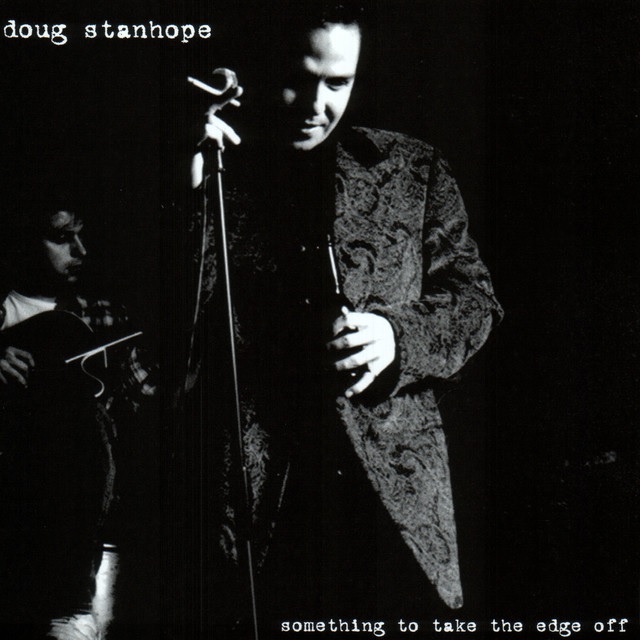
Please Be Upstanding (1): Doug Stanhope – “Something To Take The Edge Off” (2000)

My very first entry in a series where I plan to write about the stand-up comedy I consume!

“Something To Take The Edge Off” was released in 2000 after being recorded at The Laff Stop in Houston, Texas and is the second proper album release of Doug Stanhope’s established stand-up career after 1999’s “Sicko”. Where “Sicko” bore the hallmarks of rare acts who find themselves debuting with a greatest hits compilation, this follow-up feels slightly less regimented, not that any of Stanhope’s work ever comes off as particularly stylised, always seeming conversational and boasting an air of structured rambling. It may also be his masterpiece, among a packed catalogue.

At this vantage point of 2022, Stanhope’s work as a stand-up artist ranks among the most essential creative material of the young century, in any field, so naming this record as the standard-bearer of his releases is no small feat. Subsequent records cleave to a similar template but subtly push the envelope, already a more deadly weapon in Doug’s hands than with most, in incrementally more extreme directions. He can pack an hour of any CD or video release with fresh and side-splitting social commentary, always bordering on the tangential and typically radiating an assumed spontaneity, which is an expert sleight of hand for a performer who is an undoubted master of the craft and has a deep and enviable understanding of how to construct a comedy set.

“Something To Take The Edge Off” is thus a mercurial resource and stylistic lodestar in Stanhope’s career; if aspects of subsequent work push the dial even further in terms of excitement, outrage and hilarity, no other piece comes together quite as devastatingly overall, and all of the seeds can be heard being planted here. A central ingredient to the excellence of this record is the titular element, the acoustic guitar backing of musician and comedian Henry Phillips. This lends a singular attraction in the Stanhope canon and represents a meeting of the minds; beyond his general accompaniment, Phillips significantly enhances countless moments, with his instrument a key plank of several jokes. Most notable is a bit where Stanhope directly challenges the audience to name him, one of the most memorable laughs here. The timing of both acts is exquisite. Otherwise, Phillips strums away a number of watermark riffs which remain engrained in my head, ranging from the driving and kinetic to the dreamy and hallucinogenic. The pairing is entirely natural, and serves to simultaneously highlight and amplify the sonic possibilities always inherent in the vocal rhythms of stand-up comedy when usually delivered acapella.

This album firmly establishes Stanhope, early in his recorded output, as an obvious successor to the iconic Bill Hicks in several respects. When this record was released at the turn of the millennium, Hicks had been sadly dead for six years but his reputation as a revolutionary of the form was continuing to spread. Parallels do abound; Hicks’ most astonishing material releases such as “Arizona Bay” and “Rant In E-Minor” were similarly drawn from recordings at The Laff Stop and both took the format in new directions with Hicks’ own musical backing. Of course, most noteworthy are the excoriating political takes and trenchantly vocal advocacy of living outside the box, though the overlaps between the two men and their arguments are not exact. The calibre of the comedic content is undoubtedly comparable.

Stanhope’s unique expressions and sociopolitical comments here are certainly as acerbic and ruthless as his fanbase have grown to expect over the decades. The record features at least a couple of bravura employments of sound effects, a Hicks trademark which there is no shame in failing to quite match him at, and samples of the nascent body horror bits, with an inevitable sexual focus, which Stanhope would utilise even more supremely and unforgettably at various later junctures. Whether describing less explored instances of the ‘wonder’ of the human body or executing a scathing cultural takedown, Stanhope draws immense laughs from an utterly bruising poeticism which, at its finest , never leaves your head once heard. This is one of his greatest gifts, along with a flair for descriptive details which might scan as throwaway if not listening attentively but nonetheless can count among my favourite of his bits, sprinkling Easter eggs between the lines and ensuring a high repeat value.

As mentioned, Stanhope is performatively supercharged by the elusive quality of appearing to be soliloquising casually, erecting a simulacrum of easiness and drunken relaxation which masks a very thoughtfully carved show and coexists uneasily alongside an outwardly exhausted and dismaying persona. This may be the only remotely comfortable part of the experience of listening to him work, which is more widely challenging and mind-expanding in the best ways stand-up can be. He is a comedian with a white-knuckle grasp of momentum and how to effectively build to a crescendo. On this occasion we have clues and indicators to the architecture of the set bookmarked throughout for us in the form of Phillips’ guitar, carefully intertwining the intentions of both performers as they push ahead and cultivate strong audience reactions throughout.

Stanhope culminates proceedings with a major callback, albeit an intentionally crass and inherently dumb one, before diving into a closing long-form story as denouement. Stanhope tends to work by topical chapters but he certainly does set-pieces, with explosive examples littered across the span of his entire career. It is a testament to him that once immersed in his performances, it becomes rather easy to forget that he utilises traditional comic devices; a certain performative amnesia which is most surely beneficial to him. For me, the premier comedic highs of “Something To Take The Edge Off” come where Stanhope provides self-aware comment on his own scale and potential legacy (or lack thereof), including his brilliant perspective on the impact the very album he is recording is likely to have in history. Gladly, he isn’t entirely correct, and here I sit over twenty years later enshrining my views on it!

Like any staple Stanhope release, this set can easily be mined for headline quotations which neatly encapsulate the essence of the artist and his infamous worldview. There are no shortage of those, and like all of his work, this album has often been a salvation for me; a darkly cynical oasis to retreat into after a horrible day at the office or when generally feeling like microwaved human shit. It is an early crest in a battery of performances where the standard barely drops an iota lower, acting as a marvellous microcosm of Stanhope’s now extensive index and rendered especial by the ace card that is Henry Phillips’ sole addition to that oeuvre.

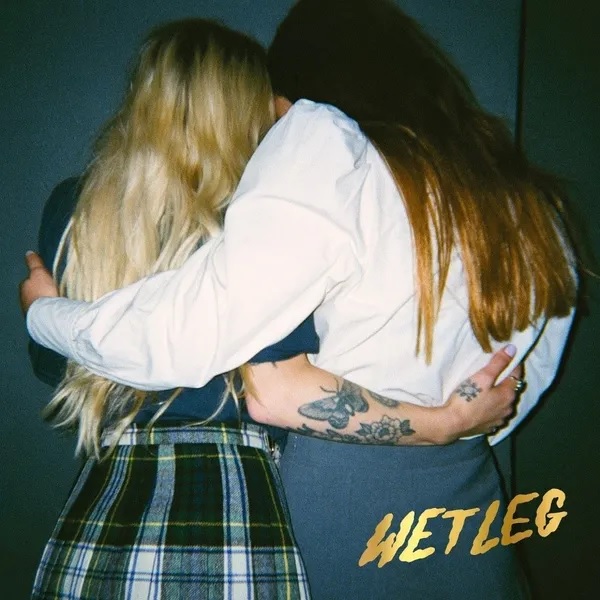
2020s Album Guide: Wet Leg – “Wet Leg” (2022)

In 2006, Arctic Monkeys debuted at #1 with an instant classic debut widely hailed as the first to be organically catapulted all the way there from the corners of an Internet where Myspace was ascendant and social media was yet to become a dirty phrase; a word-of-mouse juggernaut. In 2022, Wet Leg’s self-titled debut became the first ever Isle of Wight album to put a lid on the same chart, despite it seeming like nobody had even heard of them. Where were these songs being played and how had they attracted such fervent Guardianista acclaim?

To many it felt like a pyramid scheme despite the excellence of “Chaise Longue”, until closing track “Too Late Now” stormed the airwaves and recontextualised the band’s schtick, namely a cooler-than-thou arthouse guitar approach pitched equidistantly between landfill indie and the snook-cocking Strokes and Libertines garage riffs which activated said generation, topped with “Suck It & See”-era Monkeys basslines wobbling like Bird’s Custard. Playful, arch and soaked in ennui, the lyrics aren’t quite on Florence Shaw’s level of detachment but skirt close, with references such as to “Mean Girls” and Vincent Gallo never far away. Despite its greatness, this record’s success seems the bellwether to mark the toppling of the post-punk Brexitwave house of cards. They’re selling Boris wigs on Etsy; Brexit is over and even its advocates know it’s a disaster.

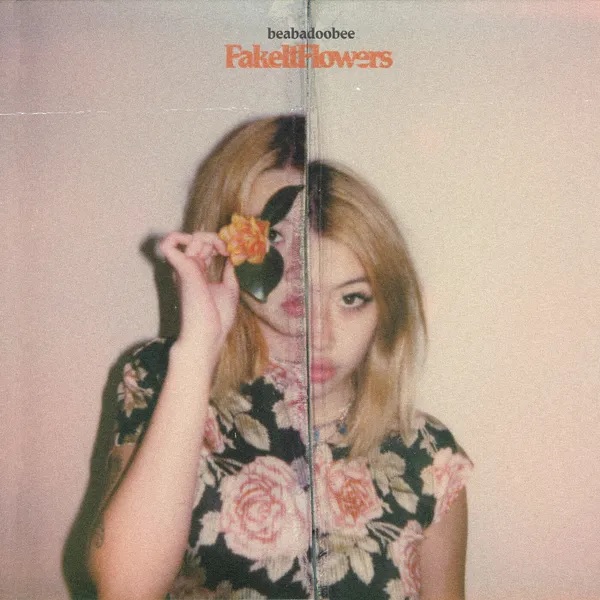
2020s Album Guide: Beabadoobee – “Fake It Flowers” (2020)

Beatrice Laus had barely been playing guitar before her bedroom revival of 90s rock music landed her on Dirty Hit. “Fake It Flowers” is a debut unashamedly indebted to that era’s hallucinogenic visions of indie flick soundtracks, but no less lit to luxuriate in for that. Beyond indulging shimmery “Siamese Dream” fantasies, the album’s brand of dream pop veritably laced with regular ribbons of dazzling, sunshine-in-the-bay melody, Laus also plays cards from the Britpop booster pack, not least ample servings of crunchy Verve-esque symphonics.

Although entirely derivative, anyone dismissing the continuing emergence of girls with guitars rebooting 90s alt-rock cornerstones may be peering past the zeitgeist, and the sound of a more utopian rock industry being built from the ground up. “Fake it Flowers” is a kaleidoscope which reveals the twin possibilities of both a Gen Z future blooming from this very launch pad and, conversely, a fully-manifested fuzzbox of Gen X sugar not to be bettered.

The Pandemic Popstar

I know I was travelling to work on a windswept, soaking wet December morning in 2019 the first time I heard The Weeknd’s “Blinding Lights” on the radio, the perfect setting for its cleansing, synth-pop backwash. Those were rarefied days; the song still felt new, impossible to reimagine now, and unbeknownst to us all, the world was about to be flipped on its axis. Little did we know what was coming in all senses, as that driving, gleaming titan of 80s time-warp mania would eventually be crowned as the number one entry on Billboard’s Greatest Songs Of All Time Hot 100 Chart in November 2021 as a result of its breathtaking commercial performance and seemingly neverending list of records and accolades, dethroning Chubby Checker’s game-changing 1960s hyper-smash “The Twist”; truly the unimaginable occurring in real time.

For perspective, this is a 60 year period of American cultural power, its zenith coming some 34 years before “Blinding Lights” with the Chicago Bears’ domination of Super Bowl 20 in 1986, merely a year after Ronald Reagan’s 1984 landslide victory in that year’s presidential election; the apex of American empire and projection. Among its countless other achievements, “Blinding Lights” also enjoyed the longest ever Billboard chart run by a song to top said ladder, ousting the Obama-era Millennial national anthem of consumerist nihilism and head-blunting escapism, LMFAO’s 2011 barely-named, recession-busting juggernaut “Party Rock Anthem”. All of this achieved by a former Canadian street rat and sofa surfer, now officially ascended to pop ubiquity and mega-stardom.

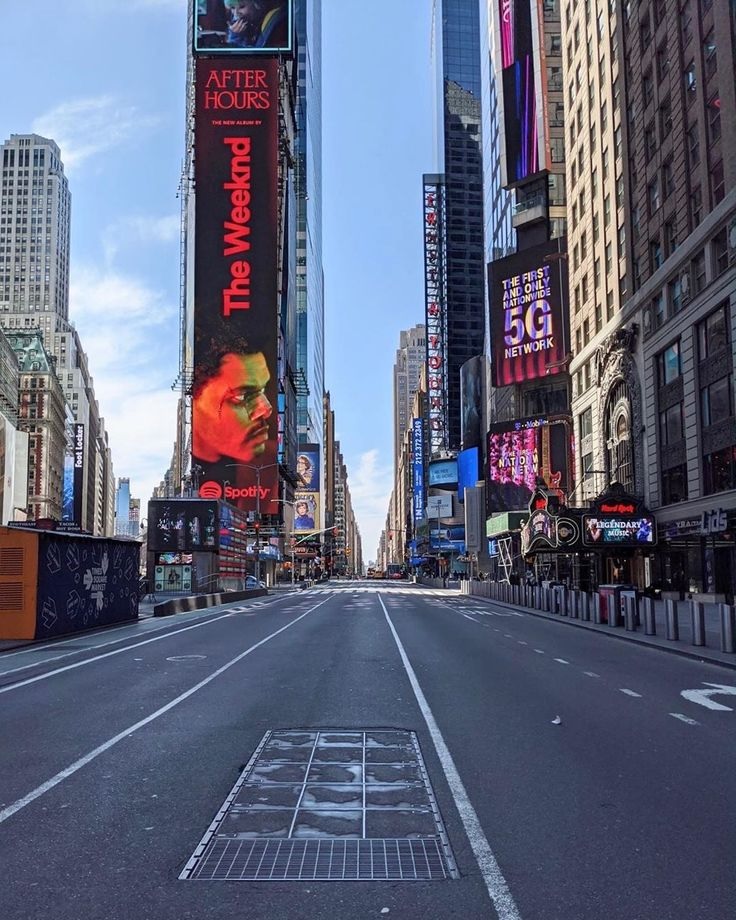
When the song’s parent album “After Hours” was unleashed in March 2020, it was released into a world where every rule had altered. It became the unintended icon of international desolation as eerie images showed towering advertisements for the record bedecking a deserted Times Square, the Crossroads of the World emptied of its usual vitality and reduced to a technicolour ode for nobody. This neatly encapsulated how things would progress for the next three months, as the album and movie pushbacks immediately began to ring in and the cultural sphere was frozen in stasis; here in the UK, the album charts were dominated by big-name compilations and greatest hits collections from across the decades as listeners sought familiar comforts and more calcified forms of nostalgia amongst an otherwise lightly-stocked market (intriguingly enough, this has continued to the present day, to a great extent). “After Hours” was the big exception, a none-more-major album release perfectly coinciding with the widespread imposition of unprecedented lockdowns, an accidental bittersweet-spot. It was The Final Album, and its stranglehold on radio, streaming and charts in such weird times told accordingly.

This commercial success was also richly deserved. “After Hours” contended for Abel Tesfaye’s strongest album to date, a tightly-sequenced cycle visually influenced  by (and named for) Martin Scorsese’s imperial period and dealing very strongly in the strengths of its select producers, from the woozy psychedelic trap of Metro Boomin, which had never been utilised as progressively as here, to the nightmarish Balearic claustrophobia of long-time collaborator Illangelo on the title track. Swedish super-writer Max Martin’s three track run through “Blinding Lights”, “In Your Eyes” and “Save Your Tears” is incredible. The other notable name in the credits is Daniel Lopatin as Oneohtrix Point Never, under his OPN moniker. Here we can trace a cultural spiderweb which would feed heavily into The Weeknd’s eventual follow-up album, the seeds clearly having been planted on “After Hours”.

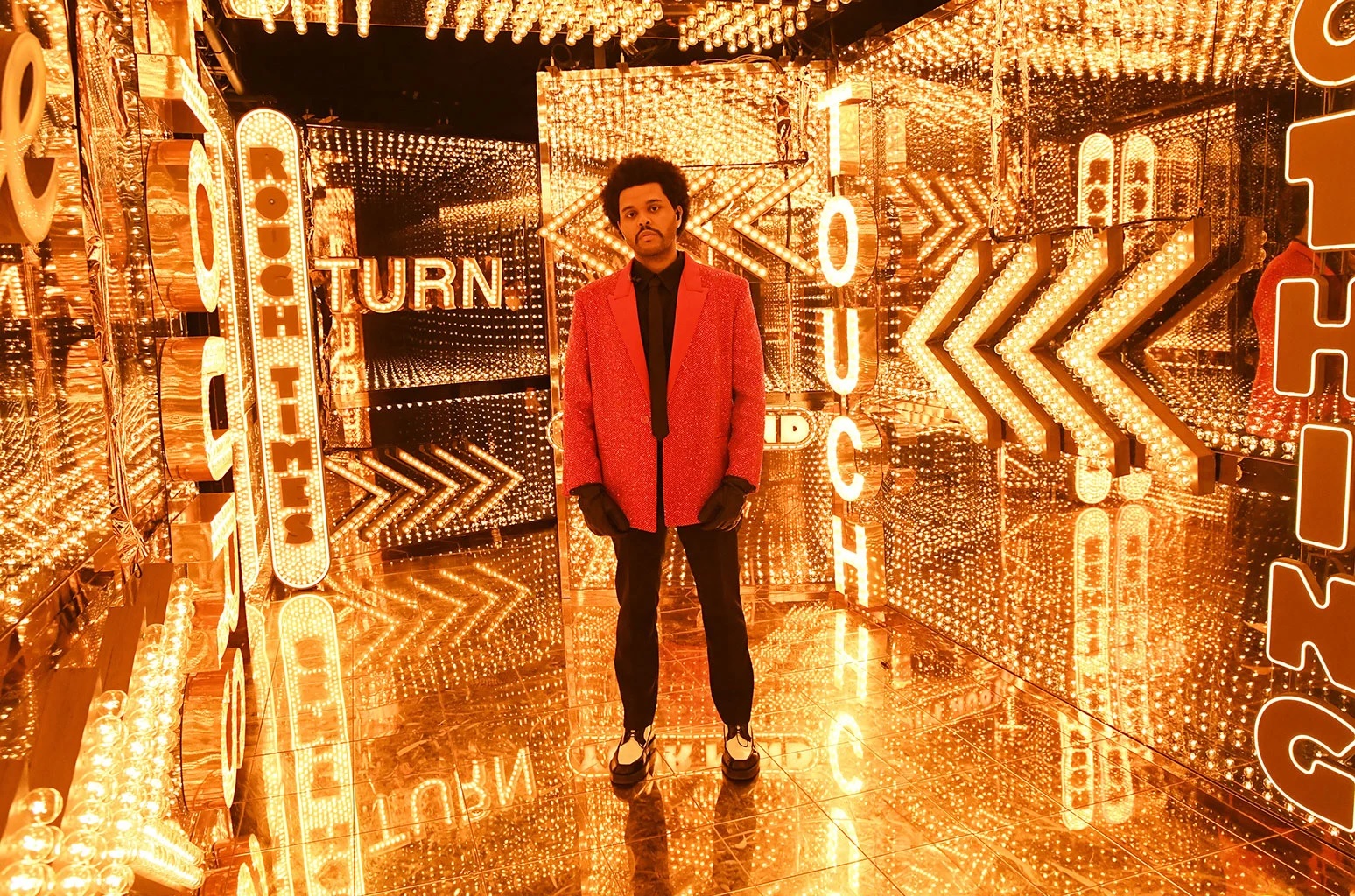
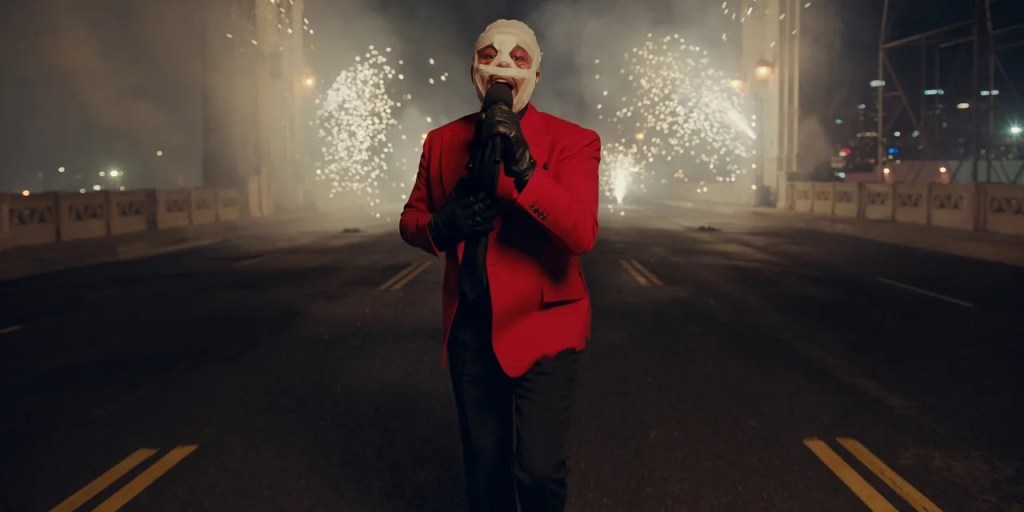
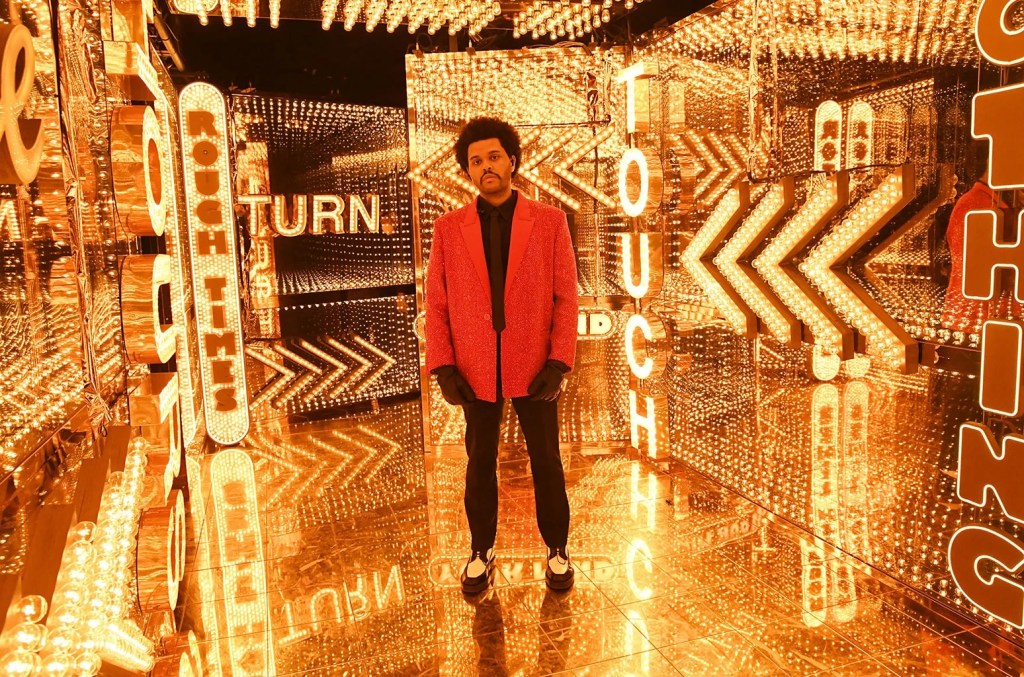
Prior to the full impact of Covid-19 being felt, Tesfaye was already keenly portraying his vision for the album and his own rapidly-developing role as a performative curator, with striking turns at late night talk shows allowing him to realise the aesthetical and character-driven aspects surrounding the songs within. Undeterred by the new circumstances the record was ultimately born into, he fully embraced the opportunity to utilise space, isolation and emptiness, qualities which resonated thematically with his entire oeuvre of work, and seized the imagination of the song-streaming public with performances such as that at the 2020s AMAs and VMAs, the latter a dizzying “Blinding Lights” atop Manhattan, which it is not an exaggeration to call one of the most significant historical performances ever, an essential time capsule moment.

Realistically, all of this was building to February 2021, as the emergence of numerous variants meant the pandemic continued to burn, the rollout of vaccines only then in its infancy. I mentioned the Super Bowl earlier and the capacity of that event to beam American soft power around the globe, even if through the use of a Canadian artist from within the orbit of its pop-cultural ecosystem, has only heightened in the intervening 35 years. Cue Super Bowl 55 in Tampa Bay, Florida, the lowest-attended Super Bowl in history. A less than half-empty Raymond James Stadium was the setting for the main event spectacular of the “After Hours” era, into which Tesfaye reportedly poured his own money in order to achieve the appropriate sense of scale. The disorienting, technically stunning show will once again be must-see viewing for any studying pandemic pop culture, its lack of guest performers lending it singularity and the hollowed-out stadium setting which comprises its unfortunate backdrop will hopefully remain totally unique. In The Weeknd’s trajectory this is a glorious moment, of course never to be topped in terms of eyeballs, and a logical endpoint for the promotional journey of “After Hours”.

The Weeknd’s place as the defining star of the Covid-19 pandemic is only cemented further by his newest album, albeit in photo negative terms. Conceptually, “After Hours” did already touch upon the idea of the transitionary. Moments such as the coda of “Faith”, a song which effectively strings together four differing choruses, particularly perfectly marry the musical and lyrical ideas of moving beyond, which the track subsequently does as it dissolves into “Blinding Lights”, that obvious centrepoint, though this wasn’t a clearly signposted jumping-off point. Nonetheless, The Weeknd’s January 2022 follow-up “Dawn FM” undoubtedly doubles down on the purgatorial, and on several of the artistic routes first burrowed on the previous album. Dropped with little warning at the turn of this calendar year, the record is more formally a concept album than anything previously attempted by Tesfaye, ostensibly a radio broadcast in the holding pen between lives, with Jim Carrey as the DJ. Max Martin’s fingerprints are once again all over the album and Swedish House Mafia are incorporated into the process, on the heels of their canyon-sized Weeknd collab “Moth To A Flame”.

However, OPN is promoted into an executive producer’s seat alongside Martin, and this quickly shows. Tesfaye met Lopatin when appearing in the Safdie Brothers’ excellent 2019 movie “Uncut Gems”, which was scored by Lopatin. This relationship evidently blossomed through their aforementioned teamwork on “After Hours” and makes a lot of evolutionary sense for both men. On this evidence, “Uncut Gems” is the gift that keeps on giving, with Josh Safdie even appearing here on the interlude “Every Angel Is Terrifying” as fictional director Arthur Fleminger. The track teases the idea of a follow-up album entitled “After Life”, with Tesfaye having confirmed his vision of the albums constituting a thematic trilogy.

OPN is an exquisite choice to soundtrack The Weeknd’s exploration of liminality, spurred by the pandemic experience. “Dawn FM” is a genre tour-de-force, more dance-heavy than “After Hours” with a delicious Daft Punkian sheen, a continuing sharp focus on synthwave, pulling further influences from across the spectrum in the form of funk, drum and bass, RnB, disco, electropop and city pop, among many others. Unsurprisingly given its themes and structure, it is a love letter to FM radio. OPN’s handiwork is thus tellingly evident, based on Lopatin’s own career. The cannibalising of Japanese city pop here evokes vaporwave, within which Lopatin was a kingmaker with his 2010 opus “Chuck Person’s Eccojams Vol. 1” a transcendent document of the movement. His work, while varied, has rarely strayed all that far from such resonances, with the 2015 masterpiece “Garden Of Delete” another white-knuckle ride through the detritus of pop nostalgisms. The trajectory from obscurely seminal wildcard works to ushering through the artistic desires of the world’s biggest pop star is sadly a little-travelled road, but it is an extremely inspiring one to observe in this context. Weeknd completists will also want to hear “No Nightmares” from 2020’s “Magic Oneohtrix Point Never”, another key entry in the OPN canon.

These stylings strike me throughout “Dawn FM”, which has an incredibly liquid, amorphous sound, its sonics seeming impossibly, mystifyingly malleable. This holds a mirror to the ideas behind vaporwave, specifically in terms of the reliability and meaning of memory.  A track like “How Do I Make You Love Me?” seems to run at a different speed every time I listen to it, dependent on mood, time of the day and countless other variables. This is extremely thrilling and lends infinite repeat value. Some of The Weeknd’s strongest material is contained within, as recognised by critics, with the record drawing Tesfaye’s greatest acclaim since the visionary 2011 debut “House Of Balloons”. “Less Than Zero” is arguably the finest song he has ever written, the near-closer before Carrey ends the album with a gorgeous narration. “I Heard You’re Married” is a supremely-crafted pop song with room for guests this time, Lil Wayne slotting in seamlessly here, and Tyler The Creator of all people on “Here We Go…..Again”. “Sacrifice” is a vamping Swedish House-helmed vault which flips Alicia Myers’ 1981 hit “I Want To Thank You”, with the unusual interpolation of that tune’s piano melody into the chorus vocal.

The first track from “Dawn FM” to have mass exposure was “Take My Breath”, an asphyxiation fantasy indulgence transmitted from Planet Banger in the summer of 2021, lathered with climbing Giorgio Moroder beats and sweltering hooks. It felt of a piece with “After Hours”, but pushing unmistakeably into the beyond. Max Martin had done his thing on it once again. It drew acclaim, as has come to be expected. So then, how do we go about explaining a Billboard peak at number six, or a highest chart bow at 13 in the UK, both countries where “Blinding Lights” especially but indeed all songs untethered from “After Hours” were all-conquering? “Dawn FM” has followed a pattern of countless artists throughout the annals, achieving critical adoration but alongside some commercial regression. This should of course be contextualised in this case; the album capped the UK album charts but in the US, despite a strong start as expected, it could only find number two, held off the mountaintop by Gunna’s “DS4Eever”, which immediately seemed symbolic of its lethargy and lack of commercial stamina when compared to “After Hours”.

Put simply, the world has altered once again. The pandemic is not over, but it looks a lot different in the middle of 2022 to even six months ago, let alone two years previous. In recent times, the popularity of the “Liminal Spaces” bot on Twitter has been no surprise, though it recently endured the inevitable backlash from hair-splitters alleging that numerous of its shared photos did not truly represent liminality, despite its hit rate seeming very stellar to me. Some suggested that academia was at fault for the newfound popularity and supposed misuse of the term, but this seems to ignore a sizeable elephant in the room. People see liminal spaces around them as en masse we have spent around two years teetering on some threshold of transformation, and the explanation doesn’t seem any more complex than that to me, particularly a genuinely universal experience which cannot be faithfully replicated. It is clear that The Weeknd understood this from the conceptual casing of “Dawn FM”.

One of the most impeccable liminal experiences available previously was engaging in international transit and airport travel. In a classic display of Crap Britishness™, one of the most enraging aspects of lockdown for the British public seemed not to be the restraint of lockdown itself, but the inability to escape the country at least once a year. Again, Tesfaye has attempted to tap a subconscious interest in and even desire for liminality, which has grown more potent due to events since the turn of 2020. Having experienced lockdowns effectively from the outside in the way he did during the “After Hours” promo drive, this is unsurprising. This very deeply submerged impulse harkens to a wish for transformational social change, which mass media and culture continue to bury with stunning efficacy; the revolution many anticipated as a result of the onset of pandemic, a supposed dry run of climate change disaster or a restructuring of social justice a la the post-war settlement on fast-forward, has never materialised, indeed quite the reverse. Everything is liminal in this seemingly endless era after the 2008 financial crash, the day-to-day evocation of the iconic Antonio Gramsci quote; “the crisis consists precisely in the fact that the old is dying and the new cannot be born; in this interregnum a great variety of morbid symptoms appear”.  

In terms of quality, the writing and stylistic routing on “Dawn FM” matches that of “After Hours”. The album is just as brilliantly realised and none of its ideas can be said to be underdeveloped, even if they are sometimes more fragmentary; “Dawn FM” whips through a series of miniaturised tracks shortly past its halfway point, granting constitutional distance from the preceding longplayer. The secret lies in the timing; much like the lifespan of “After Hours” is indelibly informed by the setting into which it accidentally landed, “Dawn FM” pursued conceptual avenues with expert subtlety, but into a world where the Omicron variant would soon be on the verge of at least partially burning out, and people had become tired of even acknowledging that a pandemic was ongoing. In this way it is always important to be careful what you wish for, just as British tourists at the time of writing are discovering what travel chaos truly looks like at the nation’s airports.

“Dawn FM” is an excellent album and one of the year’s best to date; this is only an attempt to dissect its mainstream underperformance relative to “After Hours”. Between them, in these differing manners, they define The Weeknd as the Pandemic Popstar; as a mass culture we experienced this bizarre period of complete upheaval and uneasy boredom through the lens of his finest artistry to date. The long-delayed “After Hours ‘Til Dawn” stadium tour will finally commence in summer 2022, with the clear promise of continuing the showmanship and ambition Tesfaye evidenced throughout 2020 and 2021, culminating at the Super Bowl. I believe this will recalibrate the tracks from “Dawn FM” as part of the wider journey of the purported trilogy as a whole, and promises to jolt audiences into taking a second listen. The rest of the story is still to be written, but it would be hard to swallow if the conclusion is that this still-evolving coterie of music is preferred in isolation rather than communally.

Pop Will Change The World: Charli XCX – “Unlock It”

A certain streaming service(!) recently informed me of my most-played song of 2021, which I suspect was a runaway winner. “Unlock It” by Charli XCX lurks at 8th in sequence on the 2017 future-pop blueprint and perfectly-titled “Pop 2”, taking cues from Ornette Coleman and Refused in terms of prophetically named genre statements. A track buried away on an album more than three years old, in our age of relentless infotainment and wafer-thin attention spans, ought to stand little chance of burrowing into any discourses, but in some cases cream does rise to the top.

Charli has herself acknowledged the cult fandom of “Unlock It” and its widespread perception, at least in the eyes of her fanbase, as her finest track, a reputation which has developed organically. This has been heightened and bolstered by the track’s popularity on TikTok, where a fine but inferior alternative cut, the Jeff Prior Mix, ranked among the app’s most-played songs of 2021 in the UK. Irrespective of this disparity in versions, my experience would seem to have been something of a universal one. “Unlock It” was already soaring when it took on a new relevance and eerie synchronicity during the deepest and darkest UK lockdown across winter 2020/21; certainly this was when I was most regularly hammering the track and dreaming naively of a summer that has yet to arrive, of parties as extravagant and free as those Charli has powered both her music and aesthetics on the basis of. Clearly I was not alone in that.

“Pop 2” as an album opens an already acclaimed trilogy of records completed by “Charli” and “How I’m Feeling Now”, the album de jour of the original worldwide lockdown (during which it was recorded in self-isolation across six weeks). Only time will tell whether this output represents the apex of XCX’s oeuvre, though we hope not, but as an already adored trio at the zenith of the hyperpop sub-genre, and one which stands to enhance its iconicity over time, this may be the case. This is not least as Charli has indicated her possible intention to pivot away from hyperpop on the upcoming 2022 album “Crash”, with tracks such as “Good Ones”, the heavyweight feature-blast “New Shapes” and equally star-studded Jax Jones and Joel Corry collab “Out Out” all implying a melding of 80s synth-pop with the recession-era bangers of LMFAO and The Black-Eyed Peas, records Charli has not been quiet in her praise of. While the typically elusive and amorphous forms of hyperpop continue to bubble away, especially in crossover with the burgeoning digicore movement, it is also difficult not to view the tragic death of Scottish producer and seminal hyperpop idol SOPHIE early in 2021 as a curtain call of sorts.

“Unlock It” is nothing less than one of the most thrilling, and therefore by extension best, pop songs of all time. It is anchored around its gleaming, sparkling synth line from Life Sim, a bleeping, sugared-up marble-cake melody which generates butterflies flapping like eagles. It is breathtaking. Overall production comes from major Charli collaborator and hyperpop overlord AG Cook of PC Music, who bends an exquisite track out of the sheer malleability of these components. The lyrics are luminous, a freak-sized funfair which repeatedly evokes white knuckles and deliciousness (“rollercoaster ride”, “cherry maraschino”) to convey the excitement of the pursuit of true love, the sort which brings out goosebumps and makes the stomach do bungee-jumps. This is in tandem with Charli’s other trope, besides partying, which is travelling by car; “passenger seat”, “got the roof down”, “when we pit stop”. Appropriately for a song this transcendent, the metaphor extends ever so slightly further on this occasion, with the song’s most beautiful lines; “I’m feeling like an astronaut watching the world/All alone, just you and I”.

Charli’s candied vocals croon in so syrupy a fashion as to match the song’s subject matter perfectly. They are not shifted up into a hyperpop archetype on this cut, but nonetheless subtly conjure up the genre’s chief promises of possibility and transformation. The chorus consists of little more than the track’s title repeated, spliced, cut up and interlocked in a clickety-click reminiscent of the ASMR stylings of Lorde and Billie Eilish, only to a synthetic tenfold. Charli’s voice throughout is near-indistinguishable from that of Kim Petras, who, alongside rapper Jay Park, gets to appear here in central, if as mentioned somewhat obscured, form on a perfect, timeless track. “Pop 2” is utterly loaded with invitees to Charli’s circus, and “Unlock It” is no exception. The German singer delivers the second verse, though I had to double check this. For me, this can be portrayed as a neat, knowing hyperpop trick, but all the same, both artists can count their blessings for being here.

After Park’s rapped verse, which is wisely economical in refusing to distract from the song’s central thesis, we reach the escalating climax of the track, which is a rocket ship aimed squarely into the stratosphere. You would need to venture back to post-metal’s early-century prime to locate tracks with as barrelling a denouement or as wide-eyed a sense of their own epic structure. “Unlock It” in fact contains a false finish, but more on that momentarily. As the hook doubles and trebles up towards a climax, this section commences with percussive synth stabs underlaying that unforgettable main melodic line. As vocals clamber atop each other, the sense of escalation is ratcheted up hugely by, first of all, clapping drums and then hissing noise and sirens; the melodies become increasingly fluttery and stargazey, the overall mix is more and more ecstatic by the second. This constitutes an incredibly powerful, awe-inducing stretch of guaranteed Stendhal Syndrome, the likes of which can only be afforded full justice by being heard.

“Unlock It” seems to be over at a spritely three minutes, a giddy plunge over the horizon which should have you reaching instantly for the repeat button. This does not account for its gorgeous post-Burial coda, which takes proceedings closer to the four minute mark; the revivification of majestic melody, the disembodied pitched-up garage vocals floating free from the track which birthed them in a furious orgy of love and sonics, the pitch-perfect interplay between voice and percussion. This is an unexpected and excellent appendage to what would have stood as unadulterated musical bliss on its own, and worthy of the comparison to British electronic music’s greatest artist, in feeling if not in style, and it is indeed his significance as an indicator and barometer of how things “feel” which brings Burial his seismic relevance as a 21st Century artist.

I mention this especially because it is when thinking about “Unlock It”, as I have done so much over the past 12 months, that this following particular quote from consciousness-bending British documentary artist Adam Curtis about Burial’s music often comes to mind. As this shows, Curtis is an unabashed disciple of Burial, whose music has liberally scored his astounding films, from “Bitter Lake” to “Hypernormalisation”, and the superb 2021 TV series “Can’t Get You Out Of My Head”. Curtis opined of the visionary South London producer’s song “Come Down To Us”, arguably his very best work in an extremely competitive field:

“It really sums up our time…that song is saying, it’s really frightening to jump off the edge into the darkness. Both when you fall in love with someone, and when you want to change the world. And it depends whether you can live with the fear or whether you really want the thrill of it. Or whether you retreat into the world you’re happy with….it’s the mood of our time that we’re waiting for”.

This is one of the best descriptions I’ve ever seen of “Come Down To Us” as a song, of Burial’s music in general, of the 21st Century to date and most probably of music, period. It describes what all of the very best music to be recorded, which is to say a vanishingly rare collection of songs, is able to do, including pop music of course. All pop songs should have no less ambitious an aim than to encapsulate such head-spinning, generational tendencies, and Charli XCX is able to stand as a progressive and forward-thinking act who has achieved this Herculean feat at least once with “Unlock It”. This is to say nothing of the now clear link between the Lana Wachowski speech famously sampled in Burial’s track and the direction and thematic content of much of hyperpop, which I will not explore further here but which resonates forcefully in this connection.

“Unlock It” is explicitly about love, but all songs about love are about changing the world, and all songs about changing the world are about love. Curtis accidentally and miraculously captures that symbiosis with his words, and the way tracks which somehow hurdle such towering credentials feel to listen to; they create an apprehension which is life-affirming and terrifying, even on countless repeat listens. This is the magnetism “Unlock It” boasts and which will continue to pull me back into the song, through another lonely winter into 2022 and for as long as we continue to wonder when life might be the same again, if ever, but certainly for as a long as the hope and energy of adventure continue to blaze, however faintly.