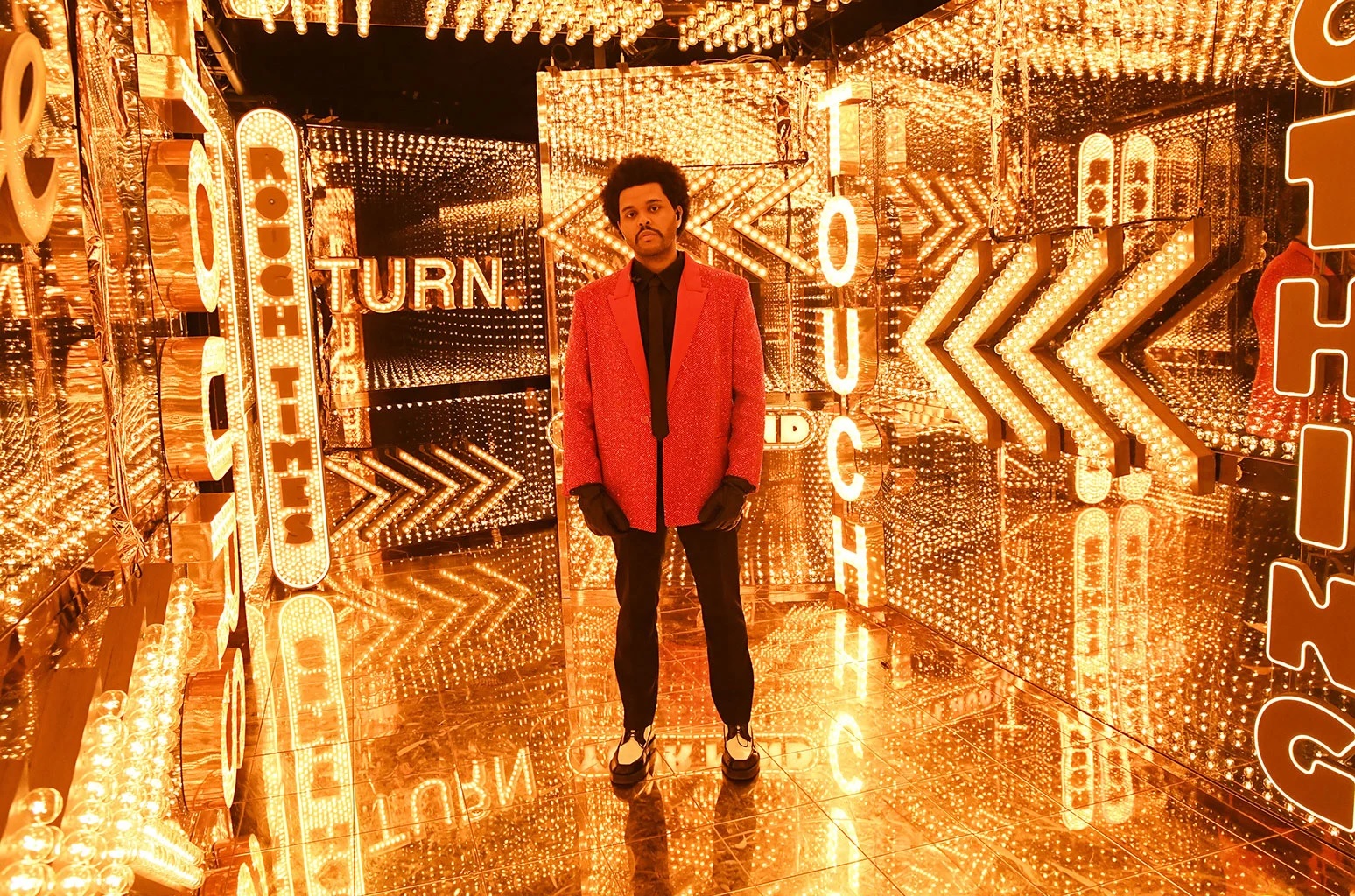
I know I was travelling to work on a windswept, soaking wet December morning in 2019 the first time I heard The Weeknd’s “Blinding Lights” on the radio, the perfect setting for its cleansing, synth-pop backwash. Those were rarefied days; the song still felt new, impossible to reimagine now, and unbeknownst to us all, the world was about to be flipped on its axis. Little did we know what was coming in all senses, as that driving, gleaming titan of 80s time-warp mania would eventually be crowned as the number one entry on Billboard’s Greatest Songs Of All Time Hot 100 Chart in November 2021 as a result of its breathtaking commercial performance and seemingly neverending list of records and accolades, dethroning Chubby Checker’s game-changing 1960s hyper-smash “The Twist”; truly the unimaginable occurring in real time.
For perspective, this is a 60 year period of American cultural power, its zenith coming some 34 years before “Blinding Lights” with the Chicago Bears’ domination of Super Bowl 20 in 1986, merely a year after Ronald Reagan’s 1984 landslide victory in that year’s presidential election; the apex of American empire and projection. Among its countless other achievements, “Blinding Lights” also enjoyed the longest ever Billboard chart run by a song to top said ladder, ousting the Obama-era Millennial national anthem of consumerist nihilism and head-blunting escapism, LMFAO’s 2011 barely-named, recession-busting juggernaut “Party Rock Anthem”. All of this achieved by a former Canadian street rat and sofa surfer, now officially ascended to pop ubiquity and mega-stardom.
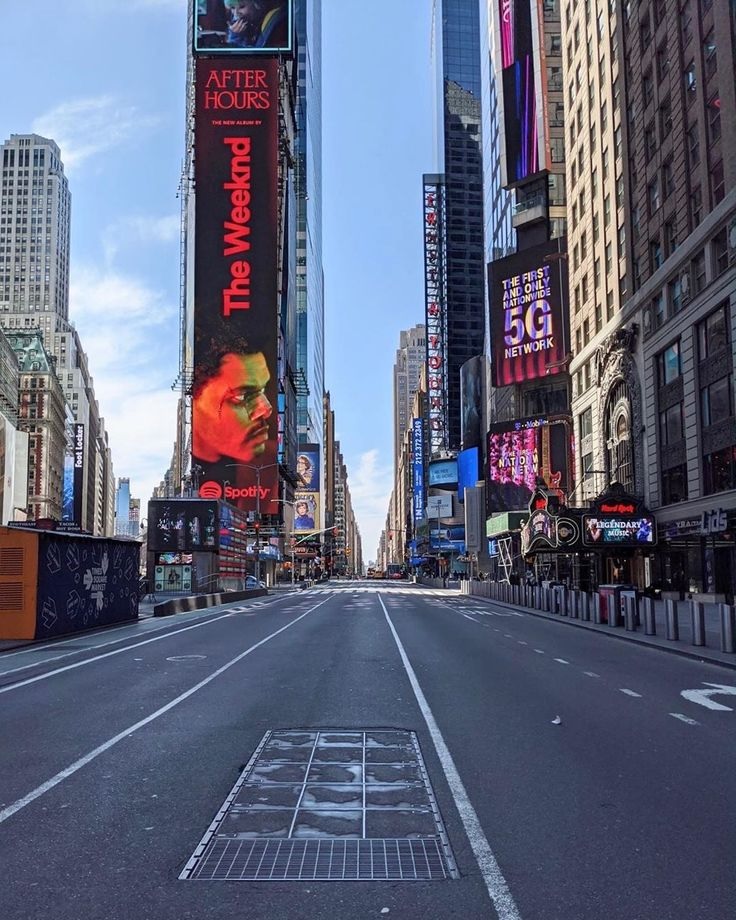
When the song’s parent album “After Hours” was unleashed in March 2020, it was released into a world where every rule had altered. It became the unintended icon of international desolation as eerie images showed towering advertisements for the record bedecking a deserted Times Square, the Crossroads of the World emptied of its usual vitality and reduced to a technicolour ode for nobody. This neatly encapsulated how things would progress for the next three months, as the album and movie pushbacks immediately began to ring in and the cultural sphere was frozen in stasis; here in the UK, the album charts were dominated by big-name compilations and greatest hits collections from across the decades as listeners sought familiar comforts and more calcified forms of nostalgia amongst an otherwise lightly-stocked market (intriguingly enough, this has continued to the present day, to a great extent). “After Hours” was the big exception, a none-more-major album release perfectly coinciding with the widespread imposition of unprecedented lockdowns, an accidental bittersweet-spot. It was The Final Album, and its stranglehold on radio, streaming and charts in such weird times told accordingly.
This commercial success was also richly deserved. “After Hours” contended for Abel Tesfaye’s strongest album to date, a tightly-sequenced cycle visually influenced by (and named for) Martin Scorsese’s imperial period and dealing very strongly in the strengths of its select producers, from the woozy psychedelic trap of Metro Boomin, which had never been utilised as progressively as here, to the nightmarish Balearic claustrophobia of long-time collaborator Illangelo on the title track. Swedish super-writer Max Martin’s three track run through “Blinding Lights”, “In Your Eyes” and “Save Your Tears” is incredible. The other notable name in the credits is Daniel Lopatin as Oneohtrix Point Never, under his OPN moniker. Here we can trace a cultural spiderweb which would feed heavily into The Weeknd’s eventual follow-up album, the seeds clearly having been planted on “After Hours”.
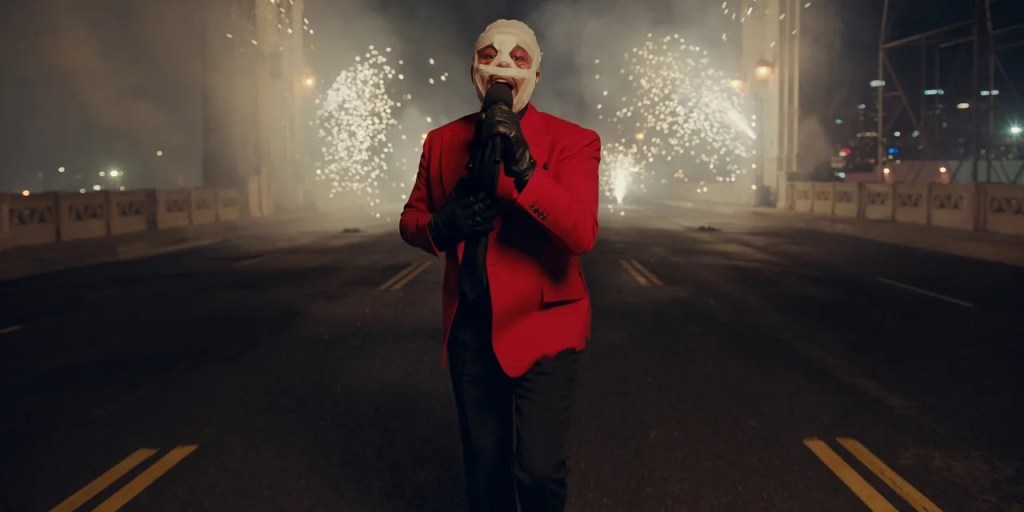
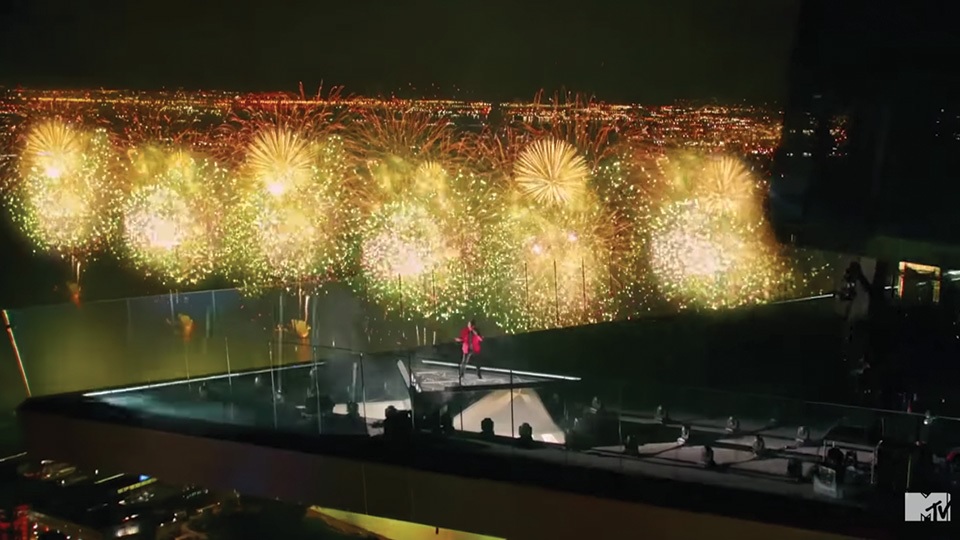
Prior to the full impact of Covid-19 being felt, Tesfaye was already keenly portraying his vision for the album and his own rapidly-developing role as a performative curator, with striking turns at late night talk shows allowing him to realise the aesthetical and character-driven aspects surrounding the songs within. Undeterred by the new circumstances the record was ultimately born into, he fully embraced the opportunity to utilise space, isolation and emptiness, qualities which resonated thematically with his entire oeuvre of work, and seized the imagination of the song-streaming public with performances such as that at the 2020s AMAs and VMAs, the latter a dizzying “Blinding Lights” atop Manhattan, which it is not an exaggeration to call one of the most significant historical performances ever, an essential time capsule moment.
Realistically, all of this was building to February 2021, as the emergence of numerous variants meant the pandemic continued to burn, the rollout of vaccines only then in its infancy. I mentioned the Super Bowl earlier and the capacity of that event to beam American soft power around the globe, even if through the use of a Canadian artist from within the orbit of its pop-cultural ecosystem, has only heightened in the intervening 35 years. Cue Super Bowl 55 in Tampa Bay, Florida, the lowest-attended Super Bowl in history. A less than half-empty Raymond James Stadium was the setting for the main event spectacular of the “After Hours” era, into which Tesfaye reportedly poured his own money in order to achieve the appropriate sense of scale. The disorienting, technically stunning show will once again be must-see viewing for any studying pandemic pop culture, its lack of guest performers lending it singularity and the hollowed-out stadium setting which comprises its unfortunate backdrop will hopefully remain totally unique. In The Weeknd’s trajectory this is a glorious moment, of course never to be topped in terms of eyeballs, and a logical endpoint for the promotional journey of “After Hours”.
The Weeknd’s place as the defining star of the Covid-19 pandemic is only cemented further by his newest album, albeit in photo negative terms. Conceptually, “After Hours” did already touch upon the idea of the transitionary. Moments such as the coda of “Faith”, a song which effectively strings together four differing choruses, particularly perfectly marry the musical and lyrical ideas of moving beyond, which the track subsequently does as it dissolves into “Blinding Lights”, that obvious centrepoint, though this wasn’t a clearly signposted jumping-off point. Nonetheless, The Weeknd’s January 2022 follow-up “Dawn FM” undoubtedly doubles down on the purgatorial, and on several of the artistic routes first burrowed on the previous album. Dropped with little warning at the turn of this calendar year, the record is more formally a concept album than anything previously attempted by Tesfaye, ostensibly a radio broadcast in the holding pen between lives, with Jim Carrey as the DJ. Max Martin’s fingerprints are once again all over the album and Swedish House Mafia are incorporated into the process, on the heels of their canyon-sized Weeknd collab “Moth To A Flame”.
However, OPN is promoted into an executive producer’s seat alongside Martin, and this quickly shows. Tesfaye met Lopatin when appearing in the Safdie Brothers’ excellent 2019 movie “Uncut Gems”, which was scored by Lopatin. This relationship evidently blossomed through their aforementioned teamwork on “After Hours” and makes a lot of evolutionary sense for both men. On this evidence, “Uncut Gems” is the gift that keeps on giving, with Josh Safdie even appearing here on the interlude “Every Angel Is Terrifying” as fictional director Arthur Fleminger. The track teases the idea of a follow-up album entitled “After Life”, with Tesfaye having confirmed his vision of the albums constituting a thematic trilogy.
OPN is an exquisite choice to soundtrack The Weeknd’s exploration of liminality, spurred by the pandemic experience. “Dawn FM” is a genre tour-de-force, more dance-heavy than “After Hours” with a delicious Daft Punkian sheen, a continuing sharp focus on synthwave, pulling further influences from across the spectrum in the form of funk, drum and bass, RnB, disco, electropop and city pop, among many others. Unsurprisingly given its themes and structure, it is a love letter to FM radio. OPN’s handiwork is thus tellingly evident, based on Lopatin’s own career. The cannibalising of Japanese city pop here evokes vaporwave, within which Lopatin was a kingmaker with his 2010 opus “Chuck Person’s Eccojams Vol. 1” a transcendent document of the movement. His work, while varied, has rarely strayed all that far from such resonances, with the 2015 masterpiece “Garden Of Delete” another white-knuckle ride through the detritus of pop nostalgisms. The trajectory from obscurely seminal wildcard works to ushering through the artistic desires of the world’s biggest pop star is sadly a little-travelled road, but it is an extremely inspiring one to observe in this context. Weeknd completists will also want to hear “No Nightmares” from 2020’s “Magic Oneohtrix Point Never”, another key entry in the OPN canon.
These stylings strike me throughout “Dawn FM”, which has an incredibly liquid, amorphous sound, its sonics seeming impossibly, mystifyingly malleable. This holds a mirror to the ideas behind vaporwave, specifically in terms of the reliability and meaning of memory. A track like “How Do I Make You Love Me?” seems to run at a different speed every time I listen to it, dependent on mood, time of the day and countless other variables. This is extremely thrilling and lends infinite repeat value. Some of The Weeknd’s strongest material is contained within, as recognised by critics, with the record drawing Tesfaye’s greatest acclaim since the visionary 2011 debut “House Of Balloons”. “Less Than Zero” is arguably the finest song he has ever written, the near-closer before Carrey ends the album with a gorgeous narration. “I Heard You’re Married” is a supremely-crafted pop song with room for guests this time, Lil Wayne slotting in seamlessly here, and Tyler The Creator of all people on “Here We Go…..Again”. “Sacrifice” is a vamping Swedish House-helmed vault which flips Alicia Myers’ 1981 hit “I Want To Thank You”, with the unusual interpolation of that tune’s piano melody into the chorus vocal.
The first track from “Dawn FM” to have mass exposure was “Take My Breath”, an asphyxiation fantasy indulgence transmitted from Planet Banger in the summer of 2021, lathered with climbing Giorgio Moroder beats and sweltering hooks. It felt of a piece with “After Hours”, but pushing unmistakeably into the beyond. Max Martin had done his thing on it once again. It drew acclaim, as has come to be expected. So then, how do we go about explaining a Billboard peak at number six, or a highest chart bow at 13 in the UK, both countries where “Blinding Lights” especially but indeed all songs untethered from “After Hours” were all-conquering? “Dawn FM” has followed a pattern of countless artists throughout the annals, achieving critical adoration but alongside some commercial regression. This should of course be contextualised in this case; the album capped the UK album charts but in the US, despite a strong start as expected, it could only find number two, held off the mountaintop by Gunna’s “DS4Eever”, which immediately seemed symbolic of its lethargy and lack of commercial stamina when compared to “After Hours”.
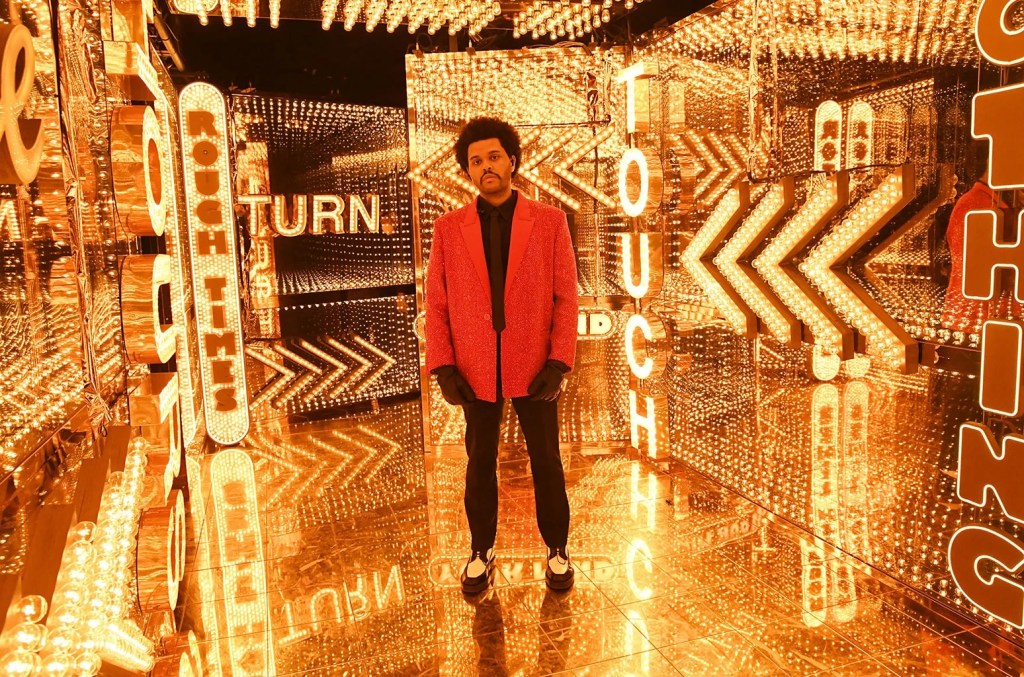
Put simply, the world has altered once again. The pandemic is not over, but it looks a lot different in the middle of 2022 to even six months ago, let alone two years previous. In recent times, the popularity of the “Liminal Spaces” bot on Twitter has been no surprise, though it recently endured the inevitable backlash from hair-splitters alleging that numerous of its shared photos did not truly represent liminality, despite its hit rate seeming very stellar to me. Some suggested that academia was at fault for the newfound popularity and supposed misuse of the term, but this seems to ignore a sizeable elephant in the room. People see liminal spaces around them as en masse we have spent around two years teetering on some threshold of transformation, and the explanation doesn’t seem any more complex than that to me, particularly a genuinely universal experience which cannot be faithfully replicated. It is clear that The Weeknd understood this from the conceptual casing of “Dawn FM”.
One of the most impeccable liminal experiences available previously was engaging in international transit and airport travel. In a classic display of Crap Britishness™, one of the most enraging aspects of lockdown for the British public seemed not to be the restraint of lockdown itself, but the inability to escape the country at least once a year. Again, Tesfaye has attempted to tap a subconscious interest in and even desire for liminality, which has grown more potent due to events since the turn of 2020. Having experienced lockdowns effectively from the outside in the way he did during the “After Hours” promo drive, this is unsurprising. This very deeply submerged impulse harkens to a wish for transformational social change, which mass media and culture continue to bury with stunning efficacy; the revolution many anticipated as a result of the onset of pandemic, a supposed dry run of climate change disaster or a restructuring of social justice a la the post-war settlement on fast-forward, has never materialised, indeed quite the reverse. Everything is liminal in this seemingly endless era after the 2008 financial crash, the day-to-day evocation of the iconic Antonio Gramsci quote; “the crisis consists precisely in the fact that the old is dying and the new cannot be born; in this interregnum a great variety of morbid symptoms appear”.
In terms of quality, the writing and stylistic routing on “Dawn FM” matches that of “After Hours”. The album is just as brilliantly realised and none of its ideas can be said to be underdeveloped, even if they are sometimes more fragmentary; “Dawn FM” whips through a series of miniaturised tracks shortly past its halfway point, granting constitutional distance from the preceding longplayer. The secret lies in the timing; much like the lifespan of “After Hours” is indelibly informed by the setting into which it accidentally landed, “Dawn FM” pursued conceptual avenues with expert subtlety, but into a world where the Omicron variant would soon be on the verge of at least partially burning out, and people had become tired of even acknowledging that a pandemic was ongoing. In this way it is always important to be careful what you wish for, just as British tourists at the time of writing are discovering what travel chaos truly looks like at the nation’s airports.
“Dawn FM” is an excellent album and one of the year’s best to date; this is only an attempt to dissect its mainstream underperformance relative to “After Hours”. Between them, in these differing manners, they define The Weeknd as the Pandemic Popstar; as a mass culture we experienced this bizarre period of complete upheaval and uneasy boredom through the lens of his finest artistry to date. The long-delayed “After Hours ‘Til Dawn” stadium tour will finally commence in summer 2022, with the clear promise of continuing the showmanship and ambition Tesfaye evidenced throughout 2020 and 2021, culminating at the Super Bowl. I believe this will recalibrate the tracks from “Dawn FM” as part of the wider journey of the purported trilogy as a whole, and promises to jolt audiences into taking a second listen. The rest of the story is still to be written, but it would be hard to swallow if the conclusion is that this still-evolving coterie of music is preferred in isolation rather than communally.
 Roads To The North